1.Chickenpox symptoms
Chickenpox Symptoms: Early Signs, Stages, Treatment & When to See a Doctor
Chickenpox is a highly contagious viral infection caused by the varicella-zoster virus (VZV). Although it is most common in children, teenagers and adults can also develop chickenpox, and the illness is often more severe in older age groups.
The hallmark symptom of chickenpox is an itchy blister-like rash, but the illness usually begins with fever, tiredness, headache, and loss of appetite one or two days before the rash appears. Thanks to routine vaccination, chickenpox is now less common in many countries, but outbreaks still occur, especially among unvaccinated individuals.
In this article, you’ll learn the early symptoms of chickenpox, how the rash develops, treatment options, possible complications, and when to seek medical attention.
Quick Answer
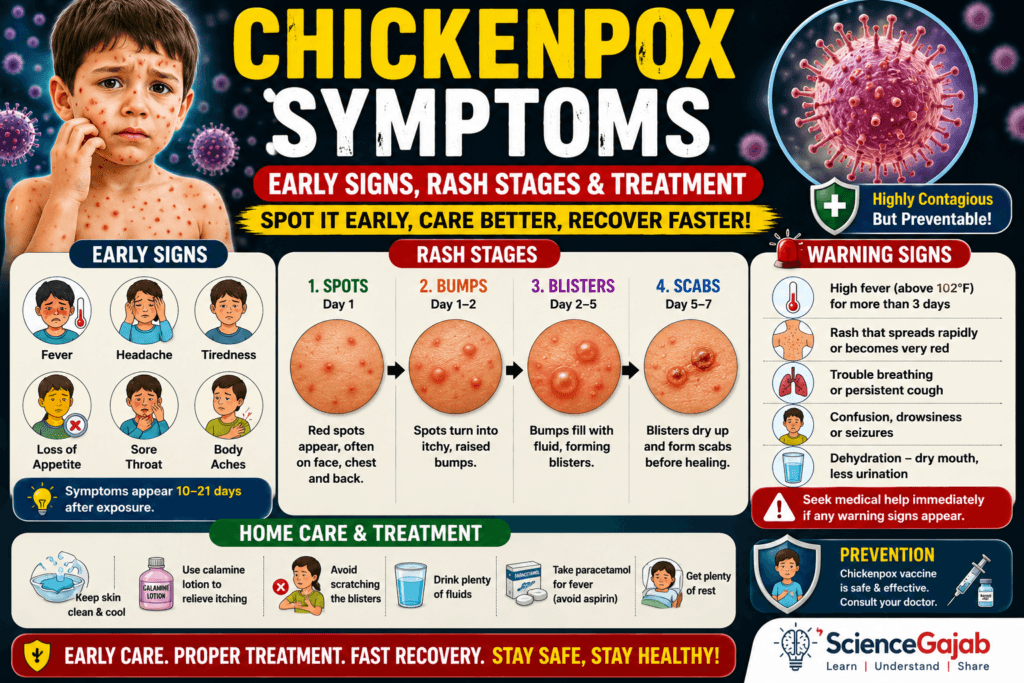
Chickenpox symptoms usually appear 10–21 days after exposure to the virus. Early symptoms include fever, headache, fatigue, body aches, sore throat, and loss of appetite. Within a day or two, an itchy red rash develops, progressing into fluid-filled blisters that eventually crust over.
Modes of Virus Transmission with Examples (Airborne, Vector, Contact) – Easy Guide for Students
What Is Chickenpox?
Chickenpox is an infectious disease caused by the varicella-zoster virus. It spreads easily through:
- Coughing or sneezing
- Direct contact with blister fluid
- Touching contaminated objects (less commonly)
A person is contagious from 1–2 days before the rash appears until all blisters have crusted over, which usually takes about 5–7 days.
Why Viruses Spread So Fast — The Invisible Science Inside Your Body
Early Symptoms of Chickenpox
Before the rash develops, many people experience flu-like symptoms.
1. Fever
A mild to moderate fever is often the first noticeable symptom.
Typical temperature:
- 100–102°F (37.8–38.9°C)
High fever may occur in adults.
2. Headache
Many people develop a persistent headache due to the body’s immune response to the infection.
3. Fatigue
Feeling unusually tired or weak is one of the earliest signs.
Children may become less active than usual.
4. Loss of Appetite
Reduced appetite commonly occurs one or two days before the rash appears.
5. Body Aches
Generalized muscle aches and body pain are common, especially in teenagers and adults.
6. Sore Throat
Some people experience a mild sore throat before skin lesions become visible.
What is the main cause of mumps?
The Chickenpox Rash: Stages
The rash is the most recognizable feature of chickenpox.
Stage 1: Red Spots
Small red bumps first appear on:
- Face
- Chest
- Back
- Scalp
The rash then spreads to the arms and legs.
Stage 2: Fluid-Filled Blisters
Within 24 hours, the red bumps become clear fluid-filled blisters (vesicles).
These blisters are extremely itchy.
Stage 3: Blisters Break Open
The blisters may burst naturally, releasing clear fluid.
Scratching increases the risk of bacterial skin infection and scarring.
Stage 4: Crusts and Scabs
Within several days, the blisters dry out and form crusts or scabs.
Once all blisters have crusted, the person is generally no longer contagious.
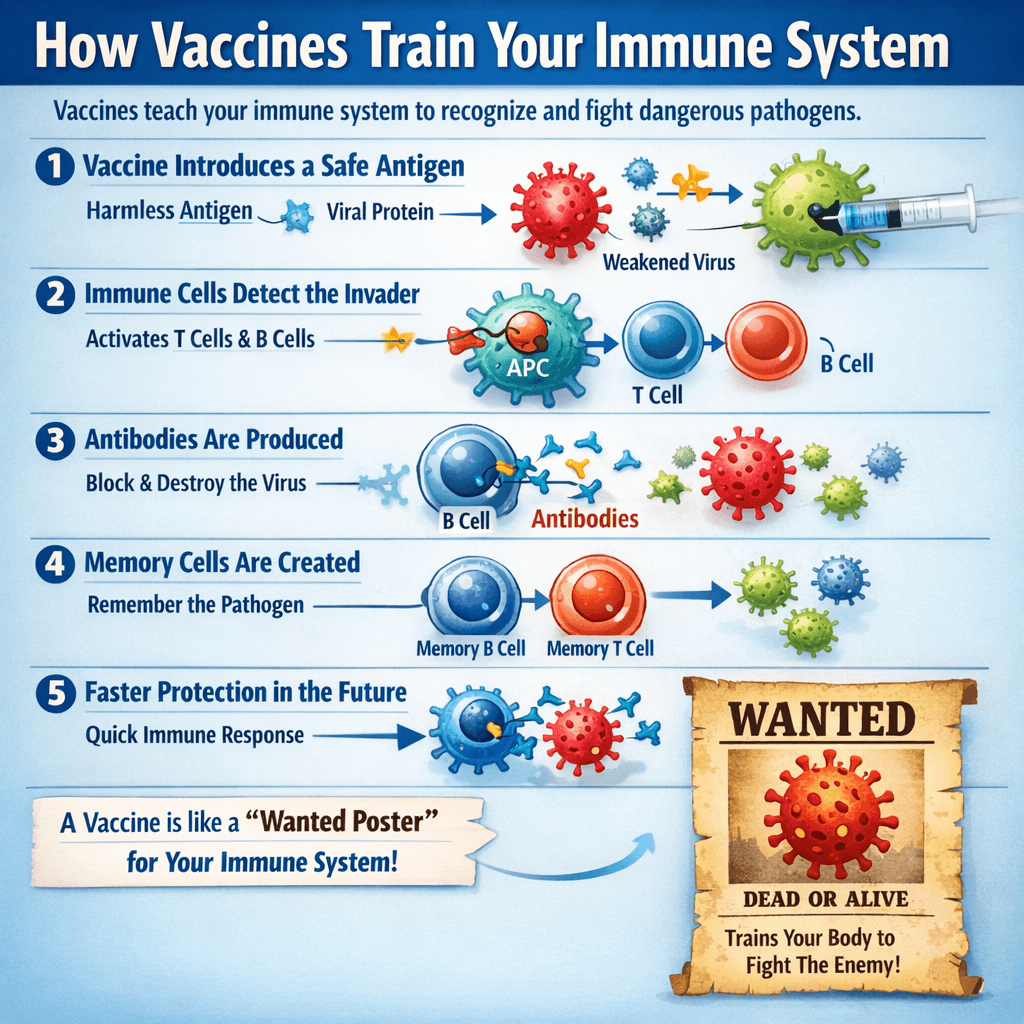
How Vaccines Train Your Immune System
Common Chickenpox Symptoms
People with chickenpox may experience:
- Itchy skin rash
- Red spots
- Fluid-filled blisters
- Fever
- Headache
- Fatigue
- Body aches
- Loss of appetite
- Sore throat
- Mild cough
- Irritability (especially in young children)
💉 How Vaccines Work (The Science Explained)
Chickenpox Symptoms in Adults
Adults often develop more severe illness than children.
Symptoms may include:
- Higher fever
- More widespread rash
- Severe itching
- Intense body pain
- Fatigue lasting several weeks
- Increased risk of pneumonia
Adults are also more likely to require antiviral treatment.
Why Antibiotics Don’t Work on Viruses (Most People Don’t Know This)
Chickenpox Symptoms in Children
Children usually recover within 7–10 days.
Common symptoms include:
- Mild fever
- Itchy rash
- Irritability
- Poor appetite
- Difficulty sleeping because of itching
Most healthy children recover without complications.
Possible Complications
Although many cases are mild, complications can occur, especially in infants, pregnant women, adults, and people with weakened immune systems.
Complications include:
- Skin infections
- Pneumonia
- Brain inflammation (encephalitis)
- Dehydration
- Ear infections
- Bloodstream infections (rare)
- Secondary bacterial infection of scratched blisters
🦠 Difference Between Virus and Bacteria Explained
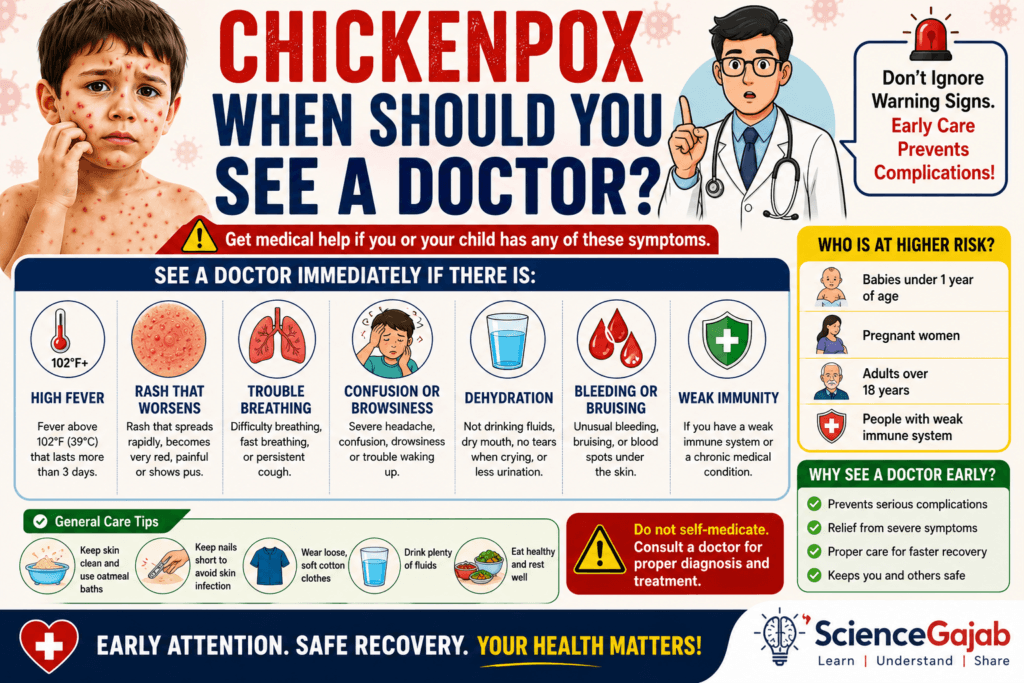
When Should You See a Doctor?
Seek medical attention immediately if chickenpox is accompanied by:
- Difficulty breathing
- Persistent high fever above 39°C (102°F)
- Severe headache
- Confusion or excessive drowsiness
- Neck stiffness
- Continuous vomiting
- Rash near the eyes
- Blisters that become very red, swollen, or filled with pus
- Signs of dehydration (dry mouth, dizziness, reduced urination)
Infants, pregnant women, newborns, and people with weakened immune systems should contact a healthcare professional promptly if exposed to or infected with chickenpox.
Diagnosis
Chickenpox is often diagnosed based on:
- Characteristic rash
- Medical history
- Recent exposure
In uncertain cases, laboratory tests such as PCR testing or blood tests can confirm infection.
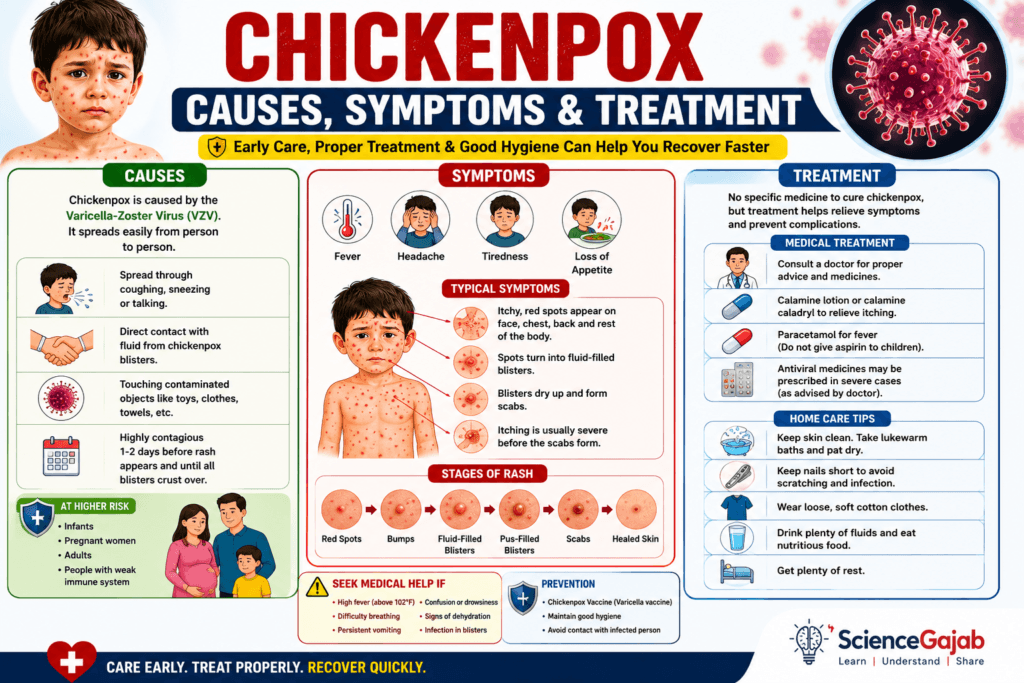
Treatment
Treatment focuses on relieving symptoms while the body’s immune system clears the virus.
Home Care
- Get plenty of rest.
- Drink adequate fluids.
- Wear loose, soft clothing.
- Keep fingernails short to reduce skin damage from scratching.
- Use cool baths to help relieve itching.
Medications
A healthcare professional may recommend:
- Fever-reducing medicines (avoid aspirin in children because of the risk of Reye syndrome).
- Calamine lotion or other soothing topical products for itching.
- Antihistamines in selected cases.
- Antiviral medication (such as acyclovir) for people at higher risk of severe disease, when started early under medical guidance.
Prevention
The most effective way to prevent chickenpox is vaccination.
Additional preventive measures include:
- Avoid close contact with infected individuals.
- Stay home until all blisters have crusted over.
- Wash hands frequently.
- Cover coughs and sneezes.
- Clean commonly touched surfaces.
Frequently Asked Questions
Most cases resolve within 7–10 days, although fatigue may persist a little longer.
Yes. It is highly contagious from 1–2 days before the rash appears until all blisters have crusted over.
Yes. Adults who have never had chickenpox or have not been vaccinated can become infected, and illness is often more severe.
It is uncommon. Most people develop long-lasting immunity after infection. However, the virus remains dormant and may later reactivate as shingles (herpes zoster).
Yes. Lukewarm baths can help soothe itching. Avoid very hot water, which may worsen discomfort.
Key Takeaways
- Chickenpox is caused by the varicella-zoster virus.
- Early symptoms include fever, headache, fatigue, body aches, sore throat, and loss of appetite.
- The rash progresses from red spots → fluid-filled blisters → crusts and scabs.
- Most healthy children recover completely within 7–10 days.
- Adults, pregnant women, newborns, and immunocompromised individuals have a higher risk of complications.
- Vaccination remains the best way to prevent chickenpox.
early signs of weak immune system
Author Dr Sanjay Prajapati (MBBS)
References
- Centers for Disease Control and Prevention (CDC). Chickenpox (Varicella). https://www.cdc.gov/chickenpox/
- World Health Organization (WHO). Varicella (Chickenpox).
- American Academy of Pediatrics. Red Book: Varicella.
- Merck Manual Professional Edition. Varicella (Chickenpox).
Reviewed for medical accuracy: This content is based on guidance from reputable public health organizations, including the CDC and WHO, and is intended for educational purposes. It should not replace individualized medical advice, diagnosis, or treatment from a qualified healthcare professional