
Why Does One Side of the Nose Get Blocked
Why Does One Side of the Nose Get Blocked?
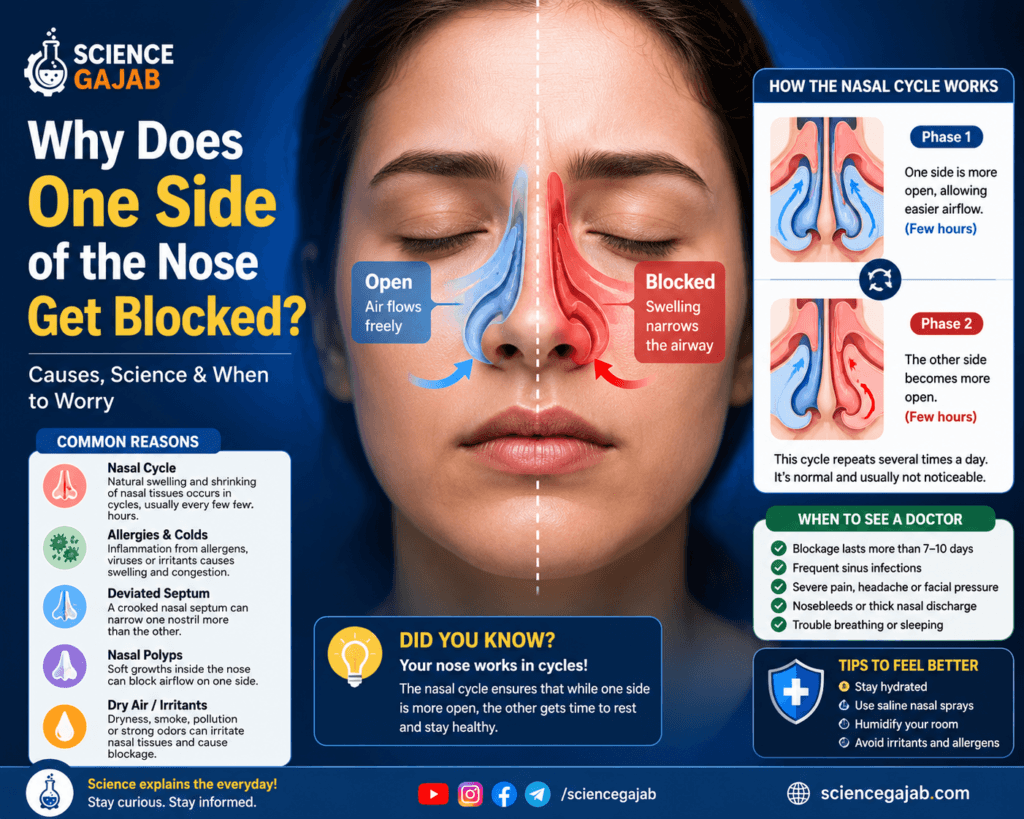
Have you ever noticed that one nostril seems blocked while the other breathes normally? Then, a few hours later, the blockage appears to switch sides. Many people assume this is caused by a cold or allergy, but in most cases, it’s actually a completely normal biological process.
This phenomenon is known as the nasal cycle, a natural rhythm that occurs in nearly everyone. Most people are unaware of it until congestion becomes more noticeable.
Understanding why one side of the nose gets blocked can help you distinguish between normal body functions and symptoms that may require medical attention.
The Nose Does More Than Just Help You Breathe
Your nose performs several important functions every day.
It helps:
- Filter dust and germs
- Warm incoming air
- Add moisture to inhaled air
- Detect smells
- Support healthy lung function
To perform these tasks efficiently, the nose constantly adjusts airflow between the two nostrils.
This adjustment is one reason one side may occasionally feel more blocked than the other.
Why do we sneeze suddenly? The Simple Science Explained
What Is the Nasal Cycle?
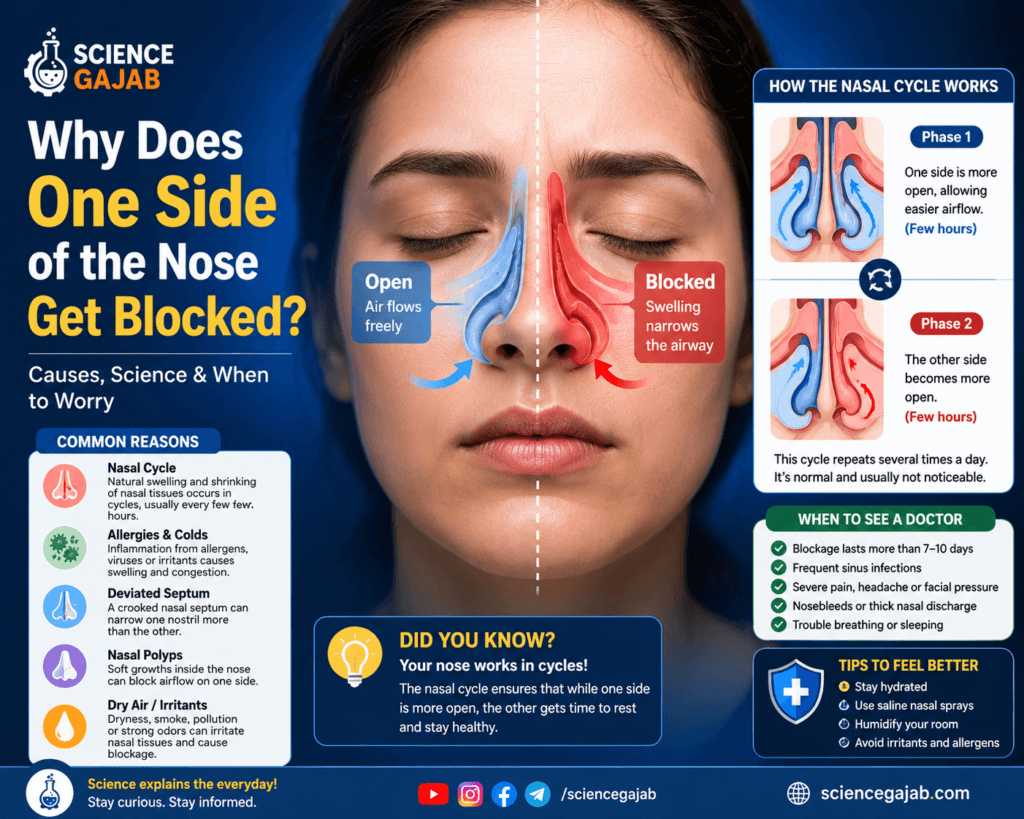
The nasal cycle is a natural process in which airflow alternates between nostrils.
During this cycle:
- One nostril becomes slightly more congested.
- The other nostril becomes more open.
- After several hours, the pattern reverses.
Most people experience this cycle throughout the day and night without realizing it.
The change is usually subtle and does not completely block breathing.
Why Do We Snore? The Science Behind Noisy Sleep
How Does the Nasal Cycle Work?
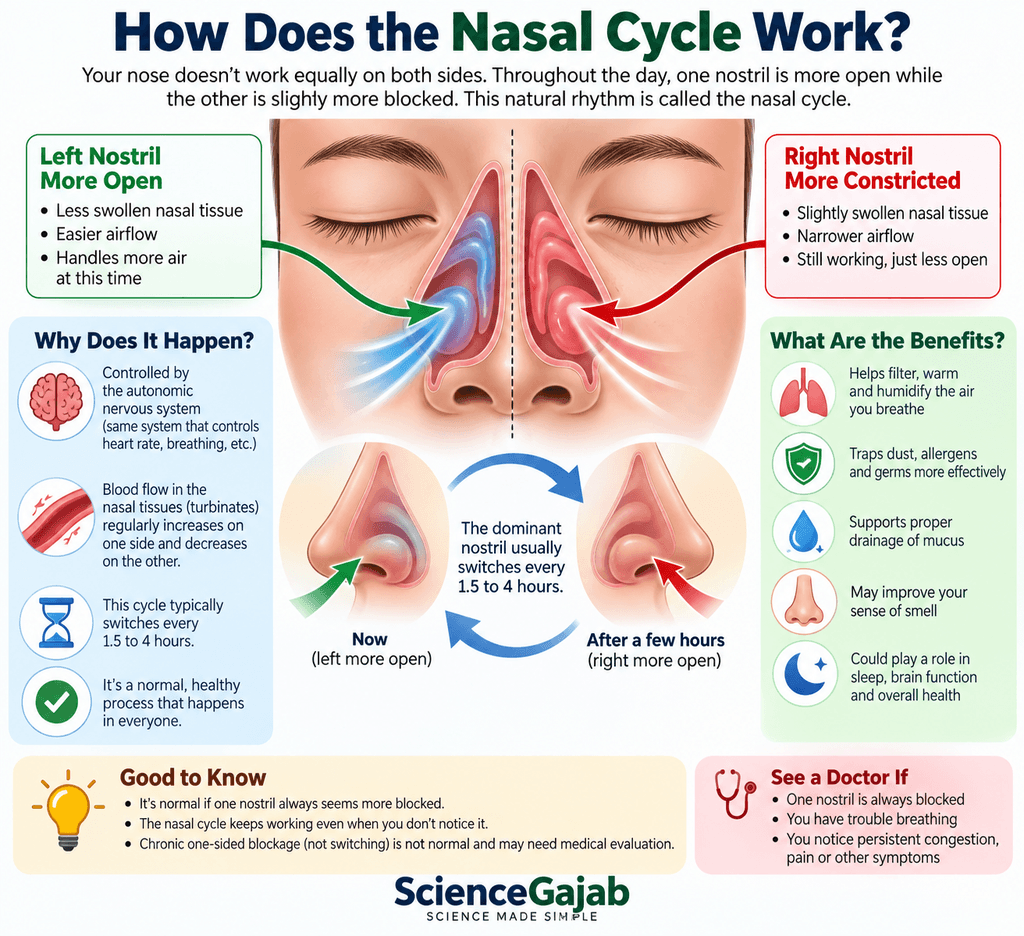
Inside the nose are structures called turbinates.
Turbinates are soft, tissue-covered bones rich in blood vessels.
Their job is to:
- Humidify air
- Filter particles
- Regulate airflow
The nervous system controls blood flow to these tissues.
When blood vessels expand:
- The turbinate swells slightly.
- Airflow decreases on that side.
When blood vessels shrink:
- The turbinate becomes smaller.
- Airflow increases.
This creates the sensation that one nostril is more open than the other.
Why Viruses Spread So Fast — The Invisible Science Inside Your Body
Why Does the Body Alternate Between Nostrils?
Scientists believe the nasal cycle serves several useful purposes.
Possible benefits include:
1. Moisture Recovery
Alternating airflow gives nasal tissues time to recover moisture.
This helps prevent excessive drying.
2. Improved Air Filtration
The cycle may improve the nose’s ability to trap particles, allergens, and microbes.
3. Protection of Nasal Tissues
By shifting airflow, tissues receive periodic rest, reducing irritation.
4. Enhanced Sense of Smell
Research suggests alternating airflow may help the brain process different types of odors more effectively.
Modes of Virus Transmission with Examples (Airborne, Vector, Contact) – Easy Guide for Students
How Long Does the Nasal Cycle Last?
The cycle varies among individuals.
Typically, one side dominates airflow for:
- 30 minutes
- Several hours
- Occasionally longer
The average cycle often lasts between 2 and 8 hours.
Because the change is gradual, many people never notice it.
Complete Blood Count (CBC) Explained: What Every Blood Test Value Means
Why Does One Nostril Feel More Blocked When Lying Down?
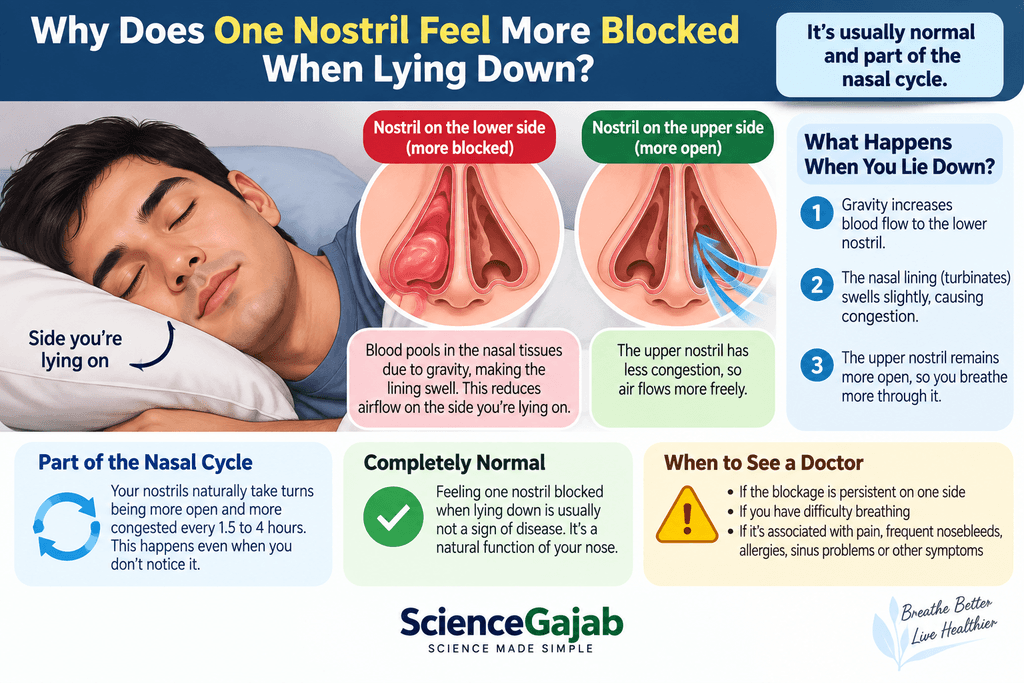
Many people notice increased blockage while sleeping.
This occurs because gravity affects blood flow.
When lying on one side:
- Blood pools more on the lower side.
- Nasal tissues swell slightly.
- The lower nostril may feel blocked.
For example:
If you sleep on your right side, the right nostril may become more congested.
Changing positions often changes which side feels blocked.
What Are Platelets? Function, Normal Count, High & Low Platelet Levels Explained
Allergies Can Make the Problem More Noticeable
Seasonal and environmental allergies can increase nasal swelling.
Common triggers include:
- Pollen
- Dust mites
- Pet dander
- Mold
When allergies cause inflammation, the normal nasal cycle becomes exaggerated.
As a result:
- One nostril may feel significantly blocked.
- Congestion becomes more noticeable.
- Breathing may feel uneven.
Colds and Sinus Infections
Viral infections frequently cause nasal congestion.
When you have a cold:
- Blood vessels expand.
- Mucus production increases.
- Nasal tissues swell.
Because of the natural nasal cycle, one side may feel more blocked than the other at different times.
This is usually temporary and improves as the infection resolves.
Why Do We Laugh? The Fascinating Science Behind Human Laughter
A Deviated Septum May Cause Persistent One-Sided Blockage
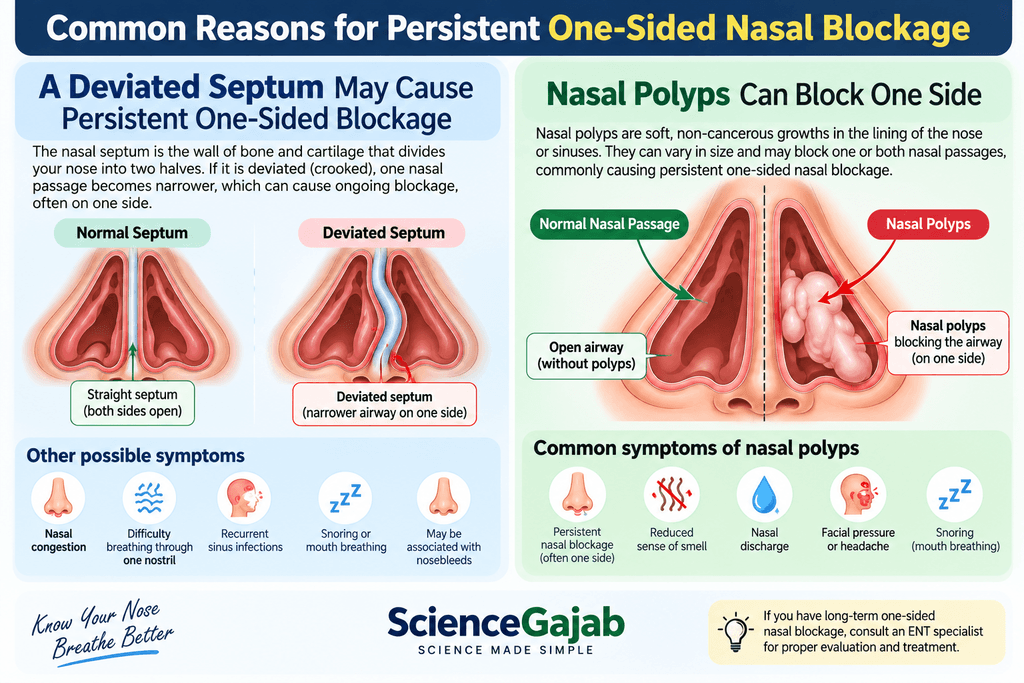
The septum is the wall separating the two nostrils.
Ideally, it sits near the center.
However, many people have a deviated septum, meaning the wall is shifted toward one side.
This can lead to:
- Chronic blockage on one side
- Difficulty breathing through one nostril
- Frequent sinus infections
- Snoring
Unlike the nasal cycle, a deviated septum often causes blockage on the same side most of the time.
Why Do Ears Ring Suddenly? (Simple Explanation You Can Trust)
Nasal Polyps Can Block One Side
Nasal polyps are soft, noncancerous growths inside the nasal passages.
They may develop due to:
- Chronic inflammation
- Allergies
- Asthma
- Recurrent sinus infections
Large polyps can obstruct airflow and create the sensation of persistent blockage.
Parts of Ear and Their Functions (Simple Diagram Explained)
Can Stress Affect Nasal Congestion?
Surprisingly, yes.
Stress influences the autonomic nervous system, which controls blood vessel function.
Some people notice:
- Increased congestion during anxiety
- Changes in nasal airflow
- Temporary worsening of blockage
Stress does not directly cause structural problems but may make symptoms more noticeable.
Why Do Eyes Feel Heavy? (Simple Explanation You Can Trust)
Why Does One Nostril Seem Completely Closed Sometimes?
During the normal nasal cycle, airflow reduction is usually mild.
However, factors such as:
- Allergies
- Infection
- Dry air
- Irritation
can intensify swelling.
This may create the feeling that one nostril is completely blocked even when some airflow remains.
Why Do Onions Make You Cry? The Shocking Science 99% People Don’t Know😳
Is One Nostril Supposed to Be Dominant?
Yes.
Studies show that one nostril usually handles more airflow than the other at any given moment.
This dominance naturally switches throughout the day.
Most healthy individuals experience this pattern without realizing it.
Interesting Facts About the Nasal Cycle
- Nearly everyone experiences it.
- It operates automatically without conscious control.
- The cycle has been recognized by scientists for over a century.
- One nostril is usually more open than the other.
- The dominant side changes multiple times daily.
- Many people only notice it when they have allergies or a cold.
When Should You See a Doctor?
Occasional one-sided blockage is usually normal.
However, medical evaluation is recommended if you experience:
- Persistent blockage on one side
- Frequent nosebleeds
- Facial pain
- Recurrent sinus infections
- Loss of smell
- Severe breathing difficulty
- A visible nasal growth
These symptoms may indicate an underlying condition requiring treatment.
How Can You Relieve Nasal Congestion?
Depending on the cause, these strategies may help:
Saline Nasal Rinses
Saltwater rinses can:
- Reduce irritation
- Remove allergens
- Improve airflow
Stay Hydrated
Proper hydration helps keep mucus thin and easier to clear.
Use a Humidifier
Moist air can reduce dryness and irritation.
Manage Allergies
Avoid triggers and follow treatment recommendations from your healthcare provider.
Change Sleeping Position
If one nostril becomes blocked while lying down, switching sides may improve airflow.
Frequently Asked Questions
Yes. The nasal cycle naturally causes one nostril to be more congested than the other at different times.
The autonomic nervous system regulates blood flow inside the nose, causing congestion to alternate between nostrils.
Yes. Gravity can increase blood flow to the lower side of the nose, making that nostril feel more congested.
Persistent blockage on the same side, difficulty breathing, and frequent sinus problems may suggest a deviated septum. A healthcare professional can confirm the diagnosis.
Yes. Allergies increase inflammation and swelling, making normal airflow changes much more noticeable.
Final Thoughts
If you’ve ever wondered why one side of your nose gets blocked while the other remains open, the answer is often the nasal cycle—a normal process that helps the nose filter, humidify, and regulate airflow efficiently.
Most cases are completely harmless and simply reflect the way the body naturally manages breathing. However, persistent one-sided blockage, severe symptoms, or accompanying problems such as facial pain or frequent infections may indicate conditions like a deviated septum, nasal polyps, or chronic sinus disease.
Understanding this fascinating body mystery can help you appreciate that sometimes what feels unusual is actually a normal part of human biology.
Medically Reviewed
Written by the ScienceGajab editorial team and medically reviewed by for accuracy by a qualified healthcare professional.
This article is based on established medical and scientific information and explains the nasal cycle in simple, easy-to-understand language.
Medical disclaimer: This content is for educational purposes only and should not replace professional medical advice, diagnosis, or treatment.
https://www.facebook.com/sciencegajab/