
Complete Blood Count Explained
Complete Blood Count (CBC) Explained: A Beginner’s Guide
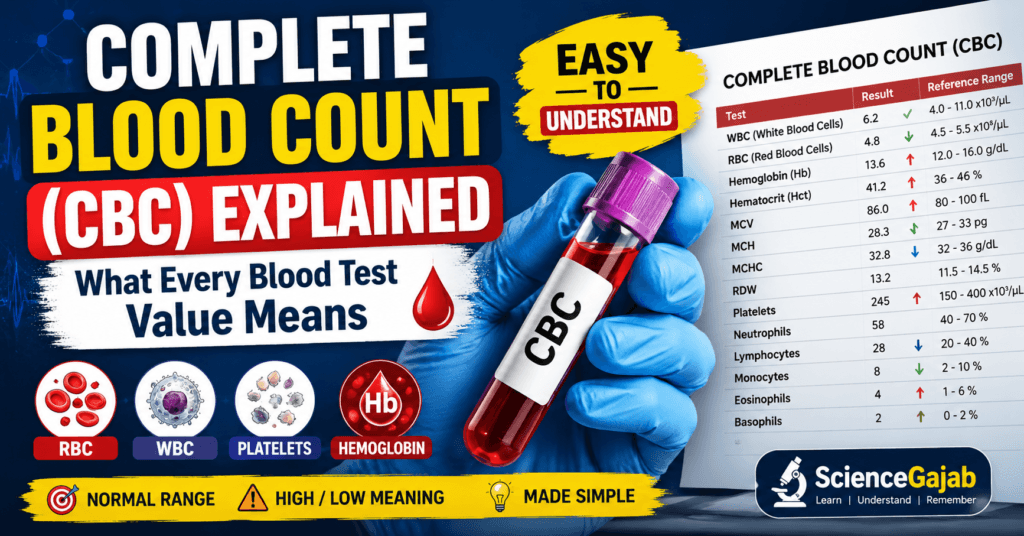
A Complete Blood Count (CBC) is one of the most commonly ordered blood tests. It measures the number and characteristics of different blood cells, helping doctors detect infections, anemia, blood disorders, inflammation, and many other medical conditions.
Whether you’re reviewing your own lab report or trying to understand a family member’s results, this guide explains every major CBC parameter in simple language.
What Is a Complete Blood Count (CBC)?
A CBC is a laboratory test that measures the three major types of blood cells:
- Red Blood Cells (RBCs)
- White Blood Cells (WBCs)
- Platelets
It also includes several calculated values that provide more detail about these cells.
Doctors often order a CBC during routine health checkups or when investigating symptoms such as:
- Fever
- Weakness
- Fatigue
- Frequent infections
- Unexplained bruising
- Bleeding
- Weight loss
Signs of Anemia: 15 Warning Symptoms You Should Never Ignore
Components of a CBC
1. Hemoglobin (Hb)
Hemoglobin is the oxygen-carrying protein inside red blood cells.
Normal Range
- Men: 13.5–17.5 g/dL
- Women: 12.0–15.5 g/dL
Low Hemoglobin May Suggest
- Iron deficiency anemia
- Vitamin B12 deficiency
- Folate deficiency
- Blood loss
- Chronic kidney disease
High Hemoglobin May Suggest
- Dehydration
- Smoking
- Living at high altitude
- Polycythemia vera
2. Hematocrit (HCT)
Hematocrit measures the percentage of blood made up of red blood cells.
Low Hematocrit
- Anemia
- Blood loss
High Hematocrit
- Dehydration
- Polycythemia
3. Red Blood Cell (RBC) Count
RBCs transport oxygen throughout the body.
Low RBC Count
- Anemia
- Bone marrow disorders
- Nutritional deficiencies
High RBC Count
- Chronic lung disease
- Dehydration
- Polycythemia
4. White Blood Cell (WBC) Count
White blood cells help fight infections.
Normal Range
4,000–11,000 cells/µL
High WBC Count (Leukocytosis)
May occur with:
- Bacterial infections
- Inflammation
- Steroid use
- Leukemia
Low WBC Count (Leukopenia)
May occur with:
- Viral infections
- Chemotherapy
- Bone marrow disorders
- Autoimmune diseases
Body Fluids and Circulation – Complete NCERT + Exam Notes for NEET & Class 11 Biology
WBC Differential Explained
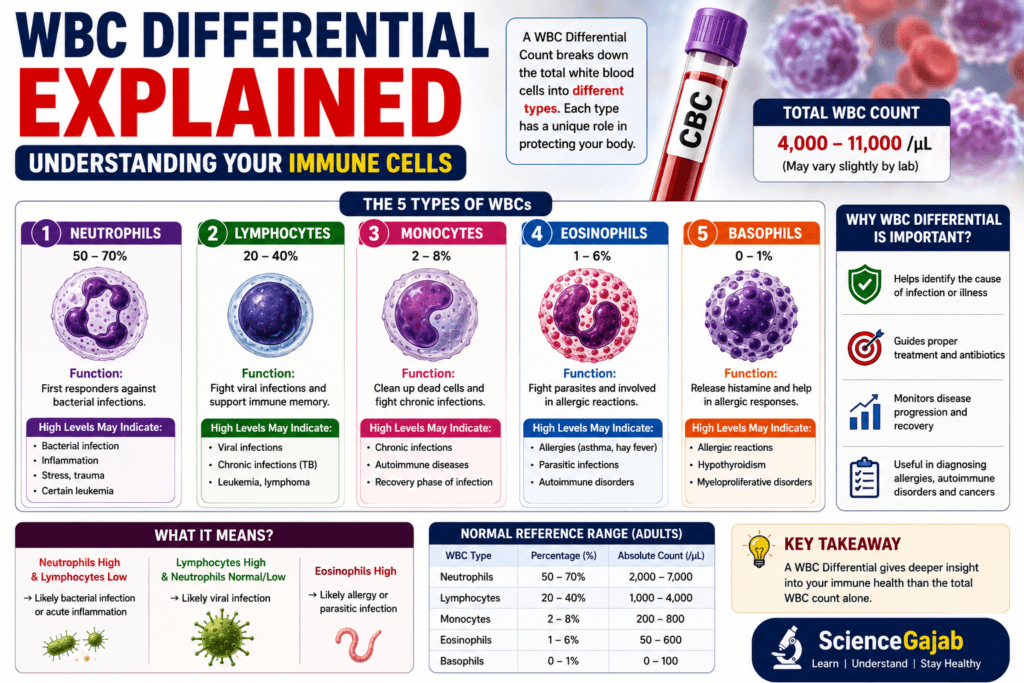
A differential count shows the percentage of each type of white blood cell.
Neutrophils
Fight bacterial infections.
High:
- Bacterial infection
- Stress
- Steroid treatment
Low:
- Viral infection
- Chemotherapy
Modes of Virus Transmission with Examples (Airborne, Vector, Contact) – Easy Guide for Students
Lymphocytes
Fight viral infections and help produce antibodies.
High:
- Viral infections
- Some leukemias
Low:
- HIV infection
- Steroid therapy
- Immune disorders
Monocytes
Help remove damaged cells and fight chronic infections.
High:
- Tuberculosis
- Autoimmune disease
- Recovery from infection
Eosinophils
Fight parasites and participate in allergic reactions.
High:
- Allergies
- Asthma
- Parasitic infections
Basophils
Release chemicals involved in inflammation and allergic responses.
High:
- Allergic conditions
- Some blood disorders
Platelet Count
Platelets help blood clot.
Normal Range
150,000–450,000/µL
Low Platelets (Thrombocytopenia)
May cause:
- Easy bruising
- Bleeding gums
- Nosebleeds
- Petechiae (tiny red spots)
Common causes include viral infections, certain medications, immune thrombocytopenia, and bone marrow disorders.
High Platelets (Thrombocytosis)
May occur with:
- Infection
- Inflammation
- Iron deficiency
- Some bone marrow diseases
What Are Platelets? Function, Normal Count, High & Low Platelet Levels Explained
RBC Indices Explained
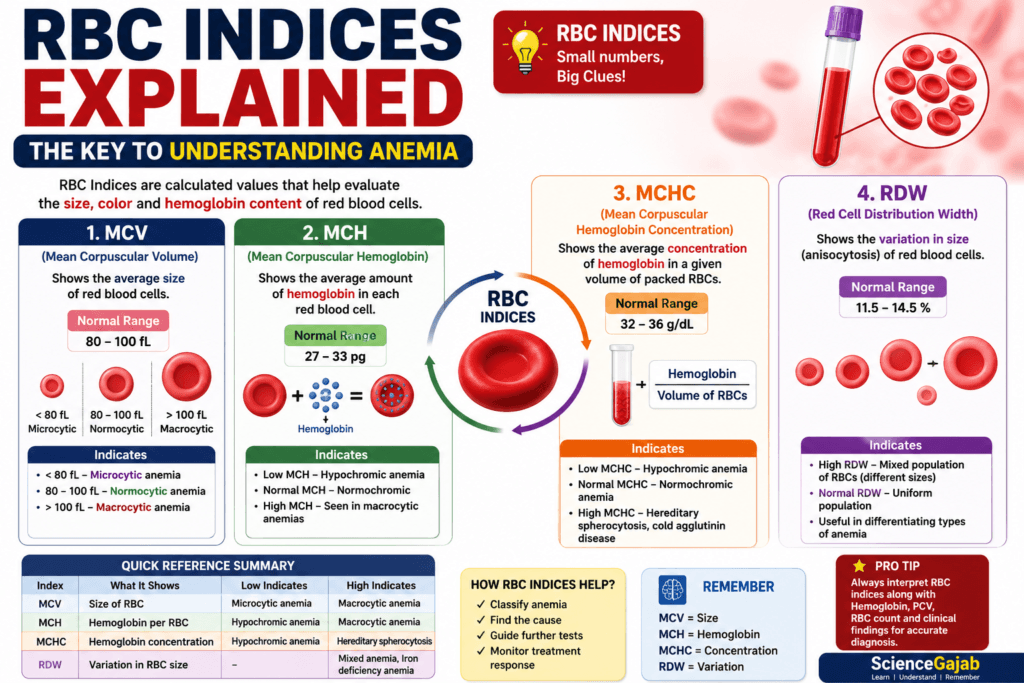
MCV (Mean Corpuscular Volume)
Measures the average size of red blood cells.
Low MCV
- Iron deficiency anemia
- Thalassemia
High MCV
- Vitamin B12 deficiency
- Folate deficiency
- Liver disease
- Alcohol use
🚨 Early Signs of Vitamin B12 Deficiency — Don’t Ignore These Warning Signals!
MCH (Mean Corpuscular Hemoglobin)
Measures the average amount of hemoglobin in each red blood cell.
Low values often accompany iron deficiency.
MCHC (Mean Corpuscular Hemoglobin Concentration)
Measures the concentration of hemoglobin within red blood cells.
Low values suggest hypochromic anemia, commonly due to iron deficiency.
RDW (Red Cell Distribution Width)
Measures variation in red blood cell size.
High RDW may indicate:
- Iron deficiency anemia
- Vitamin B12 deficiency
- Folate deficiency
- Mixed nutritional deficiencies
Can Low Vitamins Damage Nerves? (Simple Explanation You Can Trust)
MPV (Mean Platelet Volume)
Measures the average size of platelets.
Large platelets may indicate increased platelet production after destruction or blood loss, while small platelets may be seen in some bone marrow disorders.
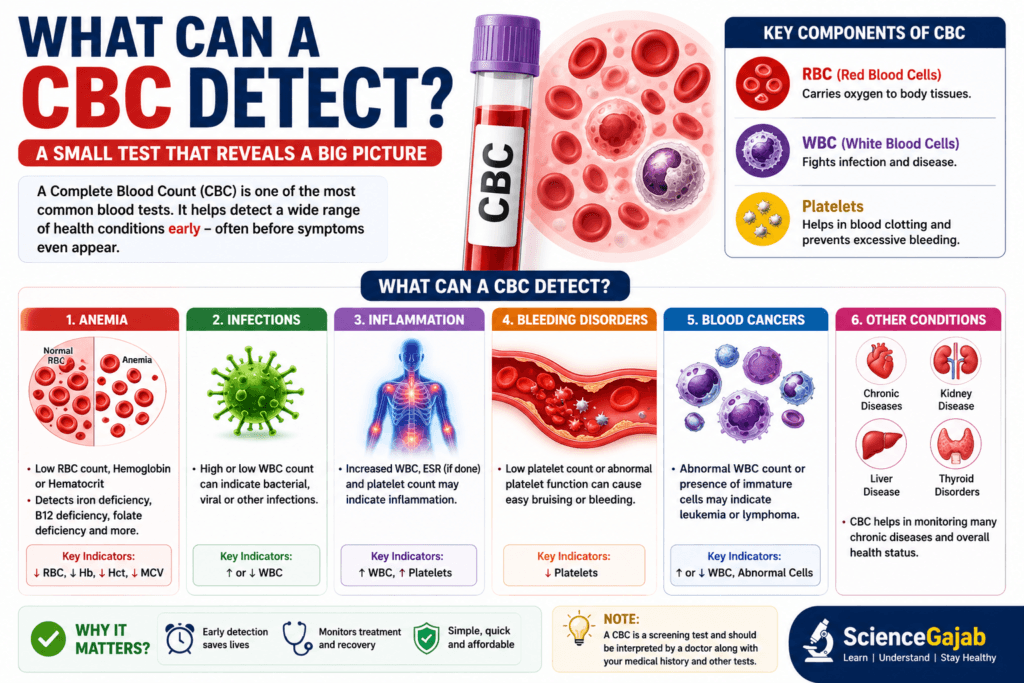
What Can a CBC Detect?
A CBC may help detect or monitor:
- Iron deficiency anemia
- Vitamin B12 deficiency
- Folate deficiency
- Bacterial infections
- Viral infections
- Leukemia
- Blood cancers
- Bone marrow disorders
- Autoimmune diseases
- Chronic inflammation
- Bleeding disorders
- Dehydration
A CBC alone does not diagnose a condition; results must be interpreted along with symptoms, examination findings, and other tests.
How Cancer Actually Begins Inside Your Body
When Is a CBC Ordered?
Doctors commonly request a CBC for:
- Routine health checkups
- Fever
- Weakness
- Persistent fatigue
- Unexplained weight loss
- Frequent infections
- Easy bruising or bleeding
- Before surgery
- Monitoring chronic diseases
- Monitoring certain medications
Feeling Weak After Fever? Do This to Recover Faster (Doctor-Backed Guide)
Frequently Asked Questions (FAQs)
Can a CBC detect cancer?
A CBC may show abnormalities that raise suspicion for certain blood cancers, but it cannot confirm a diagnosis. Additional tests are needed.
Can a CBC detect infection?
Yes. Changes in the white blood cell count and differential can suggest infection, although they do not identify the exact cause.
Do I need to fast before a CBC?
In most cases, fasting is not required unless your doctor has ordered additional blood tests that require fasting.
Is one abnormal CBC value always serious?
Not necessarily. Mild abnormalities can occur due to temporary illnesses, dehydration, medications, or laboratory variation. Your healthcare provider will interpret the results in context.
Key Takeaways
- A CBC measures red blood cells, white blood cells, platelets, and related indices.
- It is a valuable screening tool for anemia, infections, inflammation, and many blood disorders.
- Abnormal values do not automatically mean you have a serious disease.
- Always discuss your CBC results with a qualified healthcare professional, who can interpret them based on your symptoms and medical history.
Why Trust ScienceGajab?
Medical Review Process: This article is based on standard hematology references and current clinical practice. It is intended for educational purposes only and is not a substitute for professional medical advice, diagnosis, or treatment.
Author: Dr Sanjay Prajapati (MBBS)
Reviewed by: ScienceGajab Editorial Team
Last Updated: June 2026
References
- Harrison’s Principles of Internal Medicine.
- Henry’s Clinical Diagnosis and Management by Laboratory Methods.
- World Health Organization (WHO) – Hematology resources.
- American Society of Hematology – Patient Education.
Immune System: How Your Body Fights Diseases