
Function of Spleen
Function of Spleen: Everything You Need to Know
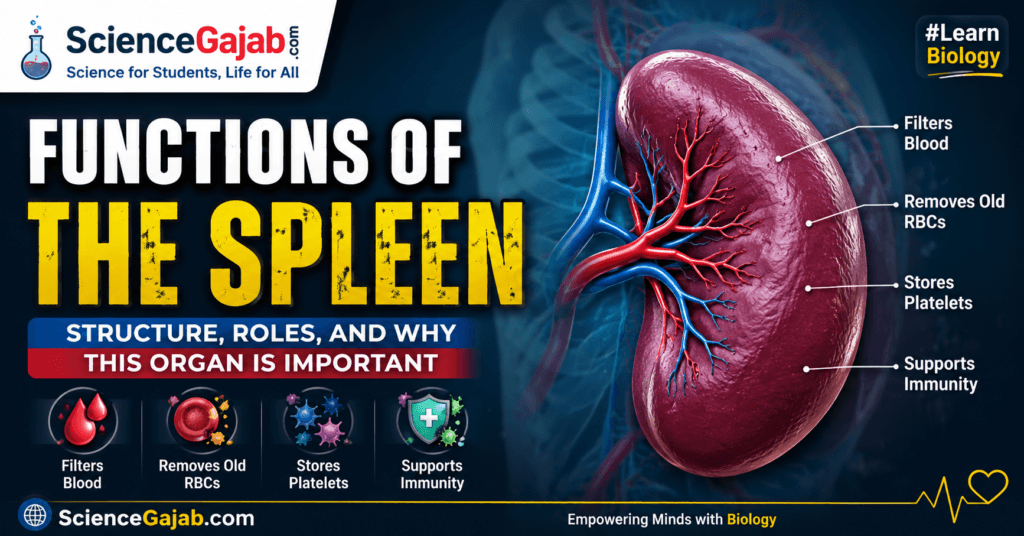
The spleen is an important organ of the lymphatic and immune systems. Although you can live without it, the spleen performs several vital functions, including filtering blood, fighting infections, recycling old red blood cells, and storing platelets.
Located in the upper left side of the abdomen, just beneath the rib cage, the spleen works continuously to keep your blood healthy and support your body’s immune defenses.
In this ScienceGajab article, you’ll learn the 10 major functions of the spleen, its structure, common diseases, and what happens if the spleen is removed.
What Is the Spleen?
The spleen is a soft, purple-colored organ about the size of a fist.
Location
- Upper left abdomen
- Below the diaphragm
- Behind the stomach
- Protected by the 9th–11th ribs
It receives a rich blood supply through the splenic artery and filters hundreds of liters of blood every day.
Use up and down arrow keys to resize the meta box pane.
Use up and down arrow keys to resize the meta box pane.
Difference Between Arteries and Veins (With Easy Diagram) — Simple Language
Structure of the Spleen
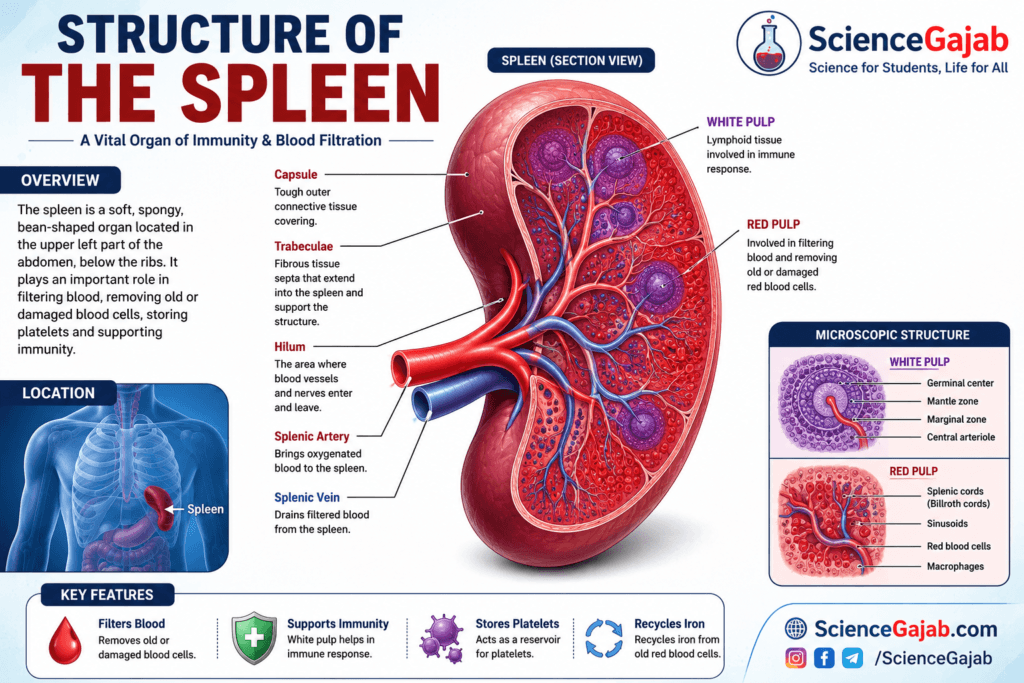
The spleen consists of two main regions:
Use up and down arrow keys to resize the meta box pane.
White Pulp
Use up and down arrow keys to resize the meta box pane.
The white pulp contains immune cells such as:
- Lymphocytes (B cells and T cells)
- Macrophages
- Dendritic cells
Its primary role is to recognize and fight infections.
🩸 What Happens When You Transfuse Blood to a Person?
Red Pulp
The red pulp is responsible for:
- Filtering blood
- Removing old red blood cells
- Recycling iron
- Storing platelets
- Removing damaged blood cells
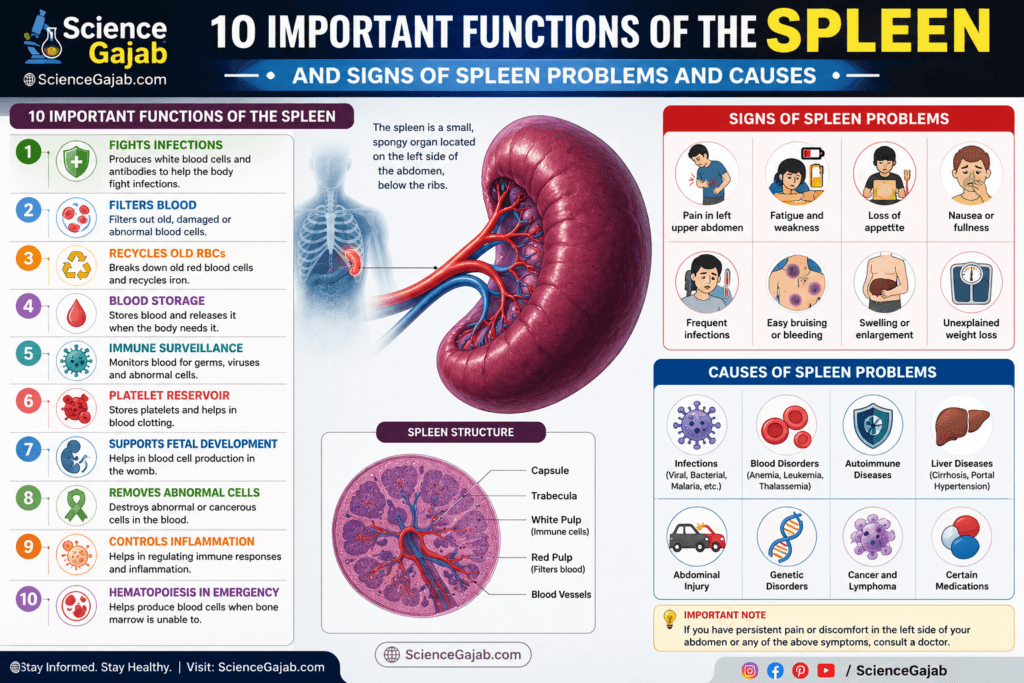
10 Important Functions of the Spleen
1. Filters Blood
The spleen acts as a natural blood filter.
It removes:
- Dead cells
- Damaged cells
- Microorganisms
- Cellular debris
This helps maintain healthy blood circulation.
2. Removes Old Red Blood Cells
Red blood cells normally survive for about 120 days.
As they age, they become less flexible.
The spleen detects and removes these worn-out cells from circulation.
3. Recycles Iron
After breaking down old red blood cells, the spleen recovers iron from hemoglobin.
The recycled iron is transported back to the bone marrow to help produce new red blood cells.
Signs of Anemia: 15 Warning Symptoms You Should Never Ignore
4. Helps Fight Infections
One of the spleen’s most important roles is supporting immunity.
It helps defend against bacteria, viruses, and other pathogens by:
- Producing antibodies
- Activating lymphocytes
- Filtering microbes from the bloodstream
Doctors Follow This Rule to Stop Infections (Do You?) Hand Hygiene: 7 Steps That Kill 99% Germs!
5. Produces Immune Cells
The white pulp contains millions of:
- B lymphocytes
- T lymphocytes
These cells recognize harmful microorganisms and coordinate immune responses.
💉 How Vaccines Work (The Science Explained)
6. Stores Platelets
Approximately one-third of the body’s platelets may be temporarily stored in the spleen.
If needed, platelets can be released into the bloodstream to help control bleeding.
7. Removes Damaged Platelets
The spleen also clears old or damaged platelets from circulation, helping maintain normal platelet function.
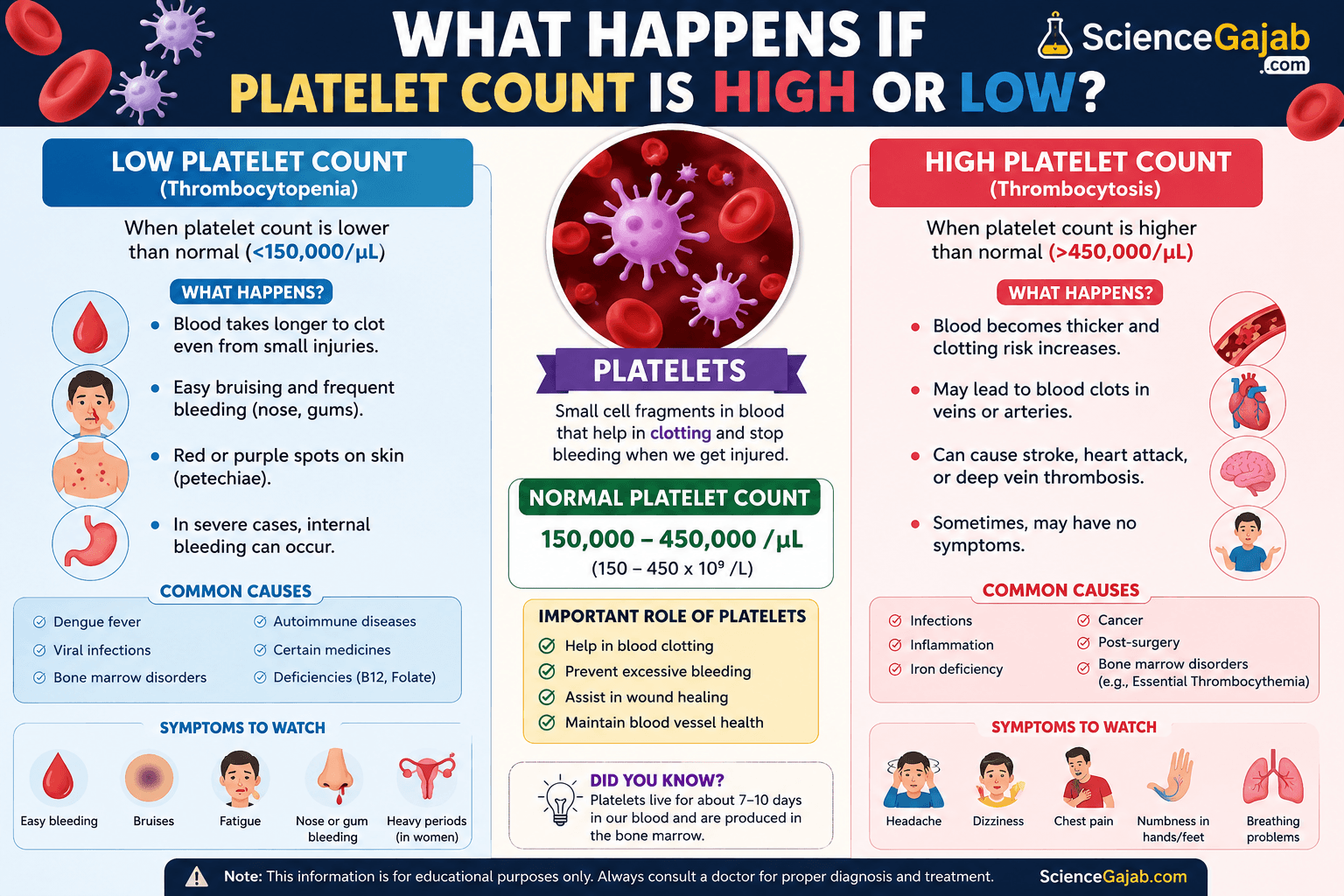
What happens if platelet count is abnormal
8. Acts as a Blood Reservoir
The spleen stores a small reserve of blood.
In some animals this reserve is released during heavy blood loss. In humans, this function is less pronounced but the spleen still serves as a reservoir for blood cells.
9. Produces Blood Cells Before Birth
During fetal development, the spleen helps produce:
- Red blood cells
- White blood cells
After birth, the bone marrow becomes the primary site of blood cell production.
10. Maintains Healthy Blood Composition
By removing abnormal cells and microorganisms, recycling iron, and supporting immune function, the spleen contributes to healthy blood composition and overall homeostasis.
Why Is the Spleen Important?
Without a healthy spleen:
- The risk of certain severe bacterial infections increases.
- Damaged blood cells remain in circulation longer.
- The body’s ability to filter blood is reduced.
- Immune responses to some bacteria become less effective.
Immune System: How Your Body Fights Diseases
Can You Live Without a Spleen?
Yes.
People can live without a spleen because the liver, bone marrow, and lymph nodes take over many of its functions.
However, individuals without a spleen have a higher risk of serious infections, particularly from bacteria such as:
- Streptococcus pneumoniae
- Haemophilus influenzae type b
- Neisseria meningitidis
Doctors often recommend certain vaccinations and may prescribe preventive antibiotics in specific situations after spleen removal.
Common Diseases Affecting the Spleen
Splenomegaly (Enlarged Spleen)
Causes include:
- Viral infections (such as infectious mononucleosis)
- Liver disease
- Blood disorders
- Certain cancers
Symptoms may include fullness in the upper left abdomen, pain, or feeling full after eating small meals.
Splenic Rupture
Usually caused by:
- Trauma
- Road traffic accidents
- Sports injuries
A ruptured spleen can cause life-threatening internal bleeding and requires immediate medical attention.
Hypersplenism
An overactive spleen removes blood cells too quickly, which can lead to:
- Anemia
- Low white blood cell count
- Low platelet count
Sickle Cell Disease
Repeated blockage of blood vessels within the spleen can damage the organ over time, reducing its ability to fight infection.
Signs of Anemia: 15 Warning Symptoms You Should Never Ignore
Signs of Spleen Problems
See a healthcare professional if you experience:
- Pain in the upper left abdomen
- Pain that spreads to the left shoulder
- Feeling full after eating a small amount
- Frequent infections
- Easy bruising or bleeding
- Unexplained fatigue
Seek emergency care after significant abdominal trauma, especially if accompanied by severe pain, dizziness, or fainting.
How to Keep Your Spleen Healthy
You can help protect your spleen by:
- Wearing seat belts and protective sports equipment to reduce injury risk.
- Staying up to date with recommended vaccinations.
- Practicing good hygiene to reduce infections.
- Managing chronic medical conditions.
- Avoiding excessive alcohol intake to reduce the risk of liver disease, which can affect the spleen.
- Seeking prompt treatment for infections when appropriate.
Complete Blood Count (CBC) Explained: What Every Blood Test Value Means
Interesting Facts About the Spleen
- It is the largest lymphatic organ in the human body.
- It filters hundreds of liters of blood each day.
- It contains both white pulp (immune tissue) and red pulp (blood-filtering tissue).
- The spleen helps recycle iron from old red blood cells.
Frequently Asked Questions (FAQs)
What is the main function of the spleen?
The spleen filters blood, removes old blood cells, helps fight infections, stores platelets, and recycles iron.
Can a person live without a spleen?
Yes. People can live without a spleen, but they have a higher risk of certain infections and should follow medical advice regarding vaccinations and preventive care.
Does the spleen produce blood cells?
During fetal development, the spleen helps produce blood cells. In healthy adults, the bone marrow is the primary site of blood cell production, although the spleen may resume blood cell production in some disease states.
What happens when the spleen enlarges?
An enlarged spleen may trap more blood cells than normal, causing low blood cell counts and discomfort in the upper left abdomen.
Is the spleen part of the immune system?
Yes. The spleen is a key organ of the lymphatic and immune systems.
Key Takeaways
- The spleen is the largest lymphatic organ and plays an important role in immunity.
- It filters blood, removes old red blood cells, stores platelets, recycles iron, and helps fight infections.
- Although people can live without a spleen, they are more susceptible to certain bacterial infections.
- Persistent pain or enlargement of the spleen should be evaluated by a healthcare professional.
Why Trust ScienceGajab?
Medical Review Process: This article is based on standard anatomy, physiology, hematology, and immunology references. It is intended for educational purposes only and should not replace professional medical advice, diagnosis, or treatment.
Author: Dr Sanjay Prajapati (MBBS)
Reviewed by: ScienceGajab Editorial Team
Last Updated: June 2026
References
- Guyton & Hall Textbook of Medical Physiology.
- Gray’s Anatomy.
- Harrison’s Principles of Internal Medicine.
- Abbas, Cellular and Molecular Immunology.
- American Society of Hematology – Patient Education.
https://www.facebook.com/sciencegajab/