Imagine trying to move your hand… but your brain’s signal never reaches the muscles.
That is what paralysis feels like.
Paralysis is one of the most frightening medical conditions because it can suddenly affect movement, speech, breathing, or even the entire body. Some people recover partially, while others may live with permanent weakness.
But what actually happens inside the body during paralysis?
In this simple guide, you’ll learn:
- What paralysis really is
- How the brain and nerves control movement
- What happens during paralysis
- Early warning signs
- Different types of paralysis
- Causes like stroke and spinal injury
- Treatment and recovery
- When paralysis becomes dangerous
🧠 How the Body Normally Moves
Before understanding paralysis, we need to understand how movement normally happens.
Your body moves through teamwork between:
- The brain
- Spinal cord
- Nerves
- Muscles
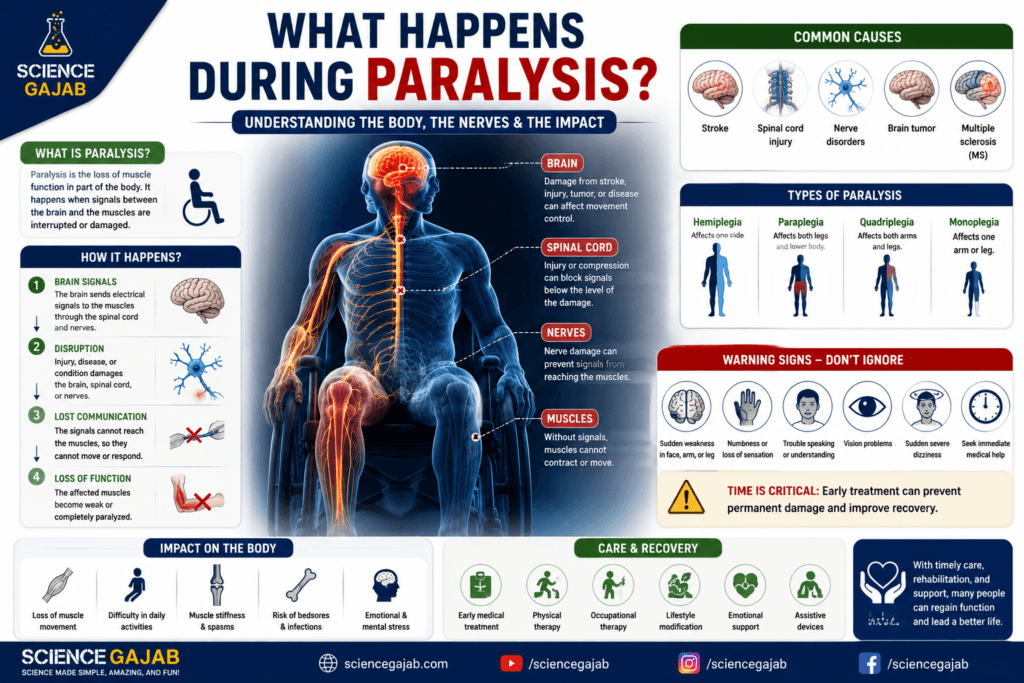
The brain sends electrical messages through the spinal cord and nerves to muscles.
For example:
- You decide to lift your arm
- Brain creates a signal
- Signal travels through nerves
- Arm muscles receive the message
- Arm moves
This system works within milliseconds.
🧠 Blood Supply of the Brain: The Hidden Network That Keeps You Alive (Explained Simply!)
🚨 What Is Paralysis?
Paralysis means loss of muscle movement in part of the body.
It happens when signals between the brain and muscles become blocked or damaged.
The muscles themselves may still exist, but they stop receiving proper instructions.
As a result:
- The body part becomes weak
- Movement becomes difficult
- Sometimes movement stops completely
Silent Signs of Heart Disease You Should Never Ignore
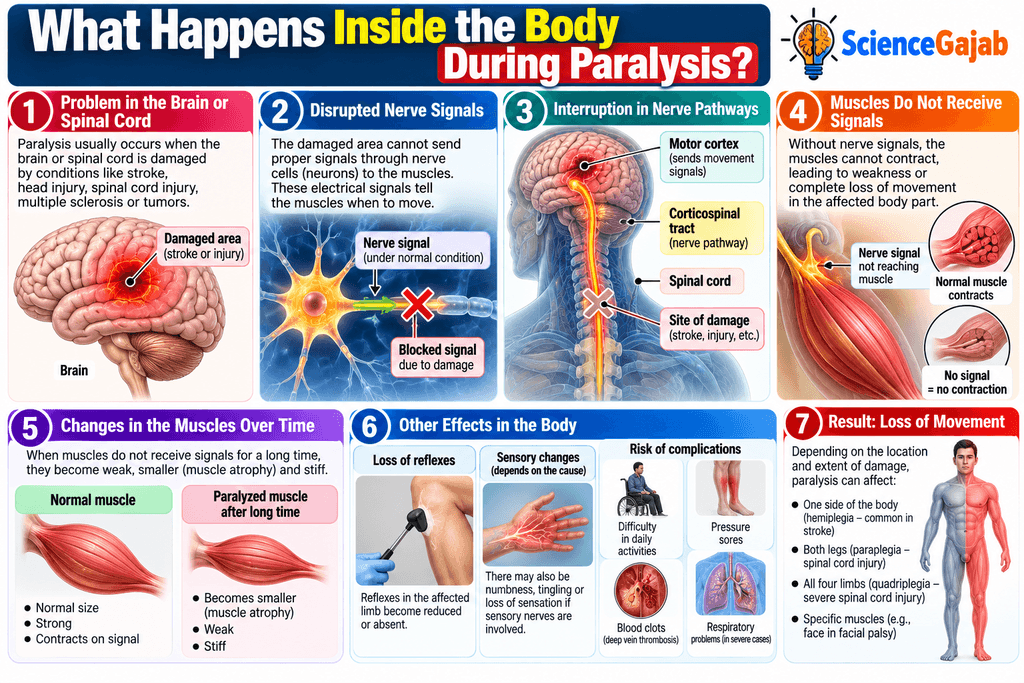
⚡ What Happens Inside the Body During Paralysis?
The main problem is interruption of nerve communication.
Think of nerves like electrical wires.
If the wire gets cut, electricity cannot reach the machine.
Similarly:
- Brain sends movement signals
- But damaged nerves block them
- Muscles no longer respond properly
This leads to:
- Weakness
- Loss of movement
- Loss of sensation
- Muscle shrinking over time
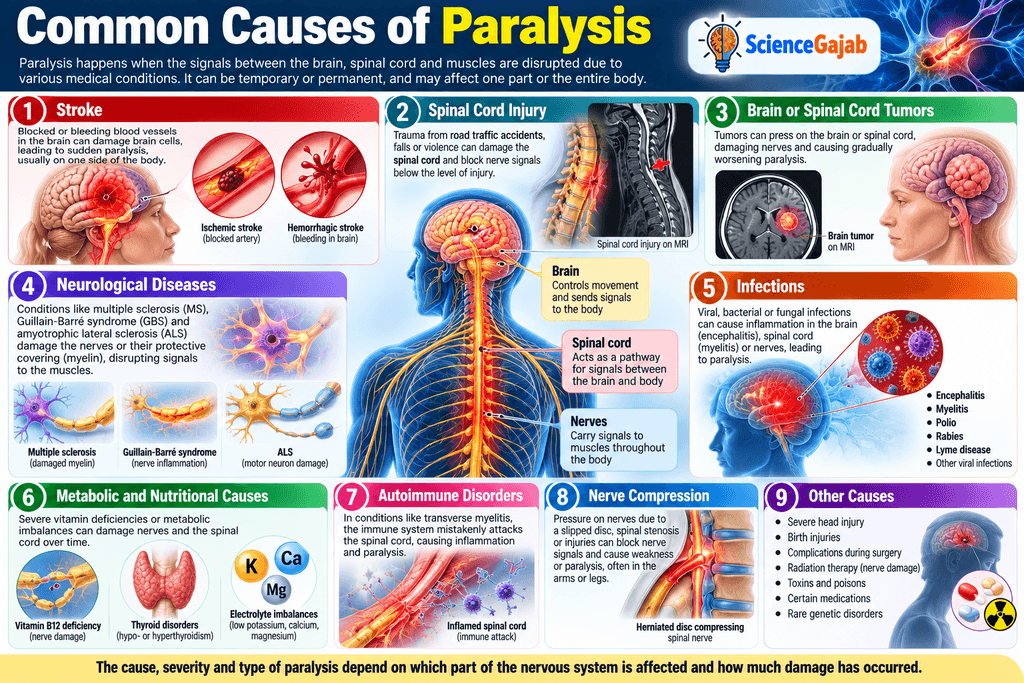
🩸 Common Causes of Paralysis
Many conditions can damage nerves or the brain.
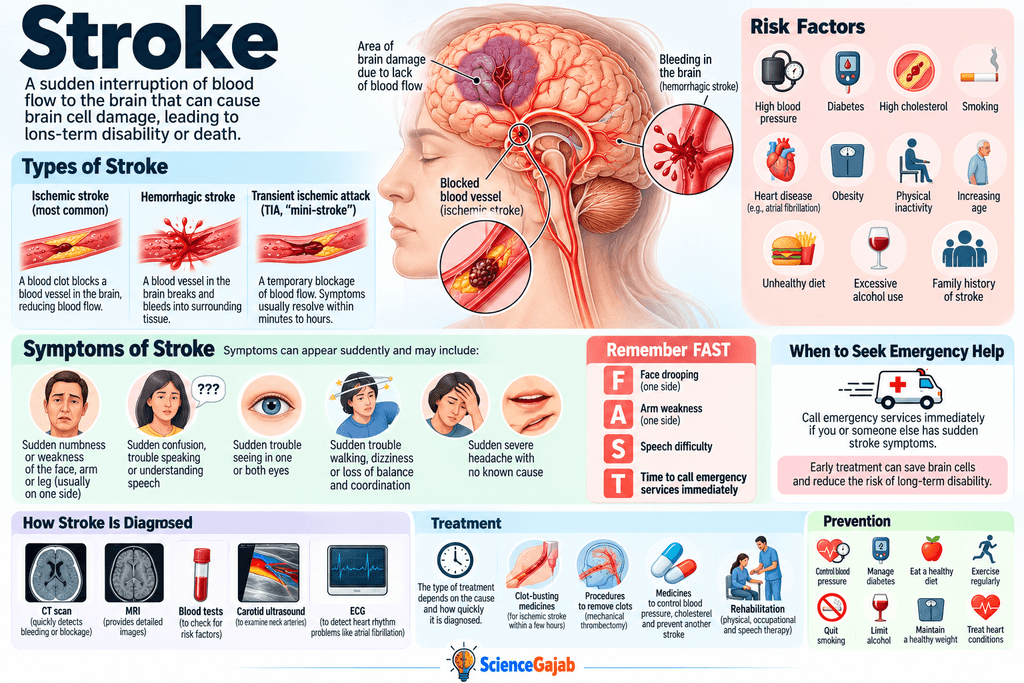
1. Stroke (Most Common Cause)
A stroke happens when blood supply to part of the brain suddenly stops.
Without oxygen, brain cells begin dying within minutes.
If the damaged brain area controls movement:
- One side of the body may become weak
- Face may droop
- Speech may become unclear
This is called hemiplegia or hemiparesis.
2. Spinal Cord Injury
The spinal cord carries messages between the brain and body.
Accidents can damage it:
- Road accidents
- Falls
- Sports injuries
If the spinal cord gets injured:
- Signals cannot travel below the injury level
- Legs or arms may stop moving
3. Nerve Diseases
Certain diseases slowly damage nerves:
- Guillain-Barré syndrome
- Multiple sclerosis
- Motor neuron disease
These conditions interfere with nerve communication.
Can Low Vitamins Damage Nerves? (Simple Explanation You Can Trust)
4. Brain Injury
Severe head injuries may damage movement centers in the brain.
5. Infections
Some infections affect nerves:
- Polio
- Meningitis
- Viral infections
Modes of Virus Transmission with Examples (Airborne, Vector, Contact) – Easy Guide for Students
🚨 Early Warning Signs Before Paralysis
Sometimes paralysis appears suddenly.
Other times warning signs happen first.
Possible warning symptoms:
- Sudden weakness
- Numbness
- Tingling
- Difficulty speaking
- Facial drooping
- Loss of balance
- Blurred vision
- Severe dizziness
These symptoms should never be ignored.
🚨 Early Signs of Vitamin B12 Deficiency — Don’t Ignore These Warning Signals!
🧍 Different Types of Paralysis
Paralysis can affect different body parts.
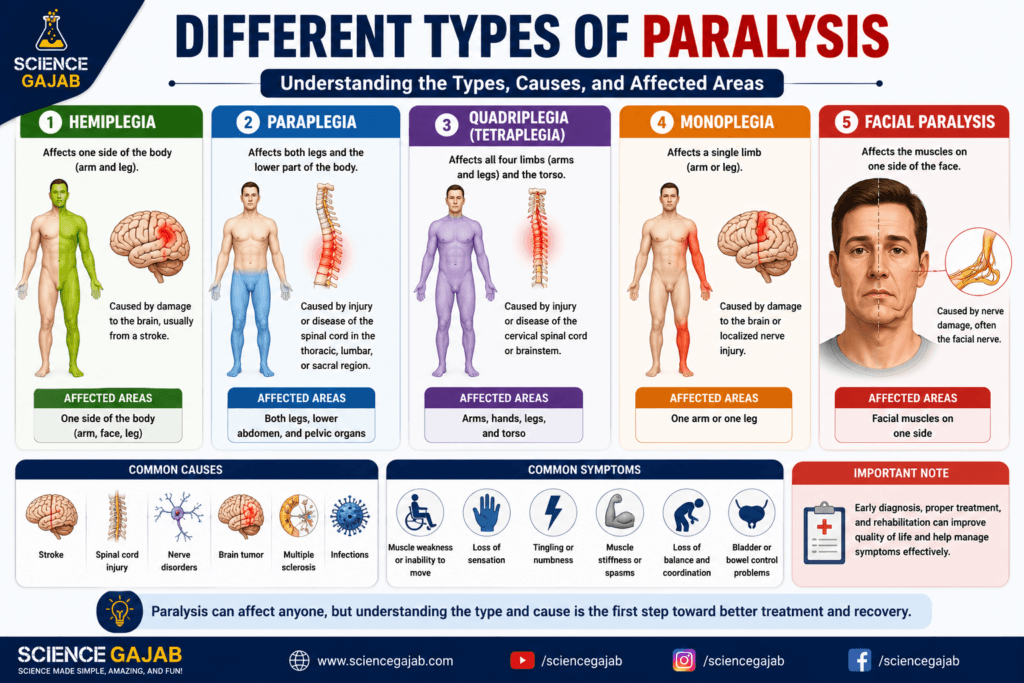
1. Monoplegia
Only one limb becomes paralyzed.
Example:
- One arm affected
2. Hemiplegia
One side of the body becomes paralyzed.
Usually caused by stroke.
3. Paraplegia
Both legs become paralyzed.
Often due to spinal cord injury.
4. Quadriplegia
All four limbs become paralyzed.
This is usually severe spinal cord damage.
⚠️ Paralysis Can Be Partial or Complete
Partial Paralysis
Some movement remains.
Complete Paralysis
No movement at all.
🧠 What Happens in the Brain During Stroke Paralysis?
The brain controls opposite body sides.
Right brain controls left body side.
Left brain controls right body side.
If stroke damages the left brain:
- Right arm and leg may become weak
If damage is severe:
- Complete paralysis may occur
😶 Why Does the Face Droop During Paralysis?
Facial muscles are controlled by nerves from the brain.
During stroke:
- Facial muscles lose nerve signals
- One side of face becomes weak
- Smile becomes uneven
- Eye may not close properly
🗣️ Why Speech Problems Happen
Some brain areas control speech.
Damage can cause:
- Slurred speech
- Difficulty understanding words
- Inability to speak properly
💓 Can Paralysis Affect Breathing?
Yes.
Severe paralysis can affect muscles needed for breathing.
This becomes life-threatening and may require emergency medical support.
🦵 What Happens to Muscles After Paralysis?
Without nerve stimulation:
- Muscles become weak
- Muscles shrink (atrophy)
- Stiffness develops
- Joint movement decreases
This is why physiotherapy is very important.
😔 Emotional Effects of Paralysis
Paralysis affects mental health too.
Many patients experience:
- Fear
- Depression
- Anxiety
- Frustration
Family support becomes extremely important during recovery.
⏳ Can Paralysis Be Temporary?
Sometimes yes.
Temporary paralysis may happen due to:
- Minor stroke
- Nerve inflammation
- Bell’s palsy
- Certain infections
Early treatment improves recovery chances.
🚑 When Paralysis Becomes a Medical Emergency
Call emergency services immediately if someone develops:
- Sudden weakness
- Facial drooping
- Slurred speech
- Sudden inability to walk
- Loss of consciousness
Especially if symptoms appear suddenly.
Stroke treatment works best within the first few hours.
🧪 How Doctors Diagnose Paralysis
Doctors examine:
- Muscle strength
- Reflexes
- Sensation
- Balance
- Brain function
Tests may include:
- CT scan
- MRI
- Blood tests
- Nerve studies
💉 Treatment of Paralysis
Treatment depends on the cause.
🩸 Stroke Treatment
Doctors may use:
- Clot-busting medicines
- Blood thinners
- Blood pressure control
Fast treatment can save brain tissue.
🦴 Spinal Cord Injury Treatment
Treatment may involve:
- Surgery
- Stabilization
- Rehabilitation
💪 Physiotherapy
One of the most important parts of recovery.
Physiotherapy helps:
- Improve muscle strength
- Prevent stiffness
- Train balance
- Improve walking ability
Recovery often takes months.
🧠 Occupational Therapy
Helps patients perform daily activities again:
- Eating
- Dressing
- Writing
- Bathing
❤️ Emotional Rehabilitation
Mental support matters greatly.
Counseling and family encouragement help recovery.
📈 Can Paralysis Improve?
Some people recover well.
Others may recover partially.
Recovery depends on:
- Cause
- Severity
- Treatment timing
- Physiotherapy
- Age
- Overall health
Earlier treatment usually gives better outcomes.
Parts of the Human Brain and Their Functions Explained | Science Gajab
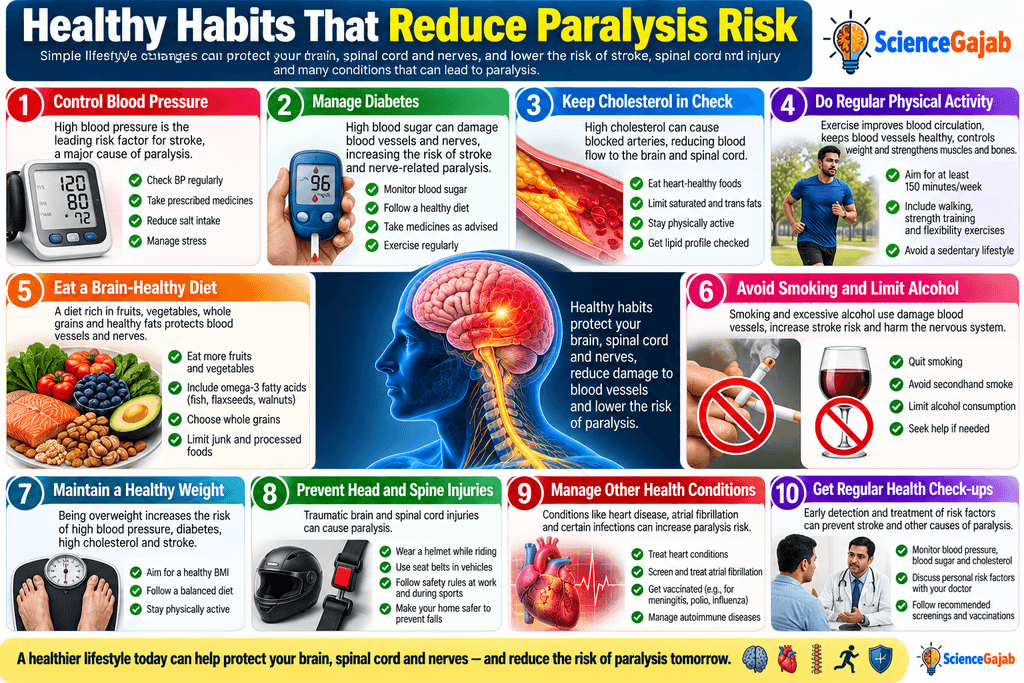
🥗 Healthy Habits That Reduce Paralysis Risk
You can lower stroke-related paralysis risk by:
- Controlling blood pressure
- Managing diabetes
- Exercising regularly
- Avoiding smoking
- Reducing alcohol
- Eating healthy foods
❓ Frequently Asked Questions
Yes. Stroke-related paralysis often appears suddenly.
No. Some people recover partially or fully depending on the cause
Stress alone usually does not cause true paralysis, but severe neurological conditions may worsen during stress.
Yes. Physiotherapy is one of the most important recovery treatments.
Sudden facial paralysis should always be medically evaluated because stroke can sometimes be the cause.
Final Thoughts
Paralysis happens when communication between the brain, nerves, and muscles gets interrupted.
What starts inside the nervous system can quickly affect:
- Movement
- Speech
- Balance
- Daily life
The most important thing is recognizing symptoms early.
Signs like:
- Sudden weakness
- Facial drooping
- Slurred speech
- Numbness
should never be ignored.
Quick medical treatment can sometimes save movement, brain function, and even life itself.
Medical Disclaimer
This article is for educational purposes only and should not replace professional medical advice, diagnosis, or treatment. Always consult a qualified healthcare provider for personal medical concerns.
Trusted Medical References
- World Health Organization (WHO)
- National Institute of Neurological Disorders and Stroke (NINDS)
- Mayo Clinic
- NHS UK
Author Information
Written for ScienceGajab by Editorial Team using simplified medical explanations to help students, patients, and general readers understand human body conditions in easy language.
Under Guidance :Dr Sanjay Prajapati (MBBS)