silent-signs-of-heart-disease
Silent Signs of Heart Disease
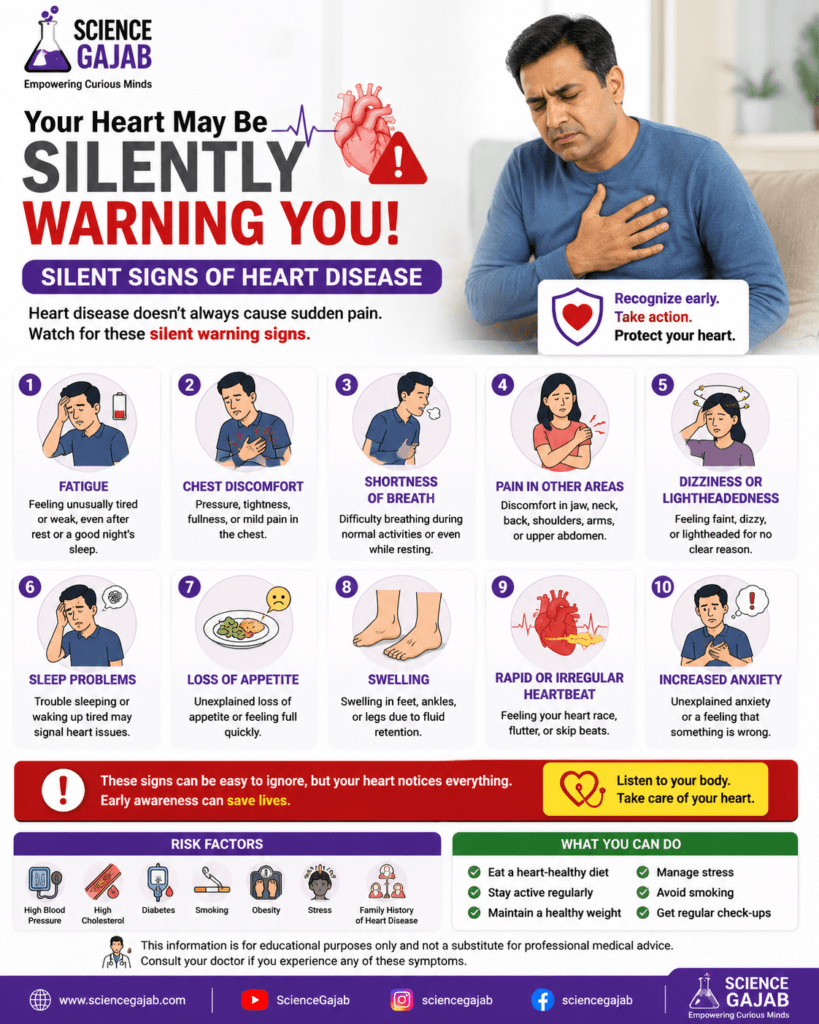
Heart disease does not always begin with severe chest pain.
In many people, the body gives subtle warning signs for weeks, months, or even years before a major heart problem occurs.
These “silent signs” are often ignored because they may look harmless or unrelated.
A person may experience:
- Unusual fatigue
- Breathlessness
- Heavy chest
- Swelling in legs
- Fast heartbeat
- Dizziness
Sometimes these symptoms appear quietly and gradually.
Understanding these early warning signs can help detect heart disease before a serious emergency like a heart attack occurs.
In this article, we’ll explain:
- Silent signs of heart disease
- Why they happen
- Symptoms men and women often ignore
- When to seek medical help
- Ways to protect heart health
Everything is explained in simple human language.
🫀 Human Circulatory System Basics: A Complete Guide
What Is Heart Disease?
Heart disease refers to conditions affecting:
- Heart muscles
- Blood vessels
- Heart rhythm
- Heart valves
Common types include:
- Coronary artery disease
- Heart failure
- Arrhythmias
- Heart attack
Structure and Function of the Human Heart | Circulatory System Explained
Why Heart Disease Can Be Silent
The body often adapts gradually to reduced blood flow.
Because of this:
- Symptoms may appear slowly
- Pain may be mild or absent
- Signs may resemble normal tiredness
Some people discover heart disease only after serious complications occur.
Why Does the Heart Beat Faster During Exercise? | Science Explained
1. Unusual Fatigue
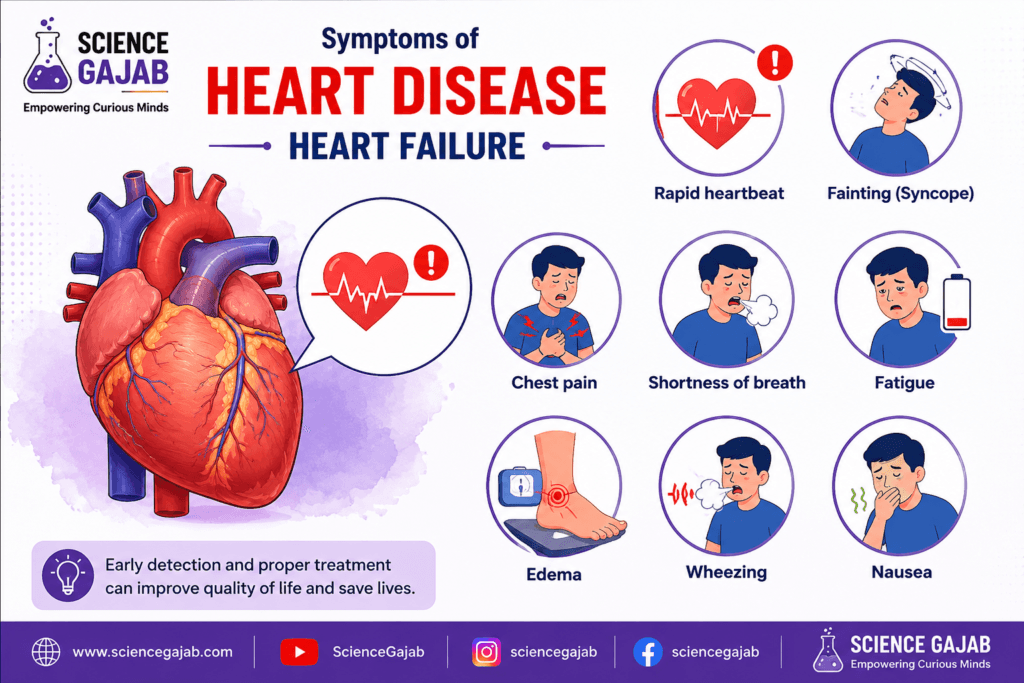
Persistent tiredness is one of the most commonly ignored warning signs.
A person may feel:
- Exhausted easily
- Weak after mild activity
- Low energy throughout the day
Why It Happens
The heart may not pump blood efficiently, reducing oxygen supply to muscles.
❤️ What Happens During a Heart Attack? The Science Explained
2. Shortness of Breath
Breathlessness may occur:
- While climbing stairs
- During walking
- Even while resting in severe cases
5
Why It Happens
Weak heart pumping can cause fluid buildup in the lungs.
Your Heart Beats 100,000 Times a Day—But Never Gets Tired. Here’s Why
3. Chest Discomfort (Not Always Severe Pain)
Heart disease may cause:
- Pressure
- Tightness
- Burning
- Heaviness
Some people describe it as:
- Indigestion
- Gas
- Mild discomfort
Especially in women, chest pain may be less dramatic.
Your Heart Can Stop in Minutes — Here’s How Artery Blockage Happens
4. Fast or Irregular Heartbeat
The heart may feel:
- Racing
- Fluttering
- Skipping beats
This may indicate abnormal heart rhythm.
Symptoms
- Palpitations
- Dizziness
- Weakness
Why Does Heartbeat Increase Suddenly? (Simple Explanation You Can Trust)
5. Swelling in Feet or Ankles
Fluid buildup may cause:
- Swollen feet
- Puffy ankles
- Tight shoes
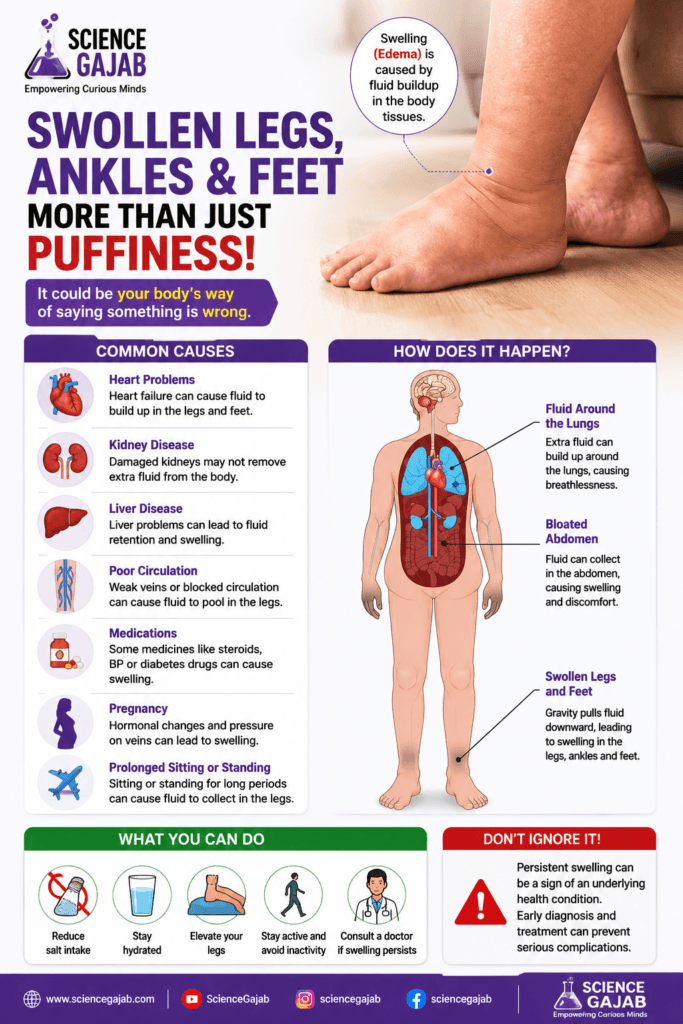
Why It Happens
Poor heart pumping causes fluid retention.
6. Dizziness or Lightheadedness
Reduced blood flow to the brain may cause:
- Dizziness
- Fainting sensation
- Weakness
This may occur during:
- Standing
- Exercise
- Sudden activity
Difference Between Arteries and Veins (With Easy Diagram) — Simple Language
7. Pain in Jaw, Neck, Arm, or Back
Heart-related pain does not always stay in the chest.
Pain may spread to:
- Left arm
- Jaw
- Neck
- Upper back
Women especially may experience unusual pain locations.
Why Does Blood Pressure Suddenly Increase? (Simple Explanation You Can Trust)
8. Excessive Sweating
Sudden unexplained sweating may occur during heart problems.
Especially concerning if associated with:
- Chest discomfort
- Weakness
- Nausea
9. Nausea or Indigestion
Some heart problems mimic digestive issues.
Symptoms may include:
- Acidity
- Stomach discomfort
- Nausea
- Bloating
This is more common in women and diabetics.
Symptoms Your Nerves Are Damaged (Early Signs You Should Never Ignore)
10. Persistent Cough
Heart failure may cause fluid buildup in lungs leading to:
- Chronic cough
- Wheezing
- Breathlessness
11. Reduced Exercise Tolerance
If simple activities suddenly become difficult, it may signal heart disease.
Examples:
- Climbing stairs
- Walking
- Carrying groceries
12. Sleep Problems
Some people with heart disease experience:
- Difficulty sleeping flat
- Sudden nighttime breathlessness
- Frequent awakening
Signs of Anemia: 15 Warning Symptoms You Should Never Ignore
13. Cold Sweats and Weakness
Sudden cold sweating with weakness may indicate reduced blood flow to the heart.
Silent Heart Attack
Some heart attacks occur with minimal symptoms.
This is called:
Silent Myocardial Infarction
A person may only notice:
- Fatigue
- Mild chest discomfort
- Breathlessness
Diabetics are at higher risk.
Signs of Diabetes Visible on Feet: 10 Warning Signs You Should Never Ignore
Why Diabetics May Miss Heart Disease Signs
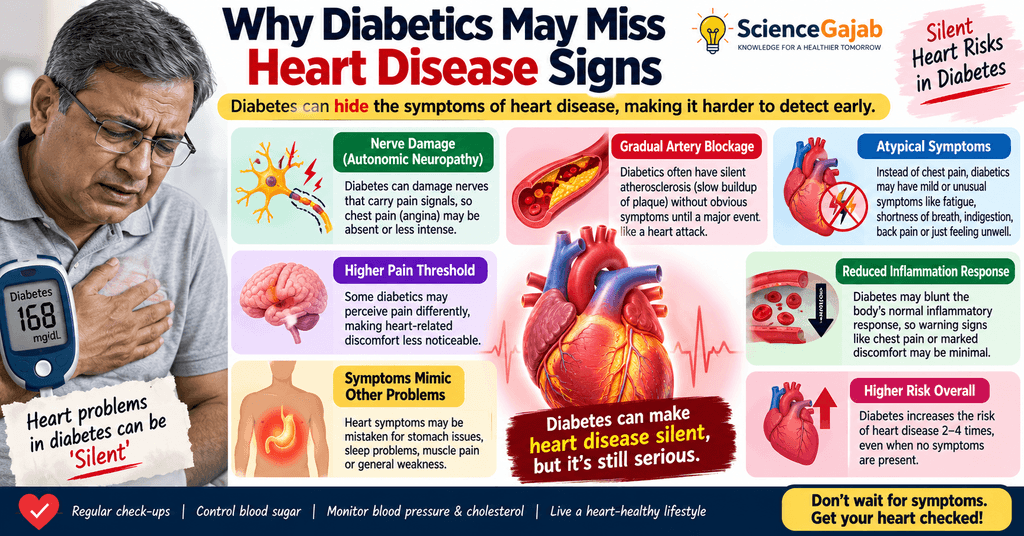
Diabetes can damage nerves, reducing pain sensation.
As a result:
- Chest pain may be mild
- Heart attacks may go unnoticed
Heart Disease Symptoms in Women
Women may experience:
- Fatigue
- Nausea
- Back pain
- Jaw pain
- Breathlessness
Classic crushing chest pain is not always present.
Heart Disease Symptoms in Men
Men more commonly experience:
- Chest pressure
- Arm pain
- Sweating
- Typical heart attack symptoms
Risk Factors for Heart Disease
Major risk factors include:
- High blood pressure
- Diabetes
- Smoking
- High cholesterol
- Obesity
- Stress
- Family history
How to Read Electrocardiograph (ECG)?
When Should You Seek Emergency Help?
Get urgent medical care if symptoms include:
- Severe chest pain
- Breathlessness
- Fainting
- Arm or jaw pain
- Sudden sweating
- Severe weakness
These may indicate a heart attack.
Difference Between Heartburn and Heart Disease
| Heartburn | Heart Disease |
|---|---|
| Burning after meals | Pressure/heaviness possible |
| Improves with antacids | May worsen with exertion |
| Acid-related | Blood flow problem |
Sometimes symptoms overlap.
How Doctors Diagnose Heart Disease
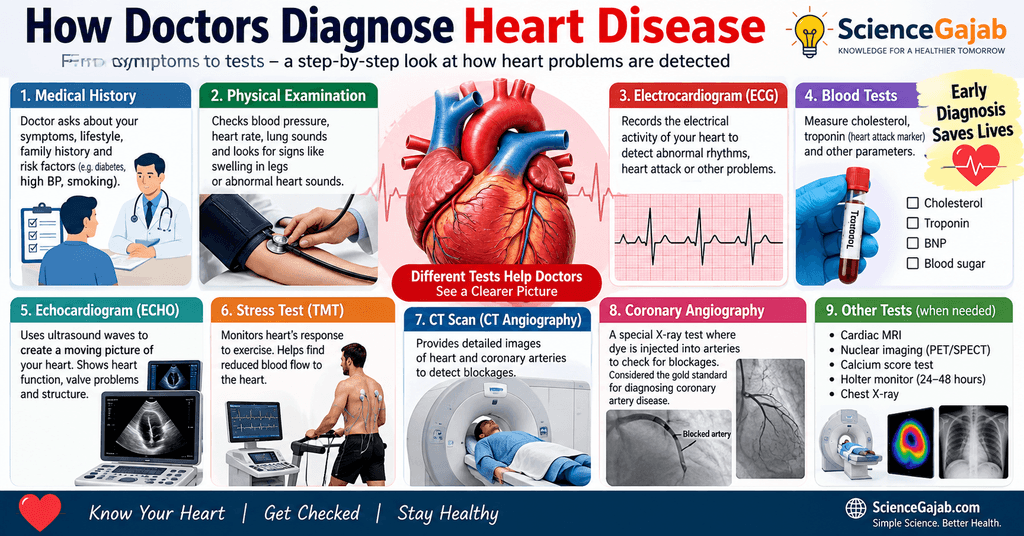
Doctors may use:
- ECG
- Echocardiography
- Blood tests
- Stress test
- Angiography
These help evaluate heart structure and blood flow.
Complete Blood Count (CBC) Explained: What Every Blood Test Value Means
How to Reduce Heart Disease Risk
1. Control Blood Pressure
Protects arteries.
2. Manage Diabetes
Reduces blood vessel damage.
3. Stop Smoking
Very important.
4. Exercise Regularly
Improves circulation and heart strength.
5. Eat Healthy Foods
Supports artery health.
6. Reduce Stress
Stress affects heart health.
Heart-Healthy Foods
Helpful foods include:
- Fruits
- Vegetables
- Oats
- Nuts
- Fish
- Whole grains
Limit:
- Excess salt
- Fried foods
- Smoking
- Alcohol excess
Functions of the Kidney: 12 Essential Roles Your Kidneys Play in Keeping You Healthy
Interesting Facts About Heart Disease
1. Heart Disease Is a Leading Global Cause of Death
2. Symptoms May Begin Years Earlier
3. Women Often Have Atypical Symptoms
Frequently Asked Questions (FAQs)
Yes, many people have silent or unusual symptoms.
Persistent unusual fatigue can sometimes indicate heart problems.
Can swollen feet indicate heart disease?
Yes, fluid retention may occur in heart failure.
Fatigue, breathlessness, sweating, and mild discomfort may occur
Immediately if severe chest discomfort or breathlessness occurs.
Final Thoughts
Heart disease often begins quietly.
The body may give subtle warning signs such as:
- Fatigue
- Breathlessness
- Swelling
- Dizziness
- Mild chest discomfort
Ignoring these symptoms can delay diagnosis and treatment.
Recognizing silent heart disease signs early may help prevent serious complications like heart attack or heart failure.
Your heart works every second of your life — paying attention to its warning signals is extremely important.
Medical Disclaimer
This article is for educational awareness only and does not replace professional medical advice, diagnosis, or treatment.
Sources & References
- American Heart Association
- Mayo Clinic educational resources
- Cardiology educational references
- Standard physiology textbooks
Reviewed Topic
Educational overview of silent heart disease symptoms, heart attack warning signs, circulation problems, and cardiac health explained in simple language for general readers.
Author : Dr Sanjay Prajapati (MBBS)