
Why Do My Hands Shake Sometimes
Why Do My Hands Shake Sometimes?
Have you ever noticed your hands shaking while holding a cup of tea, writing, using your phone, or speaking in front of a group? Occasional hand shaking is surprisingly common and is often harmless. In many cases, it is simply the body’s response to stress, fatigue, or temporary changes in blood sugar levels.
However, persistent or worsening hand tremors can sometimes signal an underlying medical condition that deserves attention.
Understanding why your hands shake can help you determine whether it’s a normal body reaction or something worth discussing with a healthcare professional.
What Is a Hand Tremor?
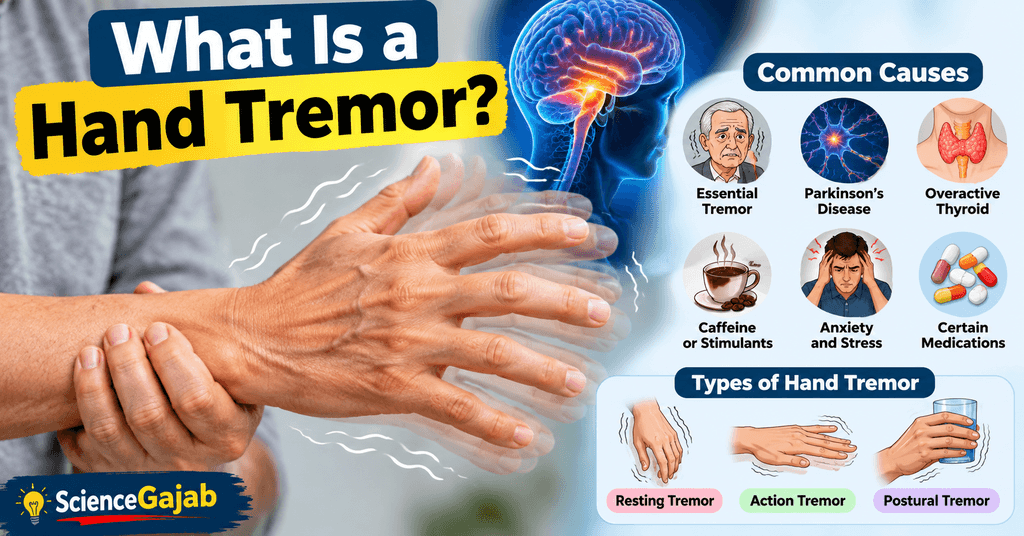
A hand tremor is an involuntary, rhythmic shaking movement of the hands.
Tremors may be:
- Mild or severe
- Temporary or persistent
- Present in one hand or both
- Noticeable only during certain activities
Most people experience minor tremors occasionally, even if they don’t realize it.
Is It Normal for Hands to Shake Sometimes?
Yes.
Everyone has a tiny natural tremor known as a physiological tremor.
Usually, this tremor is so small that it isn’t visible.
However, certain factors can temporarily make it more noticeable, including:
- Stress
- Anxiety
- Fatigue
- Caffeine
- Lack of sleep
In these situations, the shaking typically improves once the trigger is removed.
Common Causes of Temporary Hand Shaking
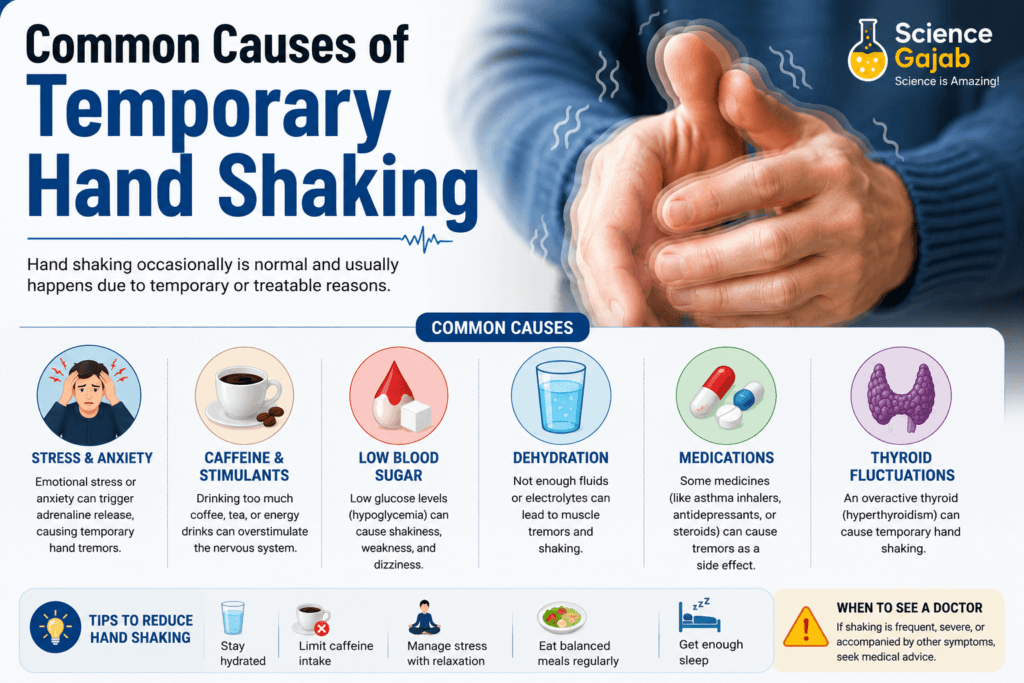
1. Stress and Anxiety
One of the most common causes of hand shaking is stress.
When you feel nervous or anxious, the body releases hormones such as adrenaline.
These hormones prepare the body for a “fight-or-flight” response by:
- Increasing heart rate
- Raising alertness
- Tightening muscles
As a result, your hands may shake.
Doctors Follow This Rule to Stop Infections (Do You?) Hand Hygiene: 7 Steps That Kill 99% Germs!
You may notice this during:
- Exams
- Public speaking
- Job interviews
- Emotional situations
2. Too Much Caffeine
Caffeine stimulates the nervous system.
Consuming large amounts through:
- Coffee
- Tea
- Energy drinks
- Soft drinks
can make tremors more noticeable.
People who are sensitive to caffeine may experience shaking even after relatively small amounts.
15 Best Foods to Improve Memory Naturally: Science-Backed Brain Nutrition
3. Low Blood Sugar
The brain depends heavily on glucose for energy.
When blood sugar drops too low, symptoms may include:
- Shaking hands
- Sweating
- Hunger
- Dizziness
- Weakness
This is particularly common if you:
- Skip meals
- Exercise intensely without eating
- Have diabetes
Eating a balanced meal or snack often improves symptoms quickly.
4. Lack of Sleep
Sleep is essential for proper nervous system function.
Insufficient sleep can lead to:
- Increased stress hormones
- Muscle fatigue
- Reduced coordination
As a result, hand tremors may become more noticeable.
5. Physical Exhaustion
After intense exercise or heavy physical activity, muscles may temporarily shake.
This occurs because muscle fibers become fatigued and require recovery time.
The shaking usually resolves on its own.
Silent Signs of Heart Disease You Should Never Ignore
Medical Causes of Hand Tremors
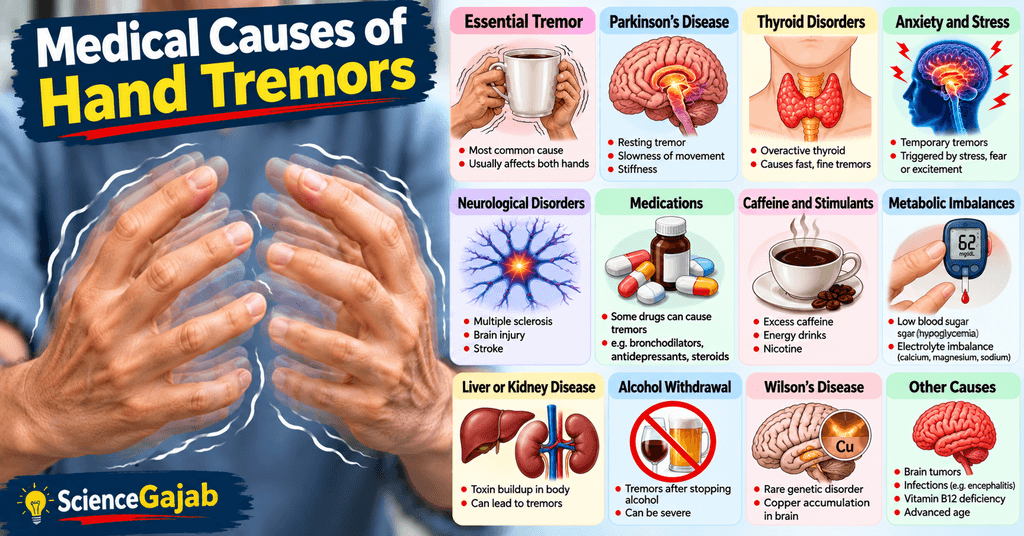
6. Essential Tremor
One of the most common movement disorders is Essential Tremor.
This condition causes rhythmic shaking that often affects:
- Hands
- Arms
- Head
- Voice
Essential tremor typically becomes more noticeable during activities such as:
- Writing
- Eating
- Holding objects
The condition often runs in families.
Understanding Hypothyroidism: Causes and Symptoms
7. Hyperthyroidism
The thyroid gland helps regulate metabolism.
An overactive thyroid can overstimulate the nervous system, leading to:
- Hand tremors
- Rapid heartbeat
- Weight loss
- Anxiety
- Sweating
Treating the thyroid condition often improves the tremor.
8. Certain Medications
Some medications may cause hand shaking as a side effect.
Examples include:
- Asthma medications
- Certain antidepressants
- Some stimulant medications
Never stop prescribed medication without consulting your healthcare provider.
Why Your Brain Suddenly Makes You Feel Dizzy
9. Parkinson’s Disease
Parkinson’s disease can cause a characteristic tremor.
This tremor often:
- Begins on one side
- Occurs at rest
- Progresses gradually
Other symptoms may include:
- Slowed movement
- Muscle stiffness
- Balance problems
It’s important to remember that occasional hand shaking does not automatically mean Parkinson’s disease.
Tingling in Hands and Feet: Causes, Symptoms & When to Worry
10. Neurological Conditions
Less commonly, tremors may be associated with conditions affecting the brain or nervous system.
Examples include:
- Multiple sclerosis
- Stroke-related damage
- Certain nerve disorders
Medical evaluation is important if symptoms are persistent or worsening.
🧠 Why Does Your Brain Forget Things? The Science Will Surprise You
Why Do My Hands Shake When I’m Nervous?
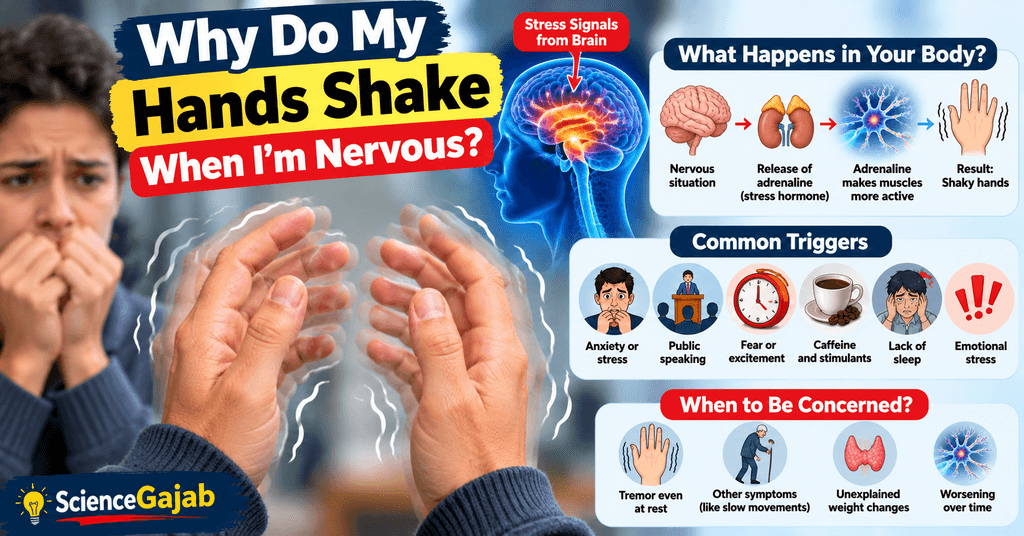
This is one of the most common questions people ask.
When you’re nervous, the body releases adrenaline.
Adrenaline:
- Increases muscle readiness
- Speeds up reactions
- Heightens alertness
These changes can produce visible shaking, especially in the hands.
The tremor usually improves once the stressful situation passes.
15 Best Foods to Improve Memory Naturally: Science-Backed Brain Nutrition
Why Do My Hands Shake When I Haven’t Eaten?
Low blood sugar is a common trigger.
When glucose levels fall:
- The body releases stress hormones.
- Muscles become more reactive.
- Tremors may develop.
Eating a healthy meal generally restores normal function.
Why Do My Hands Shake After Exercise?
After strenuous activity:
- Muscles become fatigued.
- Energy stores decrease.
- Nerve signals may become less stable temporarily.
This often causes temporary shaking that resolves with rest and hydration.
🧠 Blood Supply of the Brain: The Hidden Network That Keeps You Alive (Explained Simply!)
Can Dehydration Cause Hand Shaking?
Yes.
Dehydration can affect:
- Electrolyte balance
- Muscle function
- Nerve signaling
Symptoms may include:
- Tremors
- Weakness
- Dizziness
- Muscle cramps
Drinking fluids can help restore normal function.
Why Do Fingers Wrinkle in Water?
Why Do Older Adults Experience More Tremors?
As people age:
- Nervous system function changes
- Muscle control may decline slightly
- Essential tremor becomes more common
However, not all tremors are age-related, and persistent symptoms should still be evaluated.
How Are Hand Tremors Diagnosed?
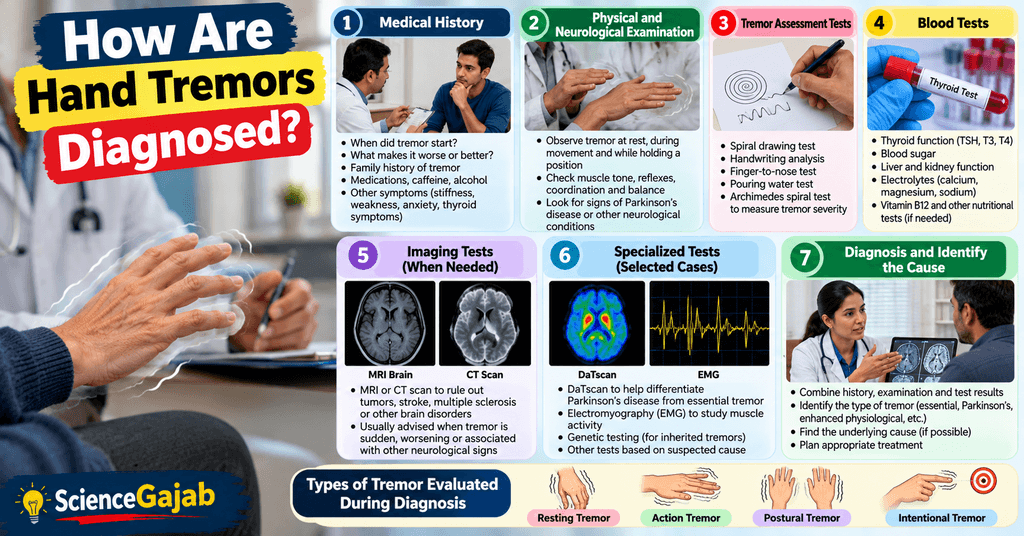
Doctors may assess:
Medical History
Questions may include:
- When did the tremor start?
- Does it occur at rest or during movement?
- Does stress worsen it?
Physical Examination
The doctor may observe:
- Writing
- Holding objects
- Finger movements
Blood Tests
These may check for:
- Thyroid problems
- Blood sugar abnormalities
- Electrolyte imbalances
Complete Blood Count (CBC) Explained: What Every Blood Test Value Means
Neurological Evaluation
If needed, additional tests may assess nervous system function.
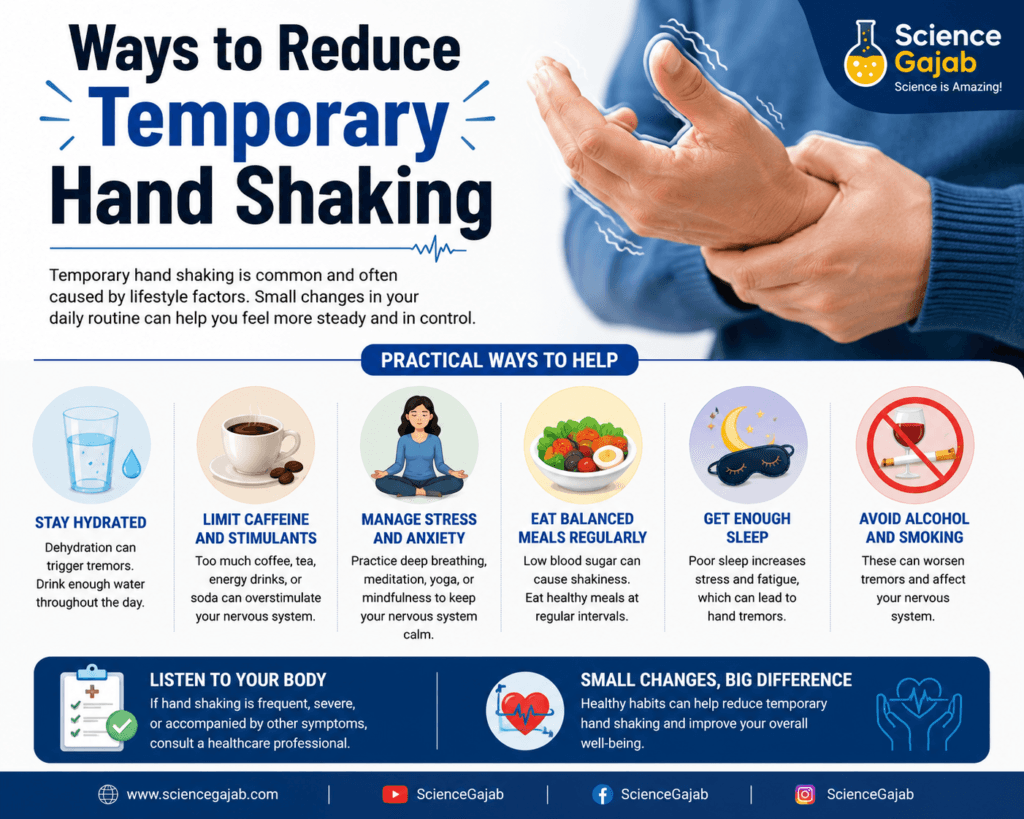
Ways to Reduce Temporary Hand Shaking
If the tremor is related to lifestyle factors, these strategies may help:
Get Enough Sleep
Aim for consistent, quality sleep.
Reduce Caffeine Intake
Limit coffee, energy drinks, and other stimulants if they trigger symptoms.
Manage Stress
Helpful techniques include:
- Deep breathing
- Meditation
- Regular exercise
- Relaxation exercises
Eat Regular Meals
Maintaining stable blood sugar levels can prevent tremors.
Stay Hydrated
Adequate fluid intake supports healthy nerve and muscle function.
When Should You See a Doctor?
Seek medical advice if:
- Tremors are worsening
- Shaking interferes with daily activities
- Tremors occur frequently without obvious triggers
- You experience weakness, balance problems, or other neurological symptoms
- The shaking persists despite lifestyle changes
Early evaluation can help identify treatable causes.
Interesting Facts About Hand Tremors
- Everyone has a tiny natural tremor.
- Stress can temporarily make tremors more visible.
- Caffeine is a common trigger.
- Essential Tremor affects millions of people worldwide.
- Not all tremors indicate a serious disease.
- Fatigue and low blood sugar frequently contribute to temporary shaking.
Frequently Asked Questions
Yes. Stress, fatigue, caffeine, and low blood sugar commonly cause temporary hand tremors.
Yes. Anxiety increases adrenaline levels, which can trigger shaking.
In some people, excessive caffeine consumption can increase tremors.
No. Most occasional tremors are caused by far more common and less serious factors.
Persistent, worsening, or disabling tremors should be evaluated by a healthcare professional.
Expert Perspective
Experience
Neurologists and movement-disorder specialists routinely evaluate patients with tremors and hand shaking.
Expertise
Research shows that tremors can result from normal physiological responses, lifestyle factors, medication effects, or neurological conditions.
Authoritativeness
This article is based on established medical knowledge from neurology, endocrinology, and movement-disorder research.
Trustworthiness
This content is for educational purposes only and should not replace professional medical evaluation or diagnosis.
Final Thoughts
Occasional hand shaking is usually harmless and often linked to stress, caffeine, fatigue, dehydration, or low blood sugar. In many cases, the tremor disappears once the underlying trigger is addressed.
However, persistent or worsening tremors should not be ignored, especially if they interfere with daily life or occur alongside other symptoms. Understanding the possible causes can help you take appropriate action and seek medical advice when necessary.
The next time your hands shake unexpectedly, remember that your body may simply be responding to temporary stress or fatigue—but if the problem persists, it’s worth getting it checked.
Author: ScienceGajab Editorial Team
Reviewed For Accuracy: Health & Science Content Review
Last Updated: sept 2026