
vitamin A deficiency symptoms
15 Vitamin A Deficiency Symptoms You Should Never Ignore (Early Warning Signs)
Reviewed by: ScienceGajab Medical Content Team
Reading Time: 14 Minutes
Last Updated: Oct 2026
Quick Answer
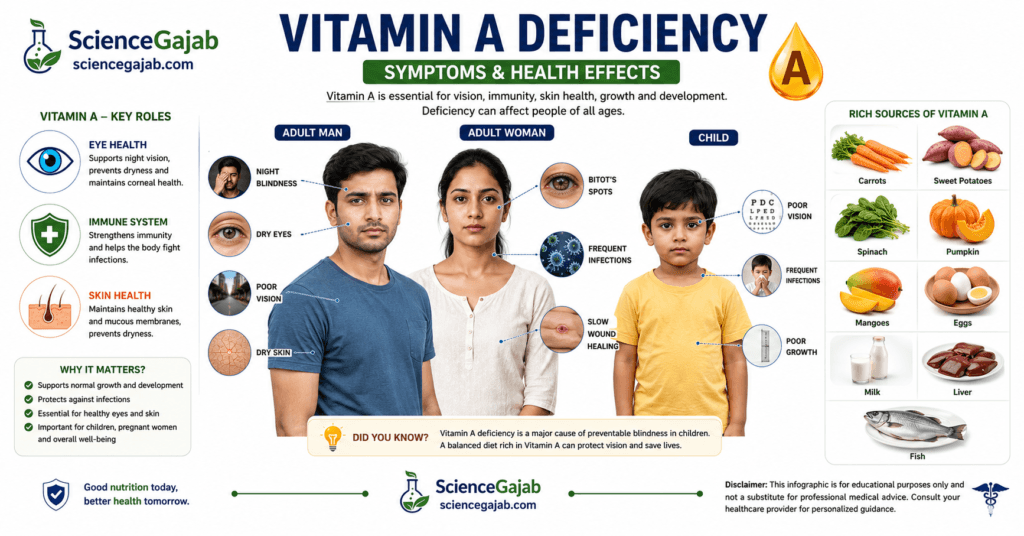
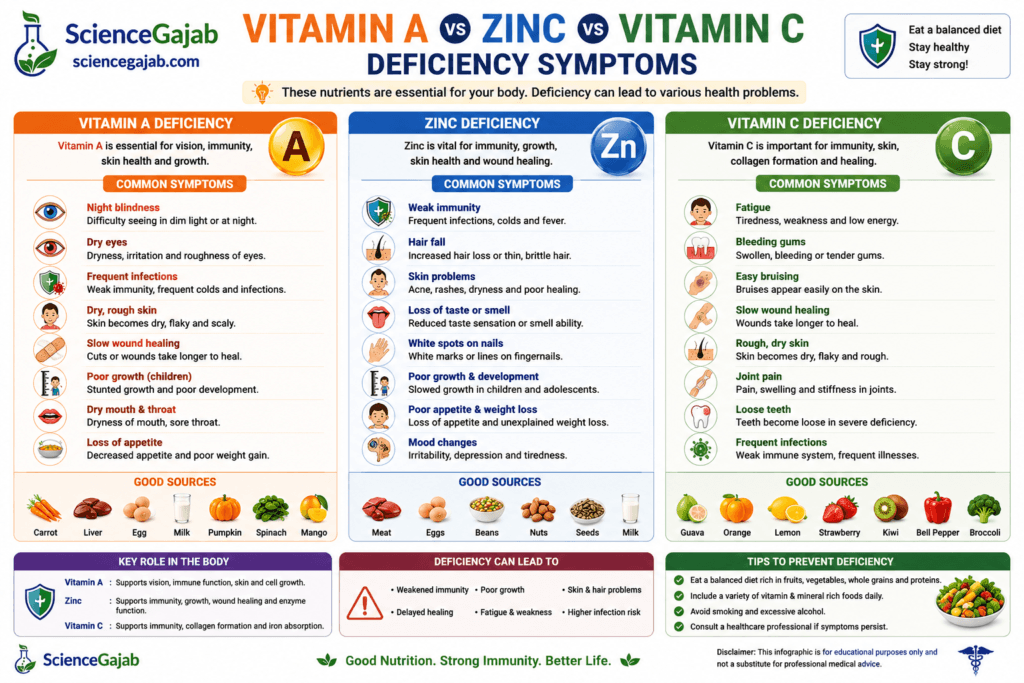
Vitamin A deficiency occurs when the body does not get enough vitamin A to support normal vision, immune function, skin health, and growth. Early symptoms include night blindness, dry eyes, dry skin, frequent infections, poor wound healing, and reduced vision in dim light. If untreated, severe deficiency can lead to xerophthalmia, corneal damage, permanent vision loss, and growth problems in children.
Fortunately, most cases improve with vitamin A-rich foods, treatment of the underlying cause, and vitamin A supplements when prescribed by a healthcare professional.
Table of Contents
- What Is Vitamin A?
- Why Is Vitamin A Important?
- Who Is at Risk?
- 15 Vitamin A Deficiency Symptoms
- Causes
- Risk Factors
- Diagnosis
- Treatment
- Best Vitamin A-Rich Foods
- Prevention
- FAQs
- Key Takeaways
Symptoms of Low Vitamins in Women (Early Signs You Should Never Ignore)
What Is Vitamin A?
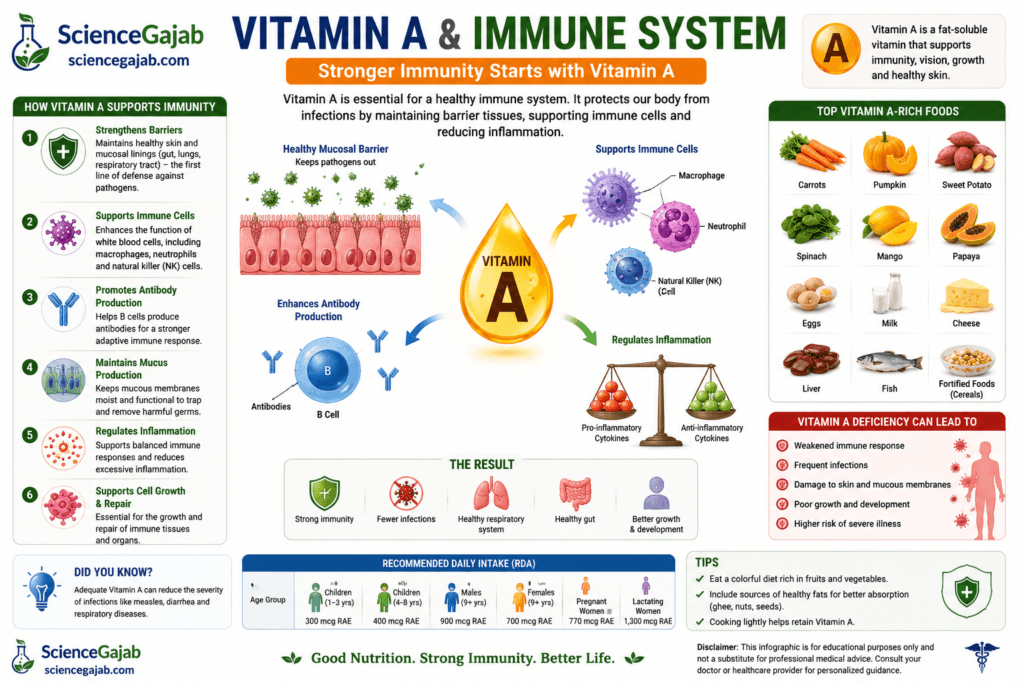
Vitamin A is a fat-soluble vitamin that plays an essential role in:
- Vision
- Immune system function
- Healthy skin
- Cell growth
- Reproduction
- Normal development in children
Vitamin A exists in two main forms:
Preformed Vitamin A (Retinol)
Found in animal foods such as:
- Liver
- Eggs
- Dairy products
- Fish
Provitamin A Carotenoids
Found in plant foods such as:
- Carrots
- Sweet potatoes
- Pumpkin
- Spinach
- Kale
- Mangoes
The body converts carotenoids into vitamin A as needed.
cracked mouth corners vitamin deficiency
Why Is Vitamin A Important?
Vitamin A supports many body systems.
It helps:
- Maintain healthy vision, especially in dim light
- Protect the surface of the eyes
- Strengthen the immune system
- Support healthy skin
- Promote wound healing
- Maintain healthy lungs
- Support normal growth in children
- Aid reproduction
- Support normal cell differentiation
Without enough vitamin A, the eyes are often affected first.
Who Is Most at Risk?
Vitamin A deficiency is more common in:
- Young children
- Pregnant women
- Breastfeeding women
- People with fat malabsorption disorders
- Individuals with Crohn’s disease
- People with cystic fibrosis
- Individuals after bariatric surgery
- People with severe malnutrition
🚨 Early Signs of Vitamin B12 Deficiency — Don’t Ignore These Warning Signals!
Early Vitamin A Deficiency Symptoms
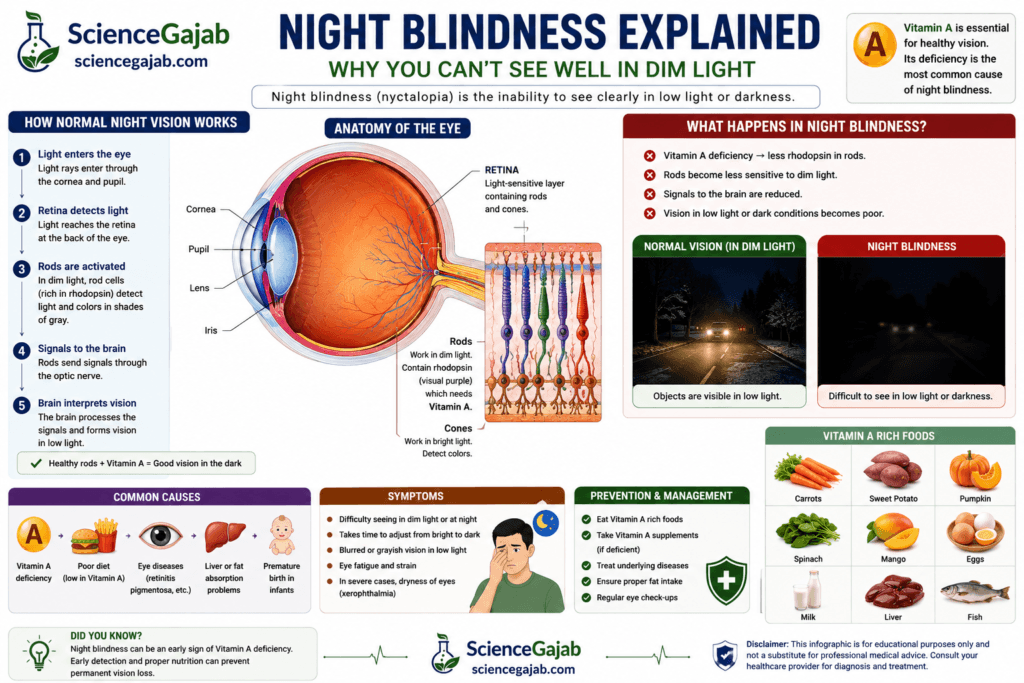
1. Night Blindness
Night blindness is usually the earliest symptom.
People may notice:
- Difficulty driving at night
- Trouble seeing in dim light
- Slow adjustment when moving from bright to dark environments
- Difficulty recognizing objects after sunset
This occurs because vitamin A is required to produce rhodopsin, a pigment needed for vision in low light.
2. Dry Eyes
Vitamin A helps keep the eye surface moist.
Deficiency may cause:
- Dry eyes
- Burning sensation
- Eye irritation
- Gritty feeling
- Increased sensitivity to light
Persistent dry eyes should be evaluated because many conditions can cause similar symptoms.
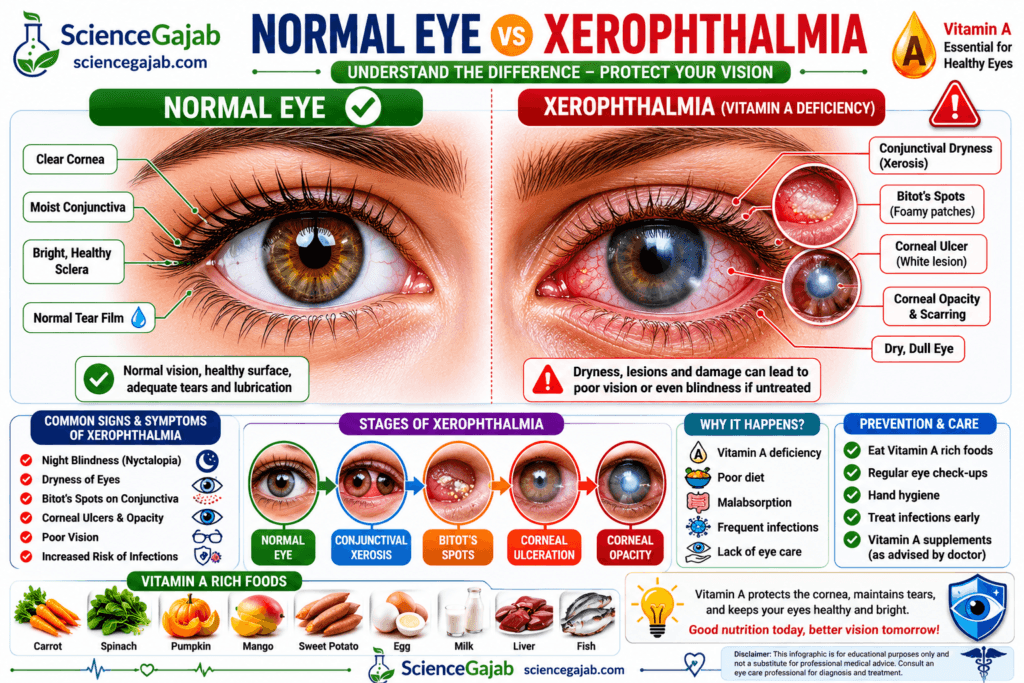
3. Bitot’s Spots
Bitot’s spots are foamy white patches that appear on the white part of the eye (conjunctiva).
They are a classic sign of vitamin A deficiency and require prompt medical evaluation.
4. Poor Vision in Dim Light
People often notice:
- Blurred vision at dusk
- Difficulty reading in low light
- Reduced contrast sensitivity
This symptom often develops before complete night blindness.
5. Frequent Eye Infections
Vitamin A supports the protective surface of the eye.
Deficiency may increase the risk of:
- Conjunctivitis
- Eye irritation
- Recurrent eye infections
6. Dry Skin
Vitamin A is important for maintaining healthy skin cells.
Deficiency may lead to:
- Dry skin
- Rough patches
- Flaky skin
- Reduced skin elasticity
7. Slow Wound Healing
Vitamin A supports tissue repair.
Cuts and wounds may:
- Heal slowly
- Become infected more easily
- Leave scars more readily
8. Frequent Infections
Vitamin A helps maintain the immune system.
People with deficiency may experience:
- Frequent colds
- Respiratory infections
- Longer recovery after illness
- Recurrent infections
Doctor’s Tip
Night blindness is an important warning sign that should never be ignored. While vitamin A deficiency is a common cause worldwide, night blindness can also occur because of inherited retinal diseases, cataracts, glaucoma, diabetes, or other eye disorders. An eye examination is essential for proper diagnosis.
Early Signs of Serious Disease You Should Never Ignore
Did You Know?
According to global public health estimates, vitamin A deficiency remains one of the leading preventable causes of childhood blindness, particularly in low-resource settings. Improving nutrition and timely treatment can significantly reduce this risk.
9. Poor Wound Healing
Vitamin A helps repair damaged tissues and supports the growth of new skin cells.
If you are deficient, you may notice:
- Cuts taking longer to heal
- Frequent wound infections
- Delayed recovery after surgery
- Skin injuries leaving scars more easily
Why Wounds Itch During Healing and How to Stop It ?
10. Frequent Respiratory Infections
Vitamin A helps maintain the protective lining of the lungs and airways.
People with deficiency may experience:
- Frequent colds
- Repeated sore throats
- Bronchitis
- Chest infections
- Longer recovery after illness
Prevention of hospital acquired infection
11. Dry Hair and Hair Loss
Vitamin A contributes to healthy hair follicles.
Low levels may cause:
- Dry hair
- Brittle hair
- Increased hair fall
- Slower hair growth
Hair loss has many causes, including iron deficiency, thyroid disease, stress, and hormonal disorders.
The Real Reason Your Hair Turns Gray (It’s Not Just Aging)
12. Poor Growth in Children
Children require adequate vitamin A for normal growth.
Long-term deficiency may contribute to:
- Poor height gain
- Low body weight
- Delayed development
- Increased illness
Chickenpox Symptoms: Early Signs, Stages, Causes, Treatment & When to See a Doctor
13. Xerophthalmia
Xerophthalmia is a serious eye disease caused by prolonged vitamin A deficiency.
Symptoms include:
- Severe eye dryness
- Thickened conjunctiva
- Bitot’s spots
- Reduced tear production
Without treatment, xerophthalmia may progress to permanent blindness.
14. Corneal Ulcers and Corneal Softening (Keratomalacia)
Severe deficiency can damage the cornea.
Possible symptoms include:
- Severe eye pain
- Blurred vision
- Corneal ulcers
- Corneal softening (keratomalacia)
This is an eye emergency requiring immediate medical care.
15. Vision Loss
Untreated vitamin A deficiency may eventually cause:
- Permanent blindness
- Severe visual impairment
- Corneal scarring
Early diagnosis and treatment greatly reduce this risk.
Causes of Sudden Blurry Vision (Simple Explanation You Can Trust)
Common Causes of Vitamin A Deficiency
1. Poor Dietary Intake
The most common cause is not eating enough vitamin A-rich foods.
2. Fat Malabsorption Disorders
Vitamin A is a fat-soluble vitamin.
Conditions affecting fat absorption include:
- Celiac disease
- Crohn’s disease
- Chronic pancreatitis
- Cystic fibrosis
3. Liver Disease
The liver stores most of the body’s vitamin A.
Severe liver disease can interfere with vitamin A storage and metabolism.
4. Bariatric Surgery
Some weight-loss surgeries reduce absorption of fat-soluble vitamins, including vitamin A.
5. Severe Malnutrition
Children and adults with severe malnutrition have an increased risk of vitamin A deficiency.
Why So Many People Need Glasses Today
Risk Factors
Higher-risk groups include:
- Children under 5 years
- Pregnant women
- Breastfeeding mothers
- Older adults with poor nutrition
- People with digestive disorders
- Individuals after bariatric surgery
- People with chronic liver disease
How Is Vitamin A Deficiency Diagnosed?
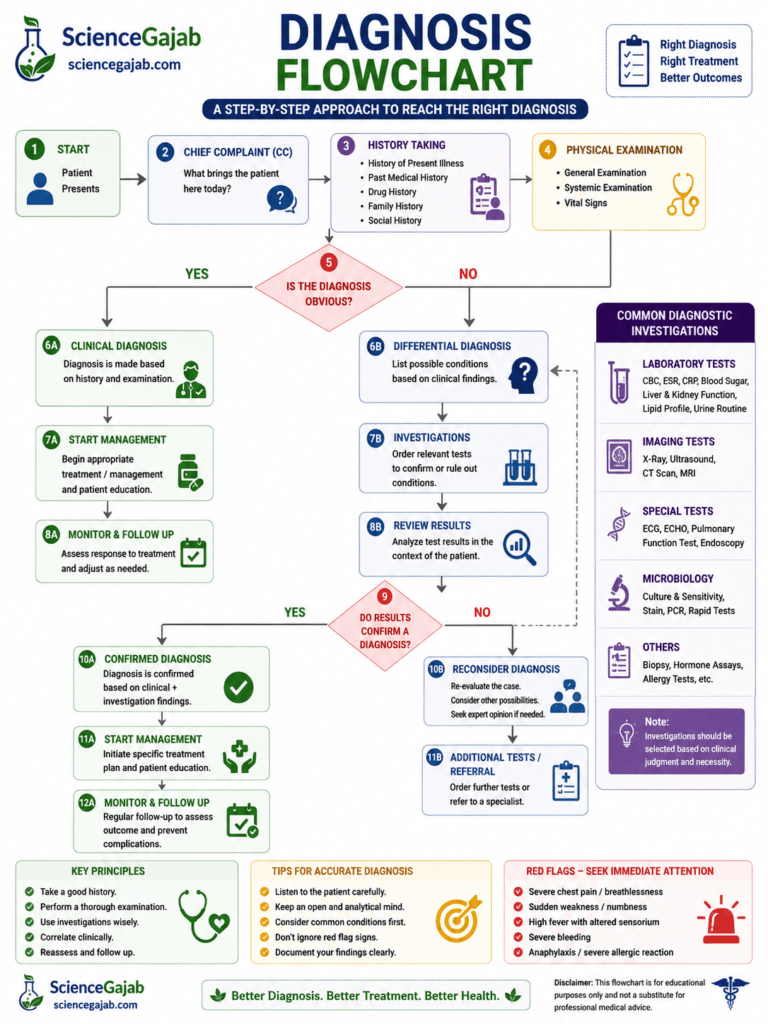
A healthcare professional may recommend:
Medical History
Questions about:
- Diet
- Eye symptoms
- Digestive disorders
- Previous surgery
- Medical conditions
Why Do Eyes Twitch? (Simple Explanation You Can Trust)
Physical Examination
The doctor may examine:
- Eyes
- Skin
- Hair
- Growth in children
- Signs of malnutrition
Laboratory Tests
Tests may include:
- Serum vitamin A (retinol) level
- Complete Blood Count (CBC) (to identify associated nutritional deficiencies)
- Liver function tests
- Additional tests depending on the suspected cause
Why Do Ears Ring Suddenly? (Simple Explanation You Can Trust)
Eye Examination
An eye specialist may perform:
- Visual acuity testing
- Slit-lamp examination
- Retinal examination
- Tear film assessment
Can Vitamin A Deficiency Be Treated?
Yes.
Treatment depends on:
- Severity of deficiency
- Age
- Pregnancy status
- Underlying cause
- Eye involvement
Mild deficiency often improves with diet, while more severe cases may require vitamin A supplements prescribed by a healthcare professional.
Treatment Options
1. Increase Vitamin A-Rich Foods
Excellent sources include:
- Liver
- Eggs
- Milk
- Cheese
- Carrots
- Sweet potatoes
- Pumpkin
- Spinach
- Kale
- Mangoes
2. Vitamin A Supplements
Supplements may be prescribed for confirmed deficiency.
Because excessive vitamin A can be harmful, especially during pregnancy, supplements should only be taken under medical guidance.
3. Treat the Underlying Cause
Long-term improvement depends on managing conditions such as:
- Crohn’s disease
- Celiac disease
- Liver disease
- Fat malabsorption disorders
Functions of the Kidney: 12 Essential Roles Your Kidneys Play in Keeping You Healthy
30 Best Vitamin A-Rich Foods
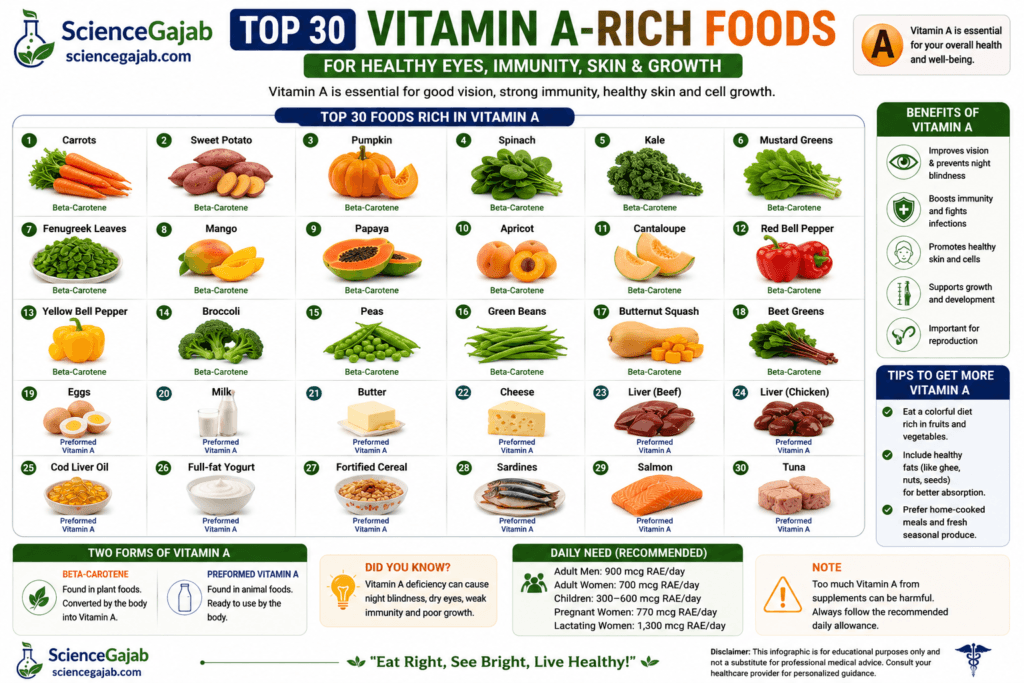
Animal Sources (Preformed Vitamin A)
- Beef liver
- Chicken liver
- Cod liver oil
- Egg yolk
- Whole milk
- Cheese
- Butter
- Salmon
- Tuna
- Sardines
Plant Sources (Beta-Carotene)
- Carrots
- Sweet potatoes
- Pumpkin
- Spinach
- Kale
- Fenugreek leaves
- Mustard greens
- Collard greens
- Red bell peppers
- Tomatoes
- Mango
- Papaya
- Apricot
- Cantaloupe
- Watermelon
- Broccoli
- Peas
- Red palm oil
- Butternut squash
- Amaranth leaves
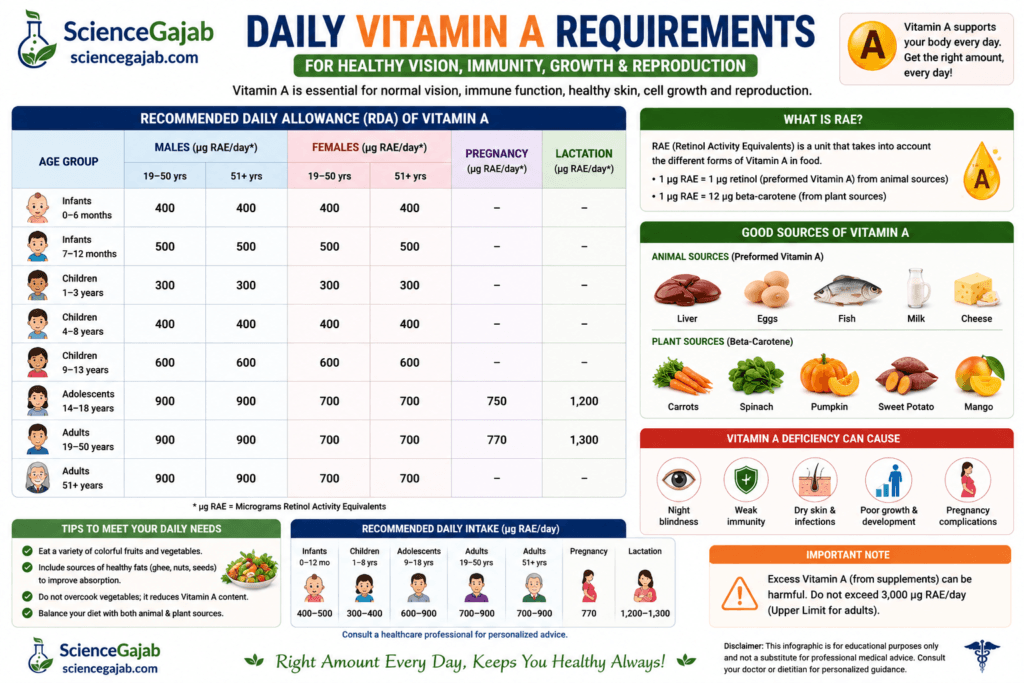
Daily Vitamin A Requirements
| Group | Recommended Daily Intake |
|---|---|
| Adult Men | 900 mcg RAE |
| Adult Women | 700 mcg RAE |
| Pregnant Women | 770 mcg RAE |
| Breastfeeding Women | 1,300 mcg RAE |
RAE = Retinol Activity Equivalents
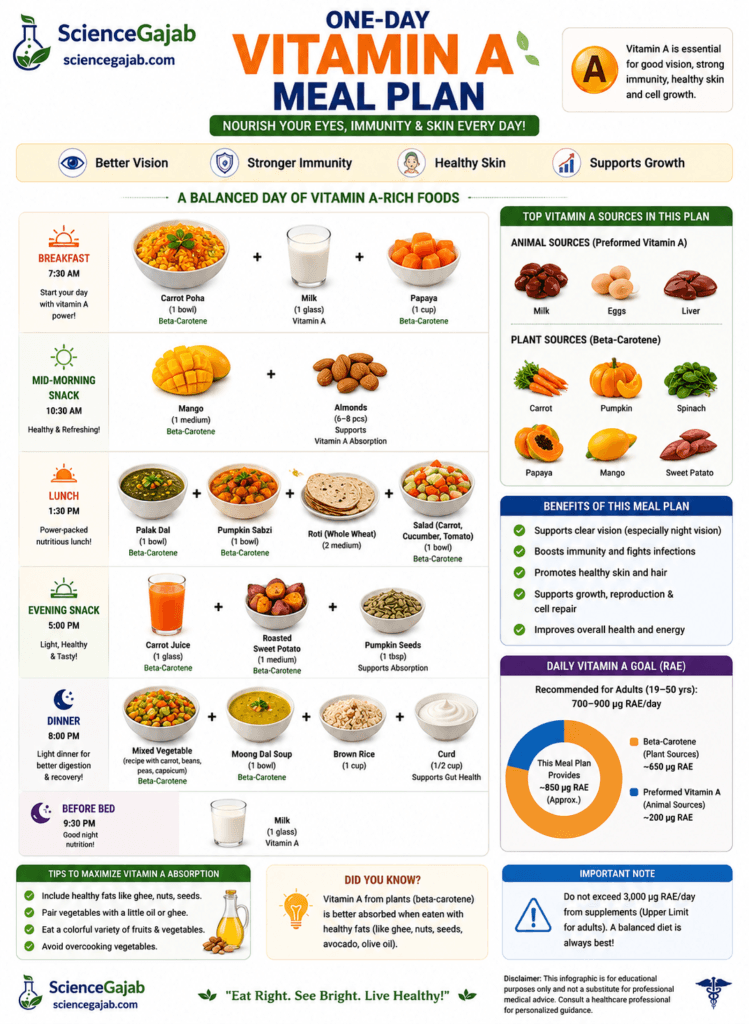
Sample One-Day Vitamin A Meal Plan
Breakfast
- Scrambled eggs
- Whole-grain toast
- Glass of milk
Mid-Morning Snack
- Mango slices
Lunch
- Spinach dal
- Brown rice
- Carrot salad
Evening Snack
- Papaya
Dinner
- Pumpkin curry
- Whole wheat chapati
- Yogurt
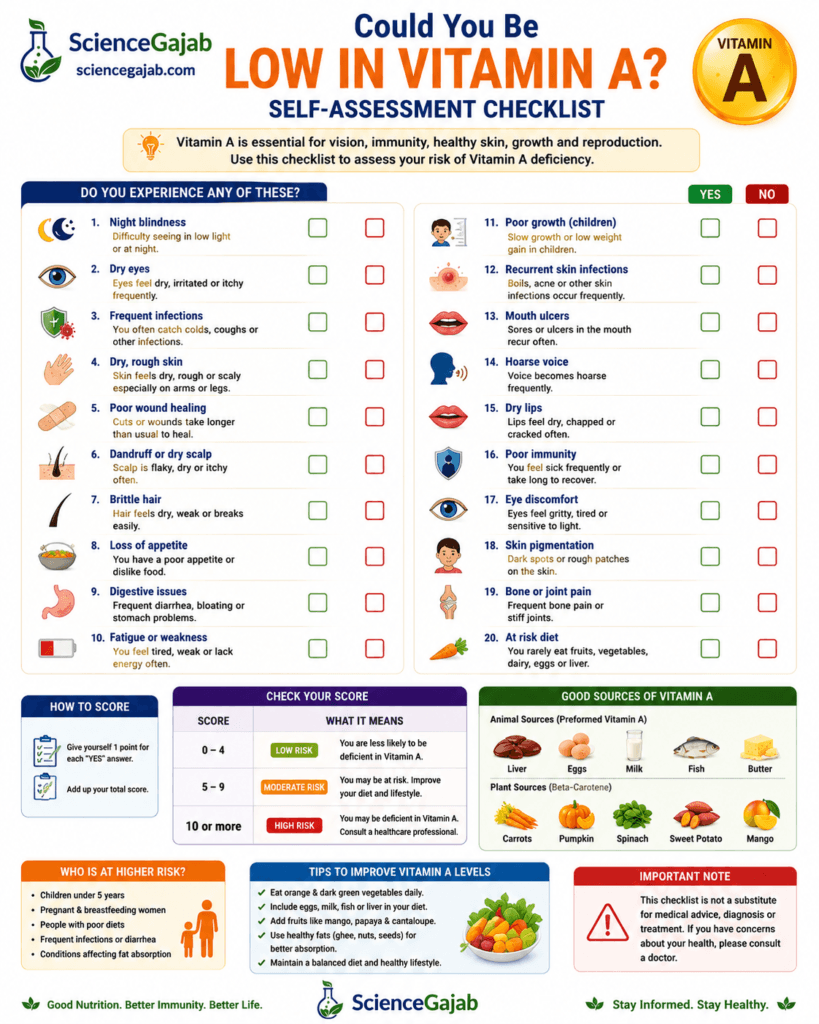
Prevention Tips
1✔ Eat colorful fruits and vegetables every day.
2✔ Include leafy green vegetables regularly.
3✔ Treat digestive disorders promptly.
4✔ Follow a balanced diet.
5✔ Take supplements only if recommended by a healthcare professional.
Frequently Asked Questions
1. What is the first sign of vitamin A deficiency?
Night blindness is often the earliest symptom.
2. Can vitamin A deficiency cause blindness?
Yes. Untreated severe deficiency can lead to permanent vision loss.
3. Which foods contain the most vitamin A?
Liver, carrots, sweet potatoes, spinach, pumpkin, kale, eggs, and dairy products.
4. Can vegetarians get enough vitamin A?
Yes. Carrots, spinach, sweet potatoes, pumpkin, mangoes, and kale are excellent plant sources of beta-carotene.
5. Is too much vitamin A harmful?
Yes. Excess vitamin A from supplements can be toxic, particularly during pregnancy.
6. Can vitamin A deficiency cause dry skin?
Yes. Dry, rough skin is a common symptom.
7. How is vitamin A deficiency diagnosed?
Diagnosis may involve a medical history, eye examination, and serum vitamin A testing.
8. Who is most at risk?
Young children, pregnant women, people with malabsorption disorders, and individuals with poor nutrition.
9. Can vitamin A deficiency be reversed?
In many cases, yes—especially when diagnosed early and treated appropriately.
10. Should I take vitamin A supplements without medical advice?
No. High-dose vitamin A supplements should only be used under medical supervision.
Key Takeaways
1✔ Vitamin A is essential for vision, immunity, healthy skin, and growth.
2✔ Early symptoms include night blindness, dry eyes, Bitot’s spots, dry skin, and frequent infections.
3✔ Severe deficiency can lead to xerophthalmia, keratomalacia, and permanent blindness.
4✔ Liver, eggs, dairy products, carrots, spinach, pumpkin, and sweet potatoes are excellent dietary sources.
5✔ Early diagnosis and treatment help prevent serious complications.
Medically reviewed by: Dr Sanjay Prajapati, MBBS
Content type: Evidence-based educational health information
Last reviewed: July 2026
References
- World Health Organization (WHO). Vitamin A deficiency.
- National Institutes of Health (NIH), Office of Dietary Supplements. Vitamin A Fact Sheet for Health Professionals.
- Merck Manual Professional Edition. Vitamin A Deficiency.
- MSD Manual Consumer Version. Vitamin A Deficiency.
- Nelson Textbook of Pediatrics. Latest edition.
- Harrison’s Principles of Internal Medicine. Latest edition.
Medical Disclaimer: This article is for educational purposes only and should not be considered medical advice. Always consult a qualified healthcare professional for diagnosis, treatment, or medical concerns. Never ignore professional medical advice or delay seeking care based on information from this article.