
Function of Kidney: Everything You Need to Know
The kidneys are two bean-shaped organs located on either side of the spine, just below the rib cage. Although each kidney is only about the size of a fist, these organs perform hundreds of essential tasks every day to keep your body healthy.
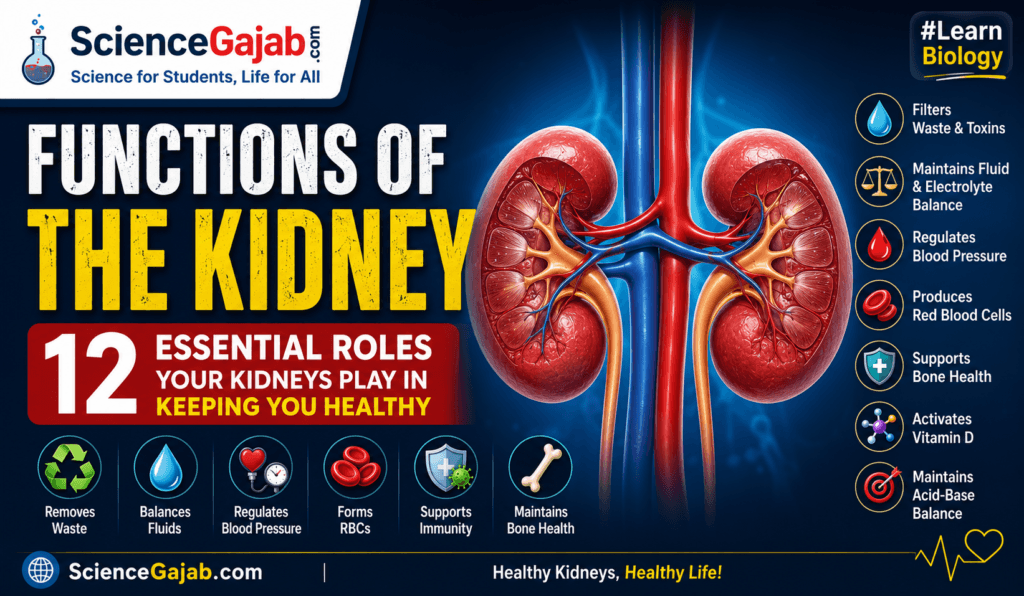
Most people know that kidneys filter blood, but they also regulate blood pressure, maintain fluid balance, produce hormones, support red blood cell production, and help keep bones strong.
In this ScienceGajab article, you’ll learn the 12 major functions of the kidney, how they work, and why healthy kidneys are vital for life.
What Is the Kidney?
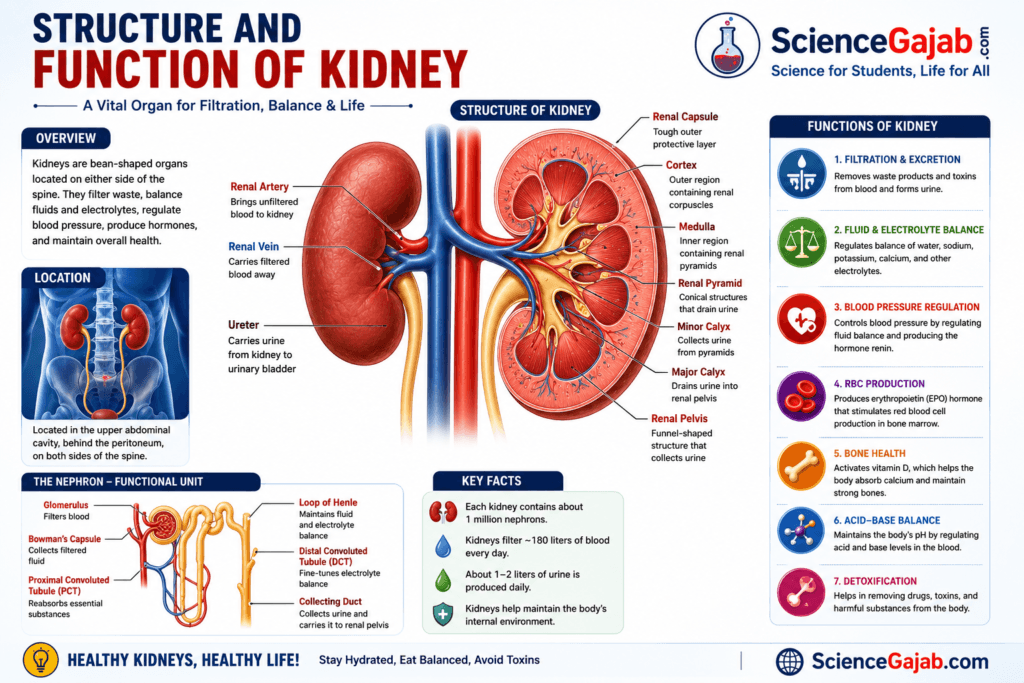
The kidneys are part of the urinary system. An average adult has two kidneys, each containing about one million microscopic filtering units called nephrons.
Every day, your kidneys filter approximately 180 liters of fluid, returning most of it to the bloodstream while producing about 1.5–2 liters of urine.
Functions of the Spleen: Structure, Roles, and Why This Organ Is Important
12 Important Functions of the Kidney
1. Filters Waste Products from the Blood
The primary function of the kidneys is to remove waste products produced during normal metabolism.
These include:
- Urea
- Creatinine
- Uric acid
- Drug metabolites
- Other toxins
These wastes are eliminated from the body through urine.
2. Removes Excess Water
The kidneys regulate the amount of water in your body.
If you drink large amounts of water, the kidneys produce more urine.
If you’re dehydrated, they conserve water by producing more concentrated urine.
This helps maintain proper hydration.
3. Maintains Electrolyte Balance
Electrolytes are minerals essential for nerve function, muscle contraction, and heart rhythm.
The kidneys regulate levels of:
- Sodium
- Potassium
- Calcium
- Magnesium
- Chloride
- Phosphate
Keeping these within a healthy range is essential for normal body function.
What Are Platelets? Function, Normal Count, High & Low Platelet Levels Explained
4. Regulates Blood Pressure
Healthy kidneys help control blood pressure through the renin-angiotensin-aldosterone system (RAAS).
They release the hormone renin, which helps regulate:
- Blood pressure
- Blood vessel constriction
- Salt balance
- Fluid balance
Poor kidney function can contribute to high blood pressure, and high blood pressure can damage the kidneys.
Why Does Blood Pressure Suddenly Increase? (Simple Explanation You Can Trust)
5. Maintains Acid-Base Balance
The kidneys help keep the body’s pH within a narrow range by:
- Excreting excess acids
- Reabsorbing bicarbonate
This prevents the blood from becoming too acidic or too alkaline.
6. Produces Erythropoietin (EPO)
The kidneys produce erythropoietin, a hormone that stimulates the bone marrow to make red blood cells.
If the kidneys are damaged, EPO production may decrease, leading to anemia.
7. Activates Vitamin D
The kidneys convert inactive vitamin D into its active form (calcitriol).
Active vitamin D helps:
- Absorb calcium from food
- Maintain healthy bones
- Support muscle function
- Strengthen the immune system
8. Supports Healthy Bones
By regulating calcium, phosphate, and vitamin D, the kidneys help maintain strong bones and teeth.
Chronic kidney disease can lead to weakened bones due to disturbances in these minerals.
Complete Blood Count (CBC) Explained: What Every Blood Test Value Means
9. Removes Drugs and Toxins
Many medications and toxic substances are filtered or processed by the kidneys before being eliminated in urine.
This helps prevent harmful substances from building up in the body.
10. Maintains Blood Osmolarity
The kidneys carefully control the concentration of dissolved substances in the blood.
This ensures that cells neither shrink nor swell because of improper water balance.
11. Helps Produce Urine
Urine formation involves three main processes:
Glomerular Filtration
Blood is filtered in tiny structures called glomeruli.
Tubular Reabsorption
Useful substances such as glucose, amino acids, and most water are reabsorbed into the bloodstream.
Tubular Secretion
Additional waste products and excess ions are secreted into the urine for removal.
Your Saliva Is More Powerful Than You Think 😳 Here’s What’s Inside
12. Maintains Overall Internal Balance (Homeostasis)
The kidneys constantly adjust the body’s internal environment by regulating:
- Water balance
- Blood pressure
- Electrolytes
- Acid-base balance
- Hormone production
- Waste removal
Together, these functions help maintain homeostasis, the stable internal conditions necessary for life.
Structure of the Kidney
Each kidney contains:
- Renal cortex
- Renal medulla
- Renal pyramids
- Renal pelvis
- Ureter
- Blood vessels
- Approximately one million nephrons
The nephron is the kidney’s functional unit and performs filtration and urine formation.
🦟 Malaria: The Most Lethal Parasitic Disease Affecting Humans Worldwide
What Happens If the Kidneys Stop Working?
When kidney function declines, waste products and excess fluid can accumulate in the body.
Possible complications include:
- Swelling of the legs or face
- High blood pressure
- Fatigue
- Shortness of breath
- Nausea
- Reduced urine output
- Electrolyte imbalances
- Anemia
- Bone disease
- Chronic kidney disease (CKD)
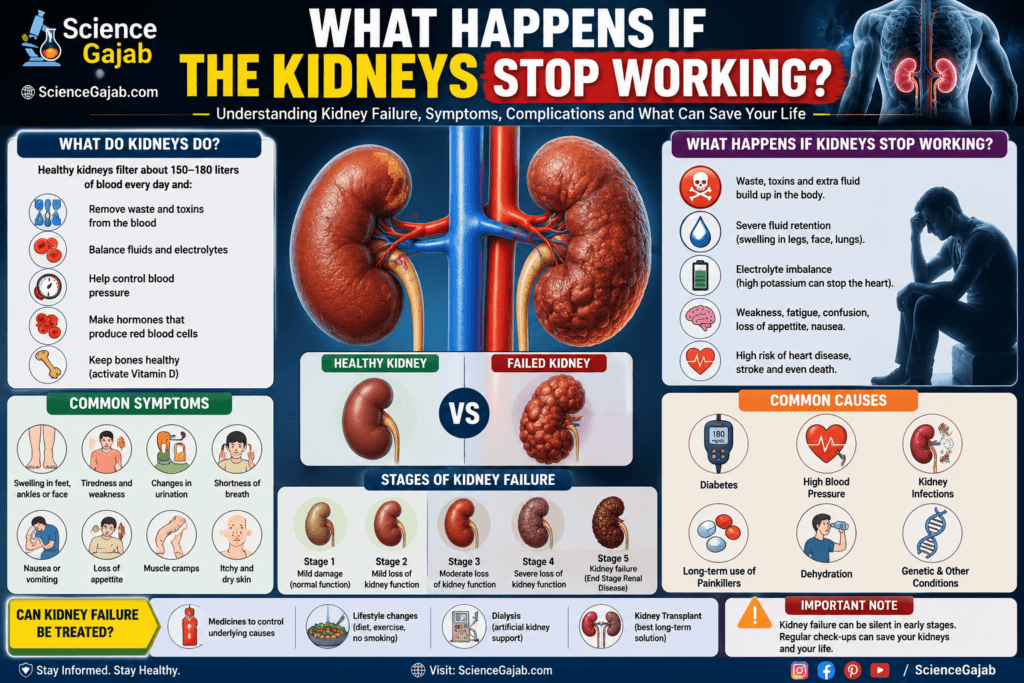
Severe kidney failure may require dialysis or a kidney transplant.
🍞 Why Fermentation Happens Without Oxygen (Simple Explanation)
How to Keep Your Kidneys Healthy
Protect your kidneys by:
- Drinking adequate water.
- Controlling blood pressure.
- Managing diabetes effectively.
- Eating a balanced diet with appropriate salt intake.
- Exercising regularly.
- Maintaining a healthy weight.
- Avoiding smoking.
- Limiting alcohol.
- Avoiding unnecessary or prolonged use of painkillers unless advised by a healthcare professional.
- Having regular health check-ups if you have risk factors for kidney disease.
Interesting Facts About Kidneys
- Each kidney contains around 1 million nephrons.
- The kidneys filter roughly 180 liters of fluid each day.
- About 99% of the filtered water is reabsorbed back into the bloodstream.
- Healthy kidneys help regulate blood pressure, bone health, and red blood cell production—not just urine formation.
10 Simple Steps of Glycolysis (Easy Breakdown)
Frequently Asked Questions (FAQs)
What is the main function of the kidney?
The kidneys primarily filter waste products and excess water from the blood to produce urine while maintaining the body’s internal balance.
How many kidneys does a person have?
Most people are born with two kidneys, although many individuals can live healthy lives with one functioning kidney.
Can a person live with one kidney?
Yes. A single healthy kidney can usually perform enough function to support normal life.
What are nephrons?
Nephrons are the microscopic filtering units inside the kidneys responsible for filtering blood and forming urine.
Which hormone is produced by the kidneys?
The kidneys produce erythropoietin (EPO) and renin, and they activate vitamin D into its biologically active form.
Key Takeaways
- The kidneys are essential organs that do much more than produce urine.
- They filter waste, regulate fluid and electrolyte balance, control blood pressure, maintain acid-base balance, produce hormones, and support healthy bones.
- Healthy kidneys are vital for maintaining overall homeostasis.
- Protecting kidney health through a healthy lifestyle and management of chronic conditions can reduce the risk of kidney disease.
Why Trust ScienceGajab?
Medical Review Process: This article is based on standard physiology and nephrology references, including current clinical guidance. It is intended for educational purposes only and should not replace professional medical advice.
Author: Sanjay Prajapati (MBBS)
Reviewed by: ScienceGajab Editorial Team
Last Updated: June 2026
References
- Guyton & Hall Textbook of Medical Physiology.
- Ganong’s Review of Medical Physiology.
- National Kidney Foundation (NKF).
- KDIGO Clinical Practice Guidelines.
- Harrison’s Principles of Internal Medicine.
https://www.facebook.com/sciencegajab/