why-ears-ring-suddenly
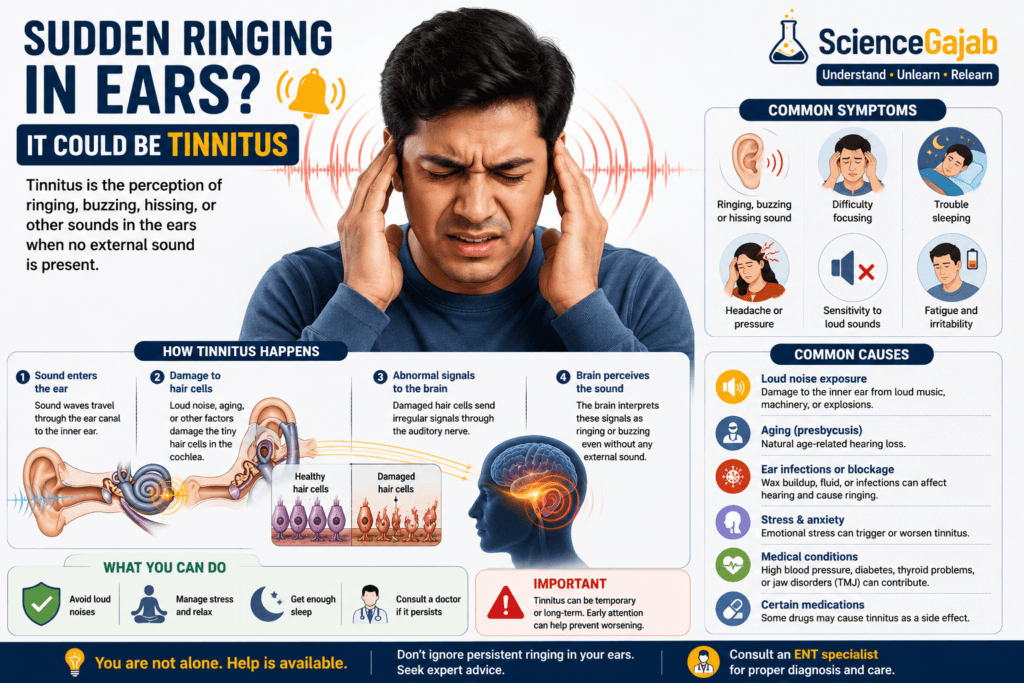
Why Do Ears Ring Suddenly?
Sudden ringing in the ears can feel strange and worrying.
A person may suddenly hear:
- Ringing
- Buzzing
- Humming
- Whistling
- Clicking sounds
even when no external sound is present.
This condition is commonly called:Tinnitus
{Tinnitus}
Ear ringing may last:
- A few seconds
- Minutes
- Hours
- Or become persistent
In many cases, it is harmless and temporary. But sometimes it may indicate:
- Hearing damage
- Ear infection
- High blood pressure
- Stress-related problems
- Nerve disorders
In this article, we’ll explain:
- Why ears suddenly ring
- Common causes
- Serious warning signs
- Treatment and prevention
Everything is explained in simple human language.
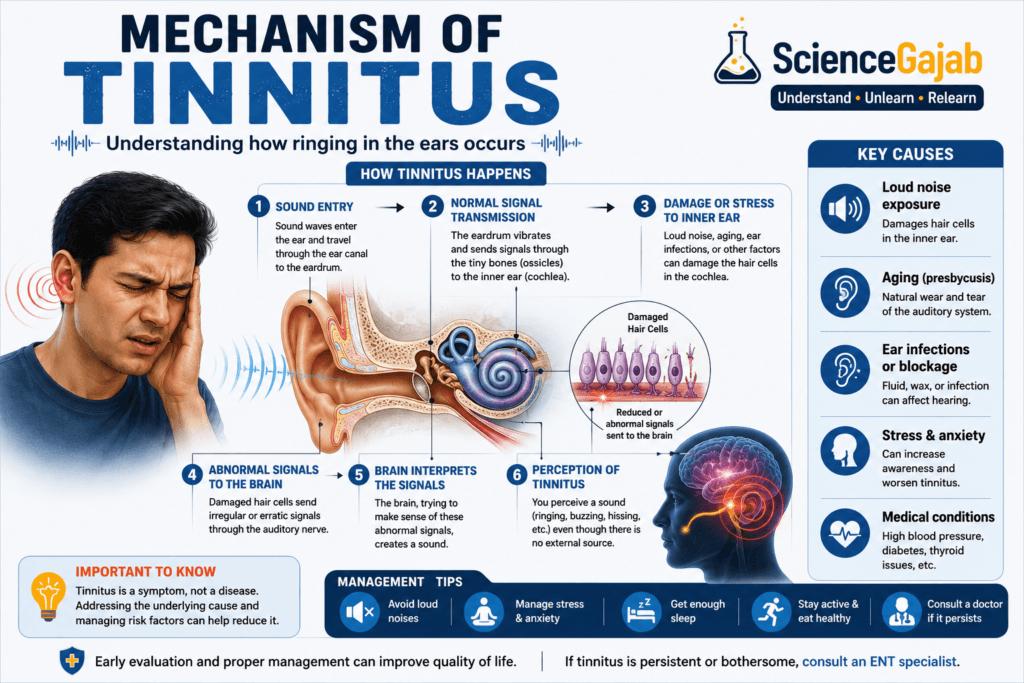
Parts of Ear and Their Functions (Simple Diagram Explained)
What Is Tinnitus?
Tinnitus means hearing sound without an outside source.
The sound may be:
- Ringing
- Buzzing
- Roaring
- Hissing
It may affect:
- One ear
- Both ears
Why Ear Ringing Happens
The ears and brain work together to process sound.
When hearing pathways become irritated or overstimulated, abnormal sound signals may occur.
Most Common Causes of Sudden Ear Ringing
1. Loud Noise Exposure
One of the most common causes.
Exposure to:
- Loud music
- Earphones at high volume
- Firecrackers
- Machinery noise
may temporarily irritate hearing cells.
2. Stress and Anxiety
Stress strongly affects the nervous system.
Anxiety may increase awareness of internal sounds and worsen tinnitus.
Symptoms often worsen:
- At night
- During stress
- In quiet environments
3. Earwax Blockage
Excess earwax may block sound transmission and irritate the ear.
Symptoms may include:
- Ringing
- Fullness in ear
- Reduced hearing
4. Ear Infection
Infections may inflame ear structures causing:
- Ringing
- Ear pain
- Pressure sensation
- Fever
5. Sudden Hearing Changes
Hearing loss may sometimes trigger tinnitus.
The brain may compensate for reduced hearing by generating phantom sounds.
Why Your Brain Suddenly Makes You Feel Dizzy
6. High Blood Pressure
High BP may affect blood flow near the ear.
Some people hear:
- Pulsing
- Whooshing sounds
especially during stress or exertion.
Why Does Blood Pressure Suddenly Increase? (Simple Explanation You Can Trust)
7. Caffeine and Stimulants
Too much:
- Coffee
- Energy drinks
- Nicotine
may overstimulate nerves and worsen ringing.
🩸 What Happens When You Transfuse Blood to a Normal Person?
8. Lack of Sleep and Fatigue
Fatigue increases nervous system sensitivity.
This may make tinnitus more noticeable.
9. Certain Medicines
Some medicines may affect hearing nerves.
Examples include:
- Certain antibiotics
- High-dose aspirin
- Some painkillers
10. Sinus and Allergy Problems
Blocked sinuses or allergies may affect ear pressure and cause ringing.
11. Temporomandibular Joint (TMJ) Problems
Jaw joint problems near the ear may trigger:
- Ear ringing
- Ear pressure
- Jaw pain
How Memories Are Formed in the Brain (Simple Step-by-Step Guide)
12. Ménière’s Disease
This inner ear disorder may cause:
- Ringing
- Vertigo
- Hearing loss
- Ear fullness
13. Poor Blood Circulation
Blood vessel problems near the ear may create pulsating sounds.
Purple Feet and Poor Circulation: Causes, Warning Signs, and When to Seek Medical Help
14. Sudden Stress Hormone Surge
Stress hormones may temporarily increase nerve activity causing ringing.
Why Ringing Happens More in Quiet Rooms
Background sounds usually mask internal ear noises.
In silence, tinnitus becomes more noticeable.
Symptoms Your Nerves Are Damaged (Early Signs You Should Never Ignore)
Why Ears Ring After Loud Music
Tiny hearing cells inside the inner ear become temporarily overstimulated.
Repeated loud noise exposure may cause permanent damage.
Why So Many People Need Glasses Today
One Ear Ringing vs Both Ears Ringing
| One Ear | Both Ears |
|---|---|
| Infection or blockage possible | Stress or hearing damage common |
| Needs evaluation if persistent | Often temporary |
Can Anxiety Really Cause Ear Ringing?
Yes.
Stress affects:
- Nerve sensitivity
- Blood flow
- Brain sound processing
Many people notice tinnitus worsening during anxiety.
Warning Signs You Should Not Ignore
Seek medical care if ringing occurs with:
- Sudden hearing loss
- Severe dizziness
- Ear pain
- Facial weakness
- Head injury
These may indicate serious conditions.
Why Do Eyes Twitch? (Simple Explanation You Can Trust)
Can High Blood Pressure Cause Ear Ringing?
Yes.
Increased blood flow pressure may create pulsating sounds near the ears.
How Doctors Diagnose Tinnitus
Doctors may recommend:
- Hearing tests
- Ear examination
- Blood pressure testing
- MRI in selected cases
Treatment Depends on the Cause
1. Remove Earwax
May improve symptoms quickly.
2. Treat Infection
Medicines may help.
3. Reduce Stress
Stress management often improves tinnitus.
4. Protect Hearing
Avoid loud sound exposure.
5. Improve Sleep
Fatigue worsens symptoms.
Your Heart Can Stop in Minutes — Here’s How Artery Blockage Happens
Home Tips to Reduce Ear Ringing
1. Lower Earphone Volume
Protect hearing cells.
2. Avoid Loud Noise
Use ear protection if needed.
3. Reduce Caffeine
May help sensitive individuals.
4. Sleep Properly
Supports nervous system recovery.
5. Use Background Noise
Soft music or fan sound may help at night.
How Cancer Actually Begins Inside Your Body
Foods That Support Ear and Nerve Health
Helpful foods include:
- Fruits
- Nuts
- Fish
- Green vegetables
Especially foods supporting circulation and nerve health.
Interesting Facts About Tinnitus
1. Tinnitus Is Extremely Common
2. Stress Often Makes It Worse
3. Loud Noise Is a Major Cause
Repeated exposure may damage hearing permanently.
Frequently Asked Questions (FAQs)
Common causes include stress, loud noise exposure, earwax, or fatigue.
Usually not, but sudden hearing loss requires urgent evaluation.
Yes, stress commonly worsens tinnitus.
Yes, especially pulsating ringing sounds.
Reducing stress, protecting hearing, and improving sleep may help.
Final Thoughts
Sudden ear ringing is common and often linked to:
- Stress
- Loud noise
- Earwax
- Fatigue
- Hearing irritation
Most cases improve with rest and proper ear care.
However, persistent ringing or ringing associated with hearing loss, dizziness, or neurological symptoms should not be ignored.
Protecting your hearing and managing stress are important for long-term ear health.
Medical Disclaimer
This article is for educational awareness only and does not replace professional medical advice, diagnosis, or treatment.
Sources & References
- American Academy of Otolaryngology
- Mayo Clinic educational resources
- Audiology educational references
- Standard physiology textbooks
Reviewed Topic
Educational overview of tinnitus, sudden ear ringing, hearing problems, stress-related ear symptoms, and inner ear disorders explained in simple language for general readers.