
symptoms-your-nerves-are-damaged
Symptoms Your Nerves Are Damaged
Nerves are the body’s communication system.
They carry signals between:
- Brain
- Spinal cord
- Muscles
- Skin
- Internal organs
When nerves become damaged, the body may start showing warning signs such as:
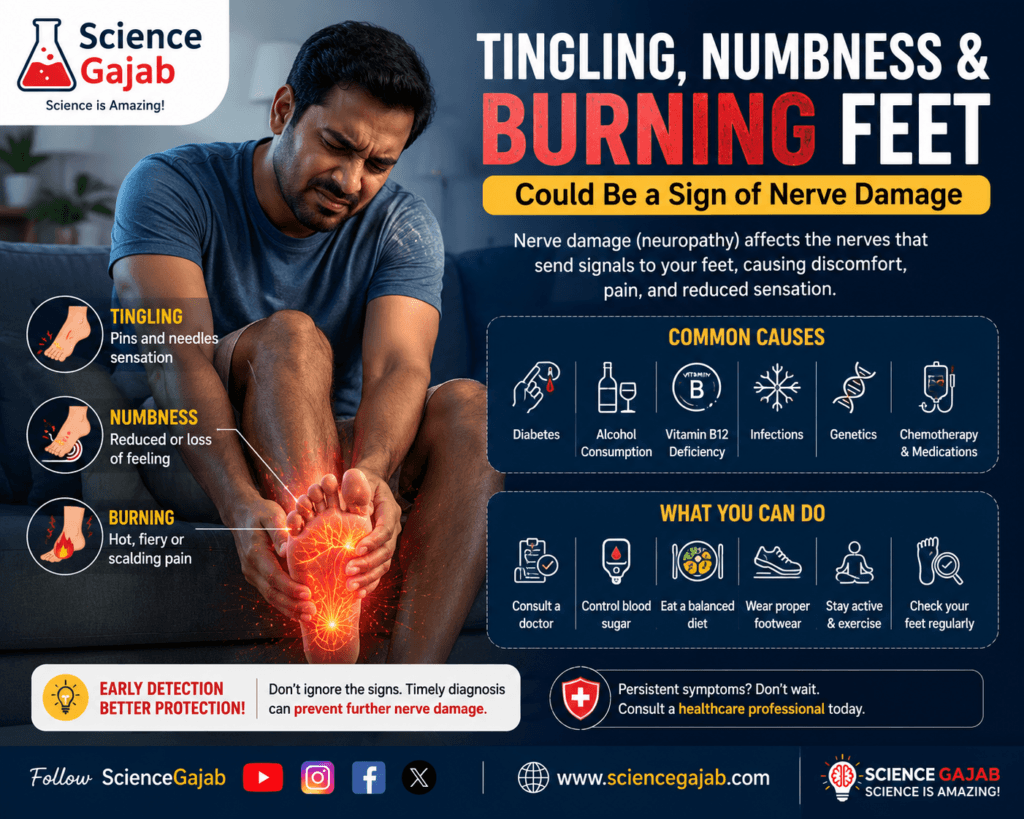
- Tingling
- Numbness
- Burning sensation
- Weakness
- Balance problems
Sometimes nerve damage develops slowly and silently.
Ignoring early symptoms may allow the damage to worsen over time.
In this article, we’ll explain:
- Symptoms of nerve damage
- Why nerves get damaged
- Early warning signs
- Common causes
- When to seek medical help
Everything is explained in simple human language.
What Your Feet Reveal About Your Health: 10 Warning Signs You Should Never Ignore
What Is Nerve Damage?
Damage to nerves is commonly called:
\text{Neuropathy}
Nerves stop carrying signals properly, leading to abnormal sensations and muscle problems.
Can Low Vitamins Damage Nerves? (Simple Explanation You Can Trust)
What Do Healthy Nerves Do?
Nerves help control:
- Movement
- Touch
- Pain sensation
- Temperature
- Balance
- Organ function
Damaged nerves may affect one or many of these functions.
🚨 Early Signs of Vitamin B12 Deficiency — Don’t Ignore These Warning Signals!
Early Symptoms of Nerve Damage
Symptoms your nerves are damaged
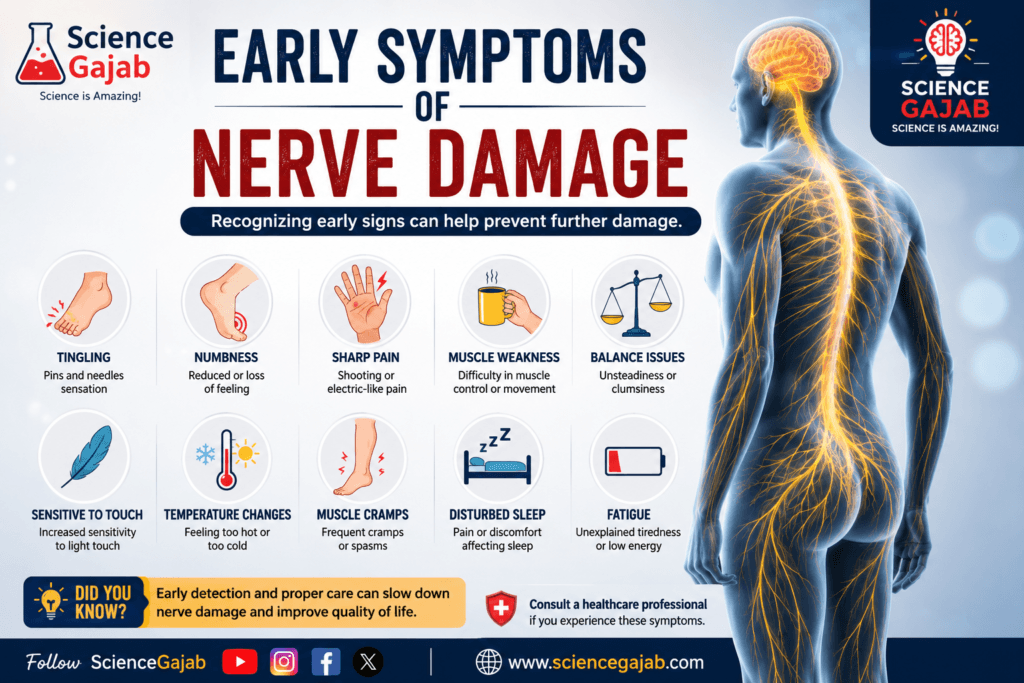
1. Tingling or Pins and Needles
This is one of the earliest signs.
People describe it as:
- Pins and needles
- Crawling sensation
- Electric feeling
Usually starts in:
- Toes
- Feet
- Fingers
2. Numbness
Numbness means reduced feeling or sensation.
A person may notice:
- Difficulty feeling touch
- Reduced pain sensation
- “Dead” feeling in feet or hands
This may increase injury risk because sensation becomes reduced.
Tingling in Hands and Feet: Causes, Symptoms & When to Worry
3. Burning Sensation
Many people with nerve damage experience:
- Burning feet
- Hot sensation
- Pain worsening at night
This is common in:
- Diabetes
- Vitamin deficiency
- Peripheral neuropathy
Cracked Heels and Health Conditions: What Your Feet May Be Telling You
4. Sharp or Electric Shock Pain
Nerve pain may feel:
- Stabbing
- Shooting
- Electric shock-like
Normal painkillers may not help much.
Why Do Feet Burn at Night? Causes, Warning Signs, and When to Worry
5. Muscle Weakness
Damaged nerves may fail to activate muscles properly.
Symptoms include:
- Weak grip
- Difficulty climbing stairs
- Foot weakness
- Trouble lifting objects
Why Do Muscles Shake? The Hidden Reason Your Body Loses Control!
6. Balance Problems
Nerves help the brain understand body position.
Damage may cause:
- Unsteady walking
- Frequent falls
- Difficulty balancing
Especially in darkness.
What Causes Swollen Feet? Common Reasons, Warning Signs, and When to Seek Help
7. Sensitivity to Touch
Even light touch may feel painful.
This is called:
- Allodynia
Common in severe neuropathy.
Back Pain Causes: 20 Reasons Your Back Hurts & When to See a Doctor
8. Cold or Hot Sensation Changes
Nerve damage may alter temperature sensation.
A person may feel:
- Feet unusually cold
- Burning heat
- Inability to detect temperature properly
Purple Feet and Poor Circulation: Causes, Warning Signs, and When to Seek Medical Help
9. Muscle Twitching or Cramps
Damaged nerves may irritate muscles causing:
- Twitching
- Spasms
- Night cramps
Why Do Eyes Twitch? (Simple Explanation You Can Trust)
10. Loss of Coordination
Fine movements may become difficult.
Examples:
- Buttoning clothes
- Writing
- Holding objects
🏃♂️ How Your Body Moves: The Science of Locomotion & Movement in 5 Minutes– A Complete Guide
11. Foot Problems
Nerve damage in feet may cause:
- Reduced sensation
- Injuries unnoticed
- Ulcers
- Poor wound healing
This is especially important in diabetes.
What Toenail Changes Reveal About Health: 12 Warning Signs You Should Never Ignore
12. Hands Falling Asleep Frequently
Frequent hand numbness may indicate:
- Nerve compression
- Carpal tunnel syndrome
- Neuropathy
13. Difficulty Walking
Advanced nerve damage may affect leg muscles and balance.
Some people feel:
- Heavy legs
- Foot dragging
- Instability
Varicose Veins Stages Explained With Pictures (Easy Guide for Everyone)
14. Digestive or Organ Symptoms
Some nerves control internal organs.
Damage may cause:
- Constipation
- Bladder problems
- Sexual dysfunction
- Abnormal sweating
This is called autonomic neuropathy.
Signs of Diabetes Visible on Feet: 10 Warning Signs You Should Never Ignore
Why Nerve Damage Often Starts in Feet First
Longest nerves in the body travel to the feet.
Long nerves are more vulnerable to injury.
That’s why symptoms usually begin in:
- Toes
- Feet
before affecting hands.
Functions of the Kidney: 12 Essential Roles Your Kidneys Play in Keeping You Healthy
Most Common Causes of Nerve Damage
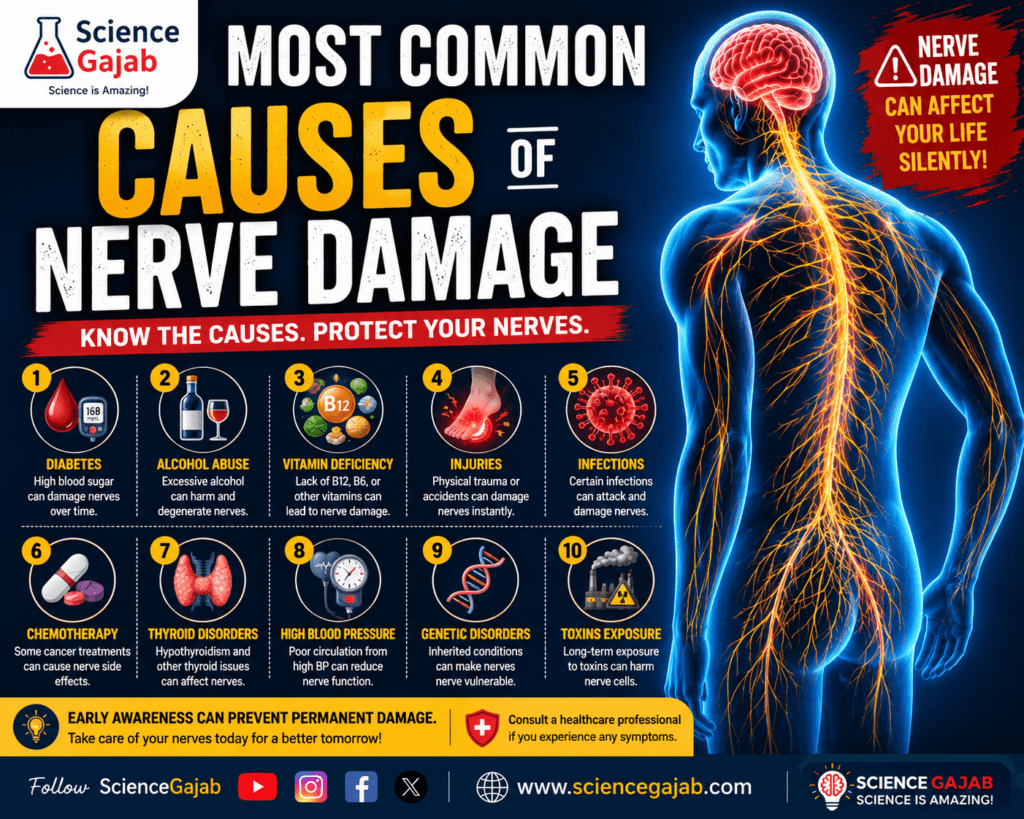
1. Diabetes
Diabetes is one of the leading causes worldwide.
High blood sugar damages nerves over time.
2. Vitamin B12 Deficiency
Vitamin B12 is essential for nerve protection.
Low levels may cause:
- Tingling
- Burning feet
- Balance problems
Neural Control and Coordination Explained (With Easy Diagrams + Examples)
3. Alcohol Excess
Long-term alcohol use may damage nerves.
4. Nerve Compression
Examples include:
- Sciatica
- Carpal tunnel syndrome
- Slipped disc
5. Kidney Disease
Toxin buildup may damage nerves.
6. Infections
Some infections affecting nerves include:
- Shingles
- HIV
- Lyme disease
Doctors Follow This Rule to Stop Infections (Do You?) Hand Hygiene: 7 Steps That Kill 99% Germs!
7. Autoimmune Diseases
Immune system disorders may attack nerves.
Chickenpox Symptoms: Early Signs, Stages, Causes, Treatment & When to See a Doctor
Difference Between Temporary Tingling and Nerve Damage
| Temporary Tingling | Nerve Damage |
|---|---|
| Short-lasting | Persistent |
| Position-related | Progressive |
| Improves quickly | Often worsens slowly |
Warning Signs You Should Not Ignore
Seek medical help if you have:
- Persistent numbness
- Weakness
- Burning pain
- Balance problems
- Frequent falls
- Muscle wasting
Modes of Virus Transmission with Examples (Airborne, Vector, Contact) – Easy Guide for Students
Can Nerve Damage Be Reversed?
Sometimes yes.
Recovery depends on:
- Cause
- Severity
- Early treatment
Early diagnosis improves chances of recovery.
How Doctors Diagnose Nerve Damage
Doctors may recommend:
- Blood sugar tests
- Vitamin B12 testing
- Nerve conduction studies
- MRI or spine imaging
🫀 Human Circulatory System Basics: A Complete Guide
Treatment Depends on the Cause
1. Diabetes Control
Important to prevent worsening.
2. Vitamin Supplements
Especially B12 if deficient.
3. Physical Therapy
Improves strength and balance.
4. Treat Compression
Posture correction or surgery may help.
How to Protect Your Nerves
1. Control Blood Sugar
Very important for diabetics.
2. Eat Nutritious Foods
Healthy nerves need vitamins.
3. Avoid Smoking
Smoking damages circulation.
4. Limit Alcohol
Protects nerves.
5. Exercise Regularly
Improves blood flow and nerve health.
🏃 What Happens Inside Cells When You Exercise (Simple Explanation)
Foods That Support Nerve Health
Helpful foods include:
- Eggs
- Fish
- Milk
- Nuts
- Green vegetables
- Fruits
🫁 Importance of Oxygen in Respiration: Why Every Cell Needs It
Interesting Facts About Nerves
1. Nerves Act Like Electrical Wires
2. Long Nerves Are Most Vulnerable
3. Diabetes Is a Major Cause of Neuropathy
Frequently Asked Questions (FAQs)
Tingling and numbness are common early symptoms.
Yes, especially vitamin B12 deficiency.
Nerve irritation commonly causes burning sensations.
Yes, damaged nerves may reduce coordination and stability.
Sometimes, but early treatment may improve recovery.
Final Thoughts
Nerve damage often begins silently with symptoms like:
- Tingling
- Burning
- Numbness
- Weakness
Ignoring these warning signs may allow the condition to worsen over time.
Early diagnosis and treatment are important because many causes — including diabetes and vitamin deficiencies — can be managed before severe damage occurs.
Healthy nerves are essential for movement, sensation, and overall body function, so paying attention to early symptoms truly matters.
Medical Disclaimer
This article is for educational awareness only and does not replace professional medical advice, diagnosis, or treatment.
Sources & References
- Mayo Clinic educational resources
- American Diabetes Association
- Neurology educational references
- Standard physiology textbooks
Reviewed Topic
Educational overview of nerve damage symptoms, neuropathy causes, diabetic nerve disease, and vitamin-related nerve problems explained in simple language for general readers.