
What Causes Swollen Feet
What Causes Swollen Feet? Common Reasons, Warning Signs, and When to Seek Help
Swollen feet are a common problem affecting people of all ages. Sometimes swelling occurs after standing for long periods, traveling, or exercising. In many cases, it goes away on its own. However, persistent or unexplained swelling may be a sign of an underlying health condition that requires medical attention.
The medical term for swelling caused by fluid accumulation is edema. Swelling may affect one foot, both feet, or extend into the ankles and legs. Understanding the possible causes can help you recognize when swelling is harmless and when it could indicate a more serious health problem.
In this article, we’ll explore the most common causes of swollen feet, warning signs to watch for, treatment options, and prevention strategies.
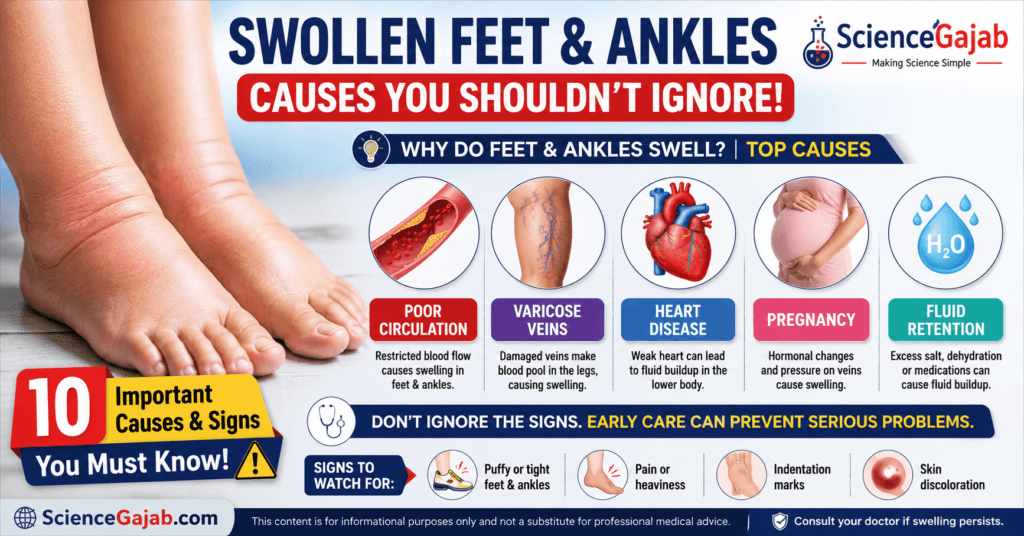
Why Do Feet Swell?
Swelling occurs when excess fluid becomes trapped in body tissues.
Normally, blood vessels and the lymphatic system work together to regulate fluid balance. When this balance is disrupted, fluid can accumulate in the feet and ankles.
Because the feet are the lowest part of the body, gravity often contributes to fluid buildup.
Common Symptoms That May Accompany Swollen Feet
Depending on the cause, swelling may occur along with:
- Tight or shiny skin
- Puffiness around the ankles
- Leg heaviness
- Pain or discomfort
- Redness
- Warmth
- Difficulty wearing shoes
- Reduced flexibility
The associated symptoms often provide clues about the underlying cause.

1. Standing or Sitting for Long Periods
One of the most common causes of swollen feet is prolonged sitting or standing.
When you remain in the same position for hours, gravity causes fluid to collect in the lower legs and feet.
Common Situations
- Office work
- Long flights
- Road trips
- Standing jobs
- Extended bed rest
Symptoms
- Mild swelling
- Feet feel heavy
- Swelling improves after movement
Regular movement usually helps reduce this type of swelling.
2. Varicose Veins and Chronic Venous Insufficiency
Veins contain valves that help blood return to the heart.
When these valves weaken, blood can pool in the legs, leading to swelling.
Symptoms
- Swollen feet and ankles
- Visible enlarged veins
- Leg heaviness
- Aching pain
- Itching around veins
This condition becomes more common with age and prolonged standing.
Varicose Veins Stages Explained With Pictures (Easy Guide for Everyone)
3. Pregnancy
Swollen feet are extremely common during pregnancy.
The growing uterus places pressure on blood vessels, making it harder for blood and fluids to return from the legs.
Normal Pregnancy Symptoms
- Mild swelling in both feet
- Increased swelling in late pregnancy
- Worse swelling after standing
Seek Medical Attention If:
- Swelling appears suddenly
- One leg is significantly larger
- Severe headaches occur
- Vision changes develop
These symptoms may indicate preeclampsia.
Is it safe to eat papaya while pregnant India?
4. Injury or Trauma
Foot injuries often cause localized swelling.
Examples
- Sprains
- Fractures
- Muscle strains
- Ligament injuries
Signs
- Pain
- Bruising
- Difficulty walking
- Swelling around the injury site
Medical evaluation may be necessary if symptoms are severe.
5. Heart Failure
The heart pumps blood throughout the body.
When the heart becomes less efficient, fluid can accumulate in the legs, ankles, and feet.
Warning Signs
- Swelling in both feet
- Shortness of breath
- Fatigue
- Rapid weight gain
- Difficulty lying flat
Persistent swelling combined with breathing difficulties requires prompt medical attention.
❤️ What Happens During a Heart Attack? The Science Explained
6. Kidney Disease
Healthy kidneys remove excess fluid and waste from the bloodstream.
When kidney function declines, fluid may accumulate throughout the body.
Symptoms
- Swollen feet and ankles
- Puffiness around the eyes
- Fatigue
- Changes in urination
- High blood pressure
Kidney-related swelling often develops gradually.
Functions of the Kidney: 12 Essential Roles Your Kidneys Play in Keeping You Healthy
7. Liver Disease
The liver produces proteins that help maintain fluid balance.
Liver disorders may reduce protein levels, allowing fluid to leak into tissues.
Possible Symptoms
- Swollen feet
- Abdominal swelling
- Fatigue
- Yellowing of the skin
- Easy bruising
Medical evaluation is important if these symptoms occur together.
What Your Feet Reveal About Your Health: 10 Warning Signs You Should Never Ignore
8. Lymphedema
The lymphatic system helps remove excess fluid from tissues.
When lymph vessels become damaged or blocked, fluid can accumulate.
Symptoms
- Persistent swelling
- Tight skin
- Heaviness
- Reduced flexibility
Lymphedema often affects one limb more than the other.
Body fluid and circulation class 11
9. Blood Clots
A blood clot in a deep vein can block blood flow and cause swelling.
This condition is known as deep vein thrombosis (DVT).
Warning Signs
- Sudden swelling
- One swollen foot or leg
- Pain
- Warm skin
- Redness
DVT requires immediate medical attention because the clot may travel to the lungs.
Difference Between Arteries and Veins (With Easy Diagram) — Simple Language
10. Certain Medications
Some medications may contribute to fluid retention.
Common Examples
- Blood pressure medications
- Steroids
- Hormonal therapies
- Anti-inflammatory medications
If swelling develops after starting a medication, consult your healthcare provider.
Why Your Brain Suddenly Makes You Feel Dizzy
11. Obesity
Excess body weight increases pressure on the veins and lymphatic system.
This may contribute to:
- Poor circulation
- Venous insufficiency
- Swelling in the feet
Weight management can significantly improve symptoms.
12. Infections
Foot infections can cause localized swelling.
Symptoms
- Redness
- Warmth
- Pain
- Fever
- Drainage
People with diabetes should pay particular attention to signs of infection.
Tingling in Hands and Feet: Causes, Symptoms & When to Worry
Swelling in One Foot vs Both Feet
One Swollen Foot
May indicate:
- Injury
- Blood clot
- Infection
- Lymphedema
Both Swollen Feet
May indicate:
- Heart failure
- Kidney disease
- Liver disease
- Pregnancy
- Venous insufficiency
The pattern of swelling can help identify the underlying cause.

When Is Swelling an Emergency?
Seek immediate medical care if swelling occurs with:
- Chest pain
- Difficulty breathing
- Sudden severe swelling
- One swollen painful leg
- Blue or pale skin
- High fever
These symptoms may indicate a serious medical condition.
What Toenail Changes Reveal About Health: 12 Warning Signs You Should Never Ignore
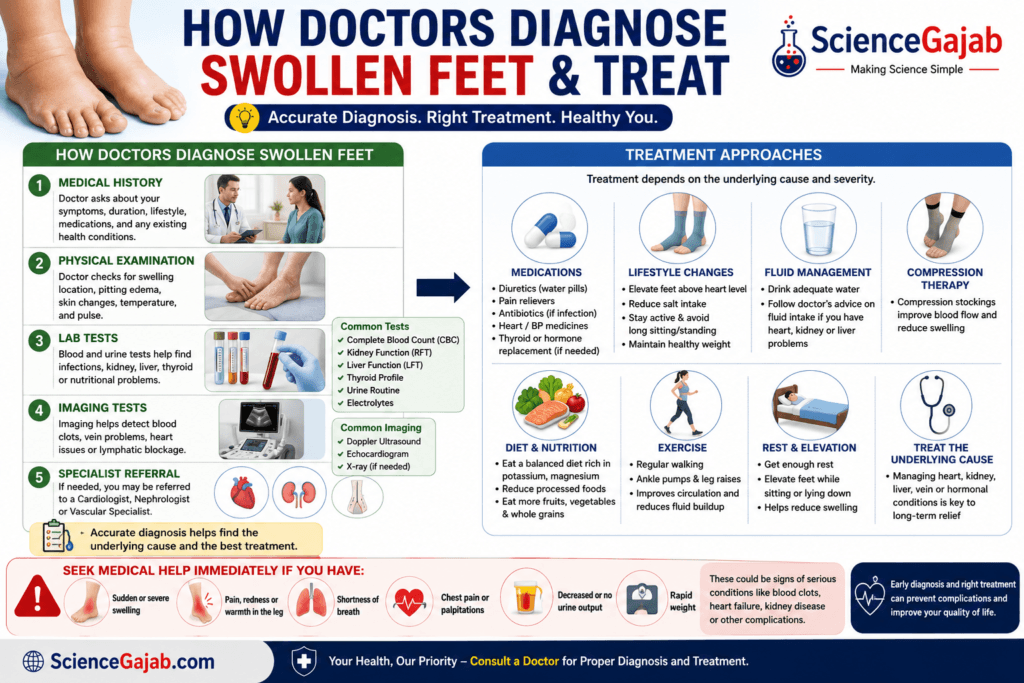
How Doctors Diagnose Swollen Feet
Diagnosis often begins with:
Medical History
Your doctor may ask about:
- Recent injuries
- Medications
- Medical conditions
- Travel history
Physical Examination
The feet, ankles, and legs are examined for:
- Fluid retention
- Skin changes
- Circulation problems
Diagnostic Tests
May include:
- Blood tests
- Ultrasound
- X-rays
- Heart tests
- Kidney function tests
How to Reduce Swollen Feet
Elevate Your Feet
Raising your feet above heart level may reduce fluid accumulation.
Stay Active
Walking encourages blood circulation.
Wear Compression Stockings
Compression can improve blood flow and reduce swelling.
Reduce Excess Salt Intake
High sodium consumption may contribute to fluid retention.
Maintain Healthy Weight
Weight loss often reduces pressure on veins.
Stay Hydrated
Adequate hydration supports healthy circulation.
Complete Blood Count (CBC) Explained: What Every Blood Test Value Means
Preventing Swollen Feet
Healthy lifestyle habits can reduce the risk of swelling.
Prevention Tips
1✔ Exercise regularly
2✔ Avoid prolonged sitting
3✔ Elevate feet when possible
4✔ Wear supportive shoes
5✔ Manage chronic health conditions
6✔ Avoid smoking
7✔ Control blood pressure
8✔ Maintain healthy body weight
Frequently Asked Questions
Is foot swelling always serious?
No. Temporary swelling after standing or travel is common. Persistent swelling should be evaluated.
Can poor circulation cause swollen feet?
Yes. Poor circulation and venous insufficiency are common causes of swelling.
Why do my feet swell at night?
Fluid often accumulates throughout the day due to gravity, causing swelling that becomes more noticeable in the evening.
Can dehydration cause swollen feet?
In some cases, dehydration may contribute to fluid imbalance and swelling.
When should I see a doctor?
If swelling persists, worsens, becomes painful, or is accompanied by breathing difficulties, seek medical advice.
Expert Health Note
This article is medically reviewed using current knowledge regarding edema, circulation disorders, vascular disease, kidney conditions, and general foot health. It is intended for educational purposes only and should not replace professional medical diagnosis or treatment. Persistent or unexplained swelling should be evaluated by a qualified healthcare provider.
Conclusion
Swollen feet can result from something as simple as standing for too long or as serious as heart disease, kidney problems, or blood clots. Understanding the potential causes allows you to recognize when swelling is harmless and when medical evaluation is necessary.
If swelling is persistent, painful, or accompanied by other concerning symptoms, do not ignore it. Early diagnosis and treatment can help prevent complications and improve overall health.
Medical Disclaimer
This article is intended for educational and informational purposes only and should not be considered a substitute for professional medical advice, diagnosis, or treatment. Swollen feet can have many causes, ranging from temporary fluid retention to conditions requiring medical attention. Always consult a qualified healthcare professional if swelling is persistent, severe, unexplained, or associated with other concerning symptoms.
When to Seek Urgent Medical Help
Seek prompt medical attention if foot or leg swelling:
- Develops suddenly, especially on one side
- Is accompanied by significant pain, redness, or warmth
- Occurs with chest pain, shortness of breath, fainting, or difficulty breathing
- Appears suddenly during pregnancy or is associated with severe headache or vision changes
- Develops after a significant injury
- Is rapidly worsening or associated with serious illness
These symptoms can sometimes indicate conditions that require urgent medical evaluation.
How We Maintain Medical Accuracy
At ScienceGajab, our health content is created for general education and is based on information from established medical and public-health resources. We aim to explain medical topics in clear, reader-friendly language while distinguishing common causes from symptoms that may require professional evaluation.
Medical information can change as new evidence becomes available. Articles should therefore be periodically reviewed and updated when necessary.
Author & Review Information
Published by: ScienceGajab Editorial Team
Medical Review: Dr Sanjay Prajapati & editorial team
Last Updated: August 2026
Do not label an article “medically reviewed” unless a qualified healthcare professional has actually reviewed it.
References
- NHS — Oedema (swelling)
- Mayo Clinic — Edema: Symptoms and causes
- MedlinePlus, U.S. National Library of Medicine — Edema
- Cleveland Clinic — Edema: Causes, symptoms and treatment
Editorial Note
ScienceGajab strives to provide accurate, understandable, and evidence-based health information. Our content is designed to help readers better understand health topics and recognize when professional medical advice may be appropriate. It does not establish a doctor-patient relationship and should not be used for self-diagnosis or as a replacement for individualized medical care.