What Toenail Changes Reveal About Health
What Toenail Changes Reveal About Health: 12 Warning Signs You Should Never Ignore
Most people rarely pay attention to their toenails unless they become painful or difficult to trim. However, toenails can sometimes provide valuable clues about your overall health. Changes in color, thickness, shape, texture, or growth patterns may occasionally signal underlying health conditions.
While many nail changes are harmless and related to aging or minor injuries, some can indicate circulation problems, nutritional deficiencies, infections, thyroid disorders, diabetes, or other medical conditions.
Because toenails grow slowly, they often reflect health changes that have been occurring over weeks or months.
In this article, we’ll explore what toenail changes reveal about health and discuss warning signs that should not be ignored.
Why Are Toenails Important Indicators of Health?
Toenails depend on healthy blood circulation, proper nutrition, and normal nail growth.
When the body experiences illness, nutritional deficiencies, circulation problems, or infections, nail growth may be affected.
Toenails can reveal:
- Nutritional deficiencies
- Poor circulation
- Chronic diseases
- Fungal infections
- Thyroid disorders
- Diabetes complications
This is why healthcare providers often examine the nails during routine medical evaluations.
Purple Feet and Poor Circulation: Causes, Warning Signs, and When to Seek Medical Help
What Healthy Toenails Look Like
Healthy toenails are usually:
1✔ Smooth
2✔ Light pink
3✔ Uniform in thickness
4✔ Free of discoloration
5✔ Strong but flexible
6✔ Growing consistently
Any significant changes that persist may warrant further investigation.
Signs of Diabetes Visible on Feet: 10 Warning Signs You Should Never Ignore
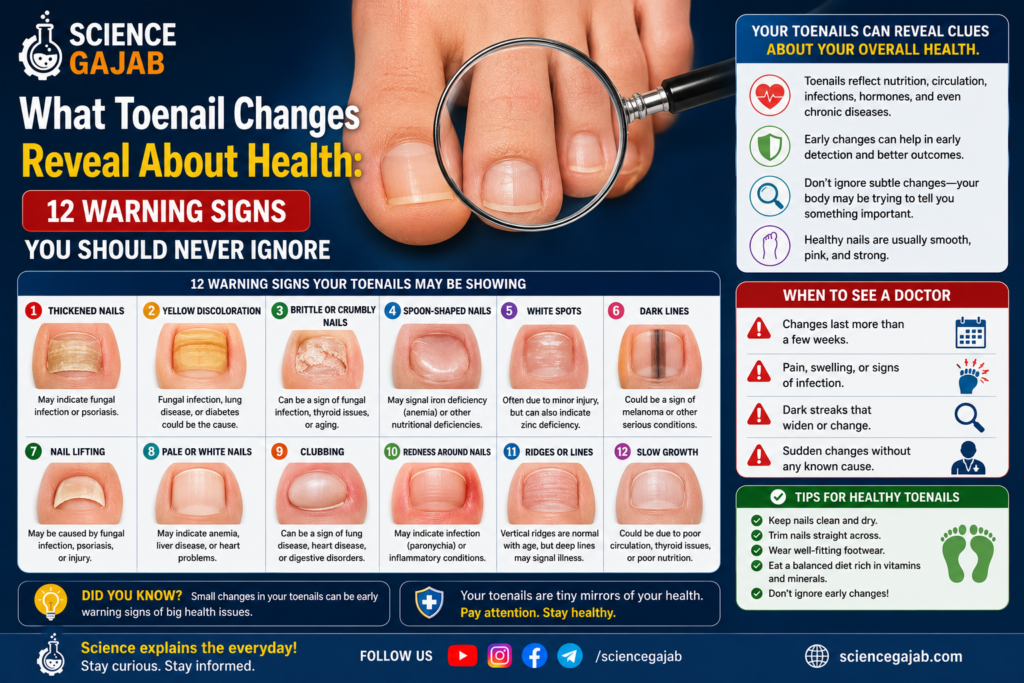
1. Yellow Toenails
Yellow toenails are among the most common nail changes.
Common Causes
- Fungal infection
- Aging
- Repeated nail trauma
- Smoking
Less Common Causes
- Diabetes
- Thyroid disease
- Chronic respiratory disorders
Warning Signs
- Thickening
- Brittleness
- Slow growth
Persistent yellow nails should be evaluated.
2. Thick Toenails
Toenails naturally thicken slightly with age.
However, excessive thickening may indicate:
Common Causes
- Fungal infection
- Repeated pressure
- Aging
Other Possible Causes
- Psoriasis
- Circulation problems
Thick nails can become painful and difficult to trim.
3. White Spots on Toenails
Small white spots are usually harmless.
Common Causes
- Minor nail injury
- Pressure from shoes
- Previous trauma
Less Common Causes
- Zinc deficiency
- Fungal infection
Most white spots disappear as the nail grows.
4. Vertical Ridges
Vertical ridges run from the base of the nail to the tip.
Usually Caused By
- Aging
- Normal nail growth
When to Pay Attention
If ridges suddenly become severe or are accompanied by other nail changes, further evaluation may be needed.
5. Horizontal Ridges (Beau’s Lines)
Horizontal grooves across the nail may indicate that nail growth temporarily stopped.
Possible Causes
- Severe illness
- High fever
- Major surgery
- Nutritional deficiency
- Uncontrolled diabetes
These lines often appear weeks after a significant health event.
6. Dark Streaks Under the Nail
Dark streaks deserve special attention.
Possible Causes
- Injury
- Bleeding under the nail
- Pigment changes
Rare but Serious Cause
- Melanoma (skin cancer)
Any unexplained dark streak should be evaluated by a healthcare professional.
7. Pale Toenails
Healthy nails usually have a pink appearance due to blood flow beneath the nail.
Pale nails may indicate:
Possible Causes
- Anemia
- Poor circulation
- Nutritional deficiencies
- Chronic illness
Persistent paleness may require medical assessment.
Varicose Veins Stages Explained With Pictures (Easy Guide for Everyone)
8. Blue or Purple Toenails
Blue or purple nails often indicate reduced oxygen delivery.
Possible Causes
- Poor circulation
- Cold exposure
- Heart disease
- Lung disease
- Raynaud’s phenomenon
Additional Symptoms
- Cold feet
- Numbness
- Shortness of breath
Persistent blue nails should never be ignored.
9. Brittle or Crumbling Toenails
Toenails that easily break may indicate:
Causes
- Fungal infection
- Aging
- Thyroid disorders
- Nutritional deficiencies
Associated Nutrients
- Iron
- Zinc
- Biotin
Proper nutrition supports nail health.
Why One Foot Swells More Than the Other: Causes, Warning Signs, and When to Seek Medical Help
10. Spoon-Shaped Nails
This condition is known as koilonychia.
The nails develop a concave shape resembling a spoon.
Common Causes
- Iron deficiency anemia
- Nutritional deficiencies
- Certain medical conditions
Spoon-shaped nails often warrant medical evaluation.
Why Do Feet Burn at Night? Causes, Warning Signs, and When to Worry
11. Toenails Growing Slowly
Slow-growing nails may sometimes indicate reduced circulation.
Possible Causes
- Peripheral artery disease
- Diabetes
- Aging
- Nutritional deficiencies
Poor circulation often affects the feet before other areas.
Why Do Feet Become Cold? (Simple Explanation You Can Trust)
12. Toenail Separation From the Nail Bed
The nail may partially lift away from the skin underneath.
Causes
- Injury
- Psoriasis
- Thyroid disorders
- Fungal infections
The affected nail often appears white or yellow.
Toenail Changes and Diabetes
Diabetes can affect both blood vessels and nerves.
Common Toenail Changes in Diabetes
- Thickened nails
- Yellow nails
- Slow growth
- Increased infections
Regular foot examinations are important for people with diabetes.
Tingling in Hands and Feet: Causes, Symptoms & When to Worry
Toenail Changes and Poor Circulation
Reduced blood flow can affect nail growth and appearance.
Warning Signs
- Slow nail growth
- Pale nails
- Blue nails
- Thickened nails
Poor circulation may also cause:
- Cold feet
- Leg pain
- Slow-healing wounds
Numb Feet: Common Causes Explained – Symptoms, Warning Signs, and Treatment
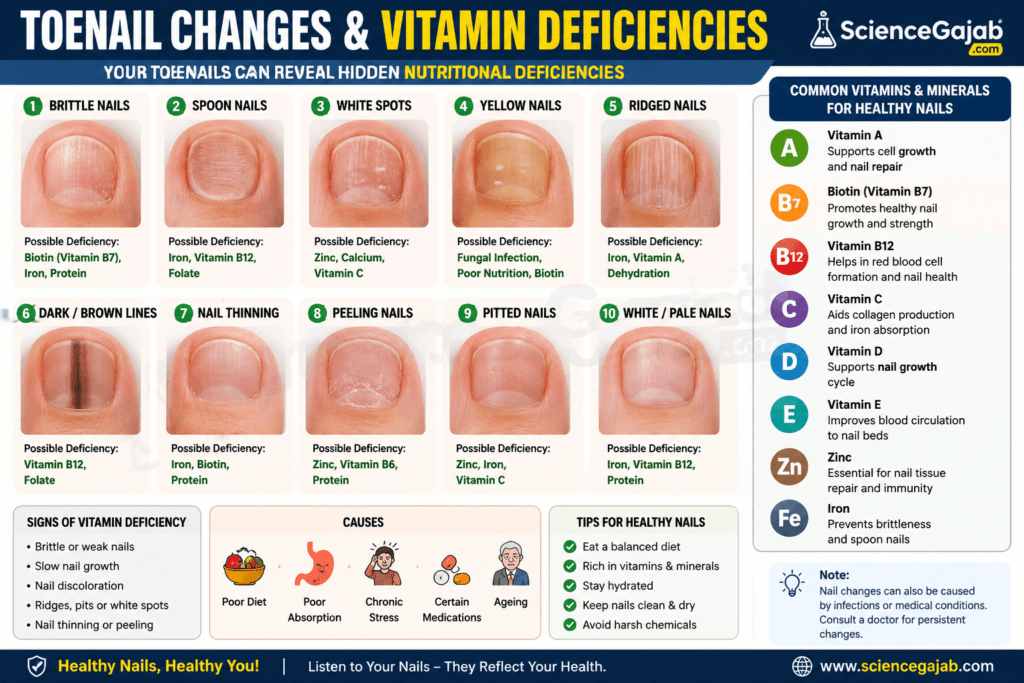
Toenail Changes and Vitamin Deficiencies
🚨 10 Signs Your Body Lacks Vitamins You Should Never Ignore
Certain nutrients are essential for healthy nails.
Iron Deficiency
May cause:
- Pale nails
- Spoon-shaped nails
Zinc Deficiency
May cause:
- White spots
- Slow nail growth
Vitamin B12 Deficiency
May contribute to:
- Nail discoloration
- Pigment changes
Balanced nutrition supports healthy nail growth.
🚨 Early Signs of Vitamin B12 Deficiency — Don’t Ignore These Warning Signals!
When Should You See a Doctor?
Seek medical advice if you notice:
- Dark streaks
- Persistent discoloration
- Nail separation
- Painful thickening
- Signs of infection
- Slow-healing wounds
- Blue or purple nails
These changes may indicate an underlying medical condition.
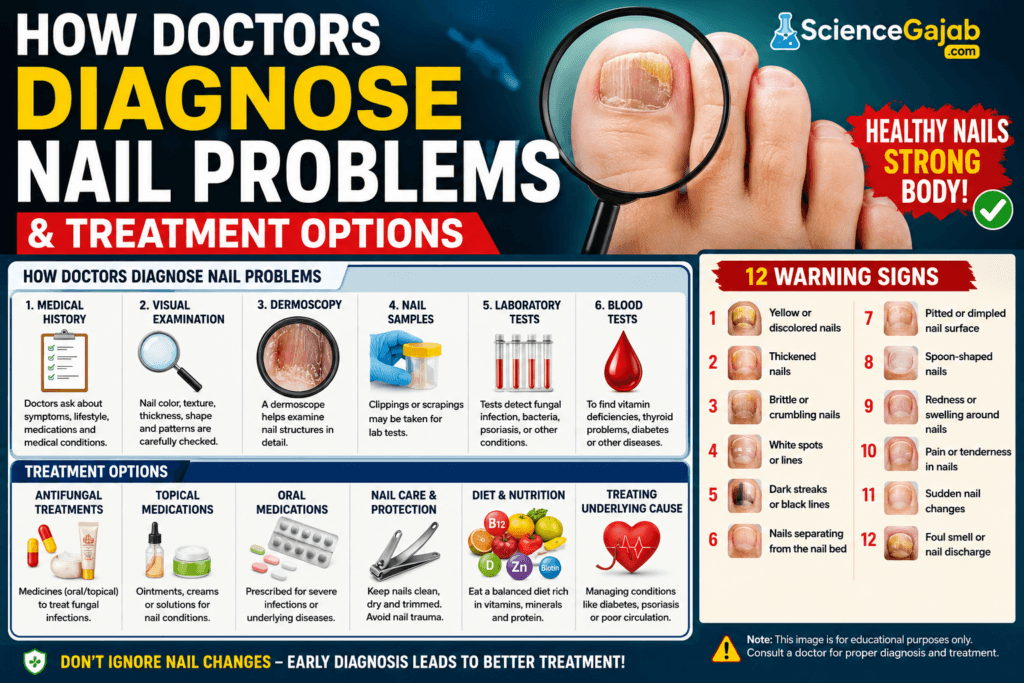
How Doctors Diagnose Nail Problems
Healthcare providers may use:
Physical Examination
Assessment of:
- Nail color
- Thickness
- Shape
- Growth patterns
Laboratory Testing
- Blood tests
- Iron levels
- Thyroid testing
- Diabetes screening
Nail Samples
Sometimes collected to evaluate fungal infections.
How to Keep Toenails Healthy
Daily Nail Care
1✔ Keep nails clean
2✔ Trim nails straight across
3✔ Wear properly fitting shoes
4✔ Avoid walking barefoot in public areas
5✔ Maintain healthy circulation
6✔ Eat a balanced diet
7✔ Control diabetes
8✔ Inspect feet regularly
Frequently Asked Questions
Yes. Nail changes can sometimes indicate infections, circulation problems, diabetes, anemia, or nutritional deficiencies.
Usually not. They are often caused by minor trauma.
Fungal infections are the most common cause, but diabetes and other conditions may contribute.
Blue nails may indicate poor circulation or reduced oxygen levels and should be evaluated if persistent.
Yes. Iron, zinc, vitamin B12, and other nutrients play important roles in nail health.
Expert Health Note
This article is based on established medical information regarding dermatology, circulation disorders, nutritional deficiencies, diabetes, and nail health. It is intended for educational purposes only and should not replace professional medical advice. Persistent or unexplained nail changes should be evaluated by a qualified healthcare provider.
Conclusion
Your toenails may reveal more about your health than you realize. Changes in color, thickness, texture, growth, or shape can sometimes provide early clues about circulation problems, nutritional deficiencies, infections, diabetes, or other medical conditions.
While many nail changes are harmless, persistent or unusual changes deserve attention. Paying close attention to your toenails and seeking medical advice when necessary may help identify health issues before more serious symptoms develop.
Healthy toenails often reflect healthy circulation, nutrition, and overall well-being.
Cracked Heels and Health Conditions: What Your Feet May Be Telling You
References :
AAD — Nail Fungus: Diagnosis & Treatment
American Academy of Dermatology (AAD) — Nail Changes & Warning Signs
NHS — Nail Problems
Mayo Clinic — Nail Ridges
Author ; Dr Sanjay Prajapati (MBBS)