Tingling in Hands and Feet
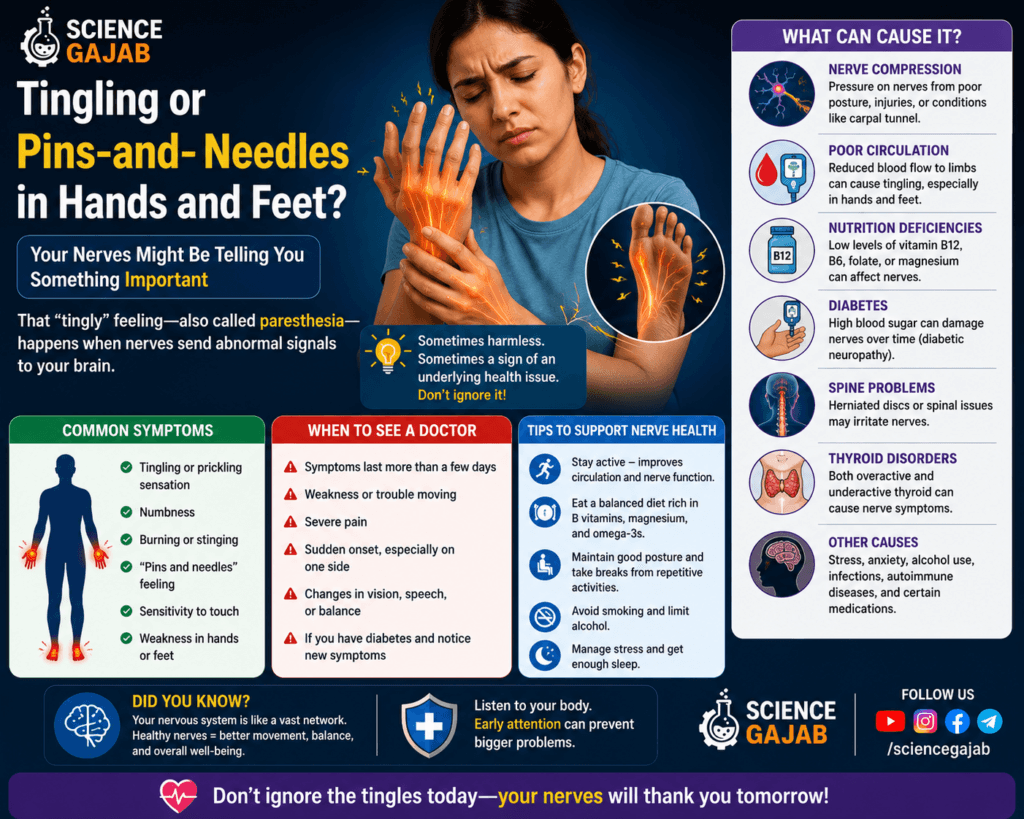
Why Do Hands and Feet Tingle?
Have you ever felt:
- Pins and needles in your hands?
- Tingling in your feet while sitting?
- Burning or numbness in fingers or toes?
This strange sensation is called tingling or paresthesia.
Sometimes it happens briefly and is harmless. But persistent tingling may indicate:
- Nerve problems
- Diabetes
- Vitamin deficiencies
- Poor blood circulation
- Anxiety
- Spine disorders
In this article, we’ll explain:
- What tingling means
- Common causes
- Dangerous warning signs
- Treatment options
- When to seek medical help
Everything is explained in simple human language.
Why Do Feet Become Cold? (Simple Explanation You Can Trust)
What Is Tingling?
Tingling is an abnormal sensation often described as:
- Pins and needles
- Prickling
- Crawling sensation
- Burning feeling
- Electric shock-like feeling
It commonly affects:
- Hands
- Fingers
- Feet
- Toes
- Arms
- Legs
Is Tingling Always Dangerous?
No.
Short-term tingling is very common and often harmless.
Example:
- Sitting cross-legged too long
- Sleeping on your arm
- Temporary pressure on a nerve
Usually sensation returns after changing position.
Why One Foot Swells More Than the Other: Causes, Warning Signs, and When to Seek Medical Help
How Do Nerves Cause Tingling?
Nerves carry signals between the brain and body.
When nerves become:
- Compressed
- Damaged
- Irritated
- Poorly supplied with blood
they may produce abnormal sensations like tingling.
🚨 Early Signs of Vitamin B12 Deficiency — Don’t Ignore These Warning Signals!
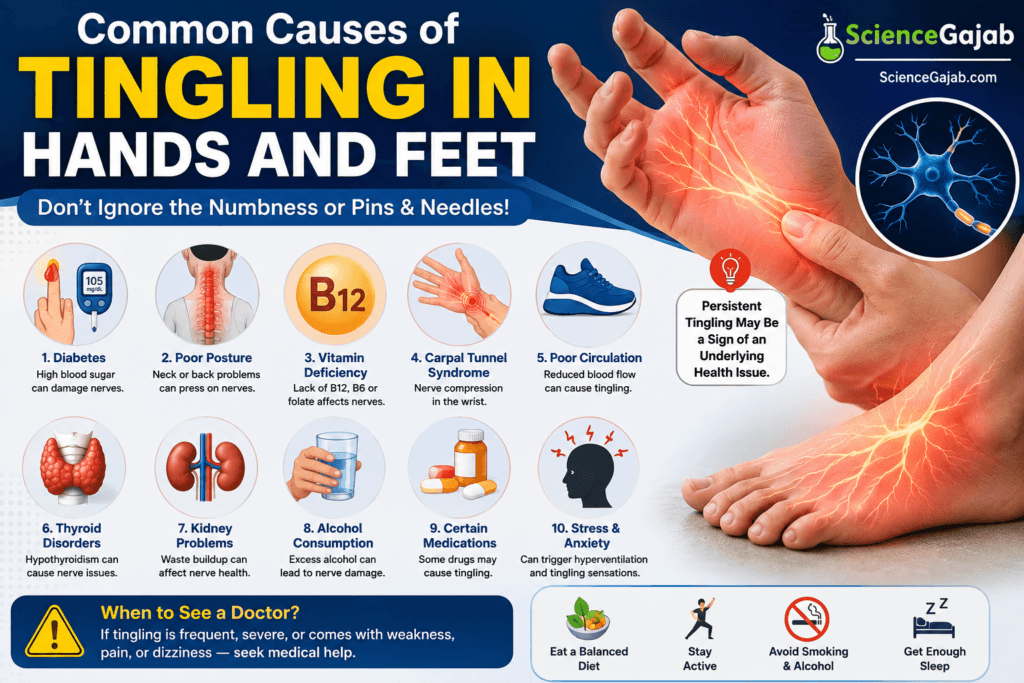
Common Causes of Tingling in Hands and Feet
1. Sitting or Sleeping in One Position
This is the most common harmless cause.
Pressure temporarily compresses nerves or blood vessels.
Examples:
- Sleeping on your arm
- Sitting cross-legged
- Leaning on elbow for long time
The tingling usually disappears quickly.
Purple Feet and Poor Circulation: Causes, Warning Signs, and When to Seek Medical Help
2. Vitamin B12 Deficiency
Vitamin B12 is essential for healthy nerves.
Low B12 may cause:
- Tingling hands and feet
- Weakness
- Fatigue
- Balance problems
Long-term deficiency may permanently damage nerves.
Numb Feet: Common Causes Explained – Symptoms, Warning Signs, and Treatment
3. Diabetes
Diabetes is one of the most important causes.
High blood sugar damages nerves over time.
This is called:
Diabetic Neuropathy
Symptoms
- Tingling feet
- Burning sensation
- Numbness
- Reduced sensation
Usually starts in feet first.
Signs of Diabetes Visible on Feet: 10 Warning Signs You Should Never Ignore
4. Anxiety and Stress
Stress strongly affects the nervous system.
Anxiety may cause:
- Tingling hands
- Tingling around mouth
- Cold feet
- Fast heartbeat
Hyperventilation during panic attacks may worsen symptoms.
Why Do Moles Appear? Causes, Types, Warning Signs & When to See a Doctor
5. Poor Blood Circulation
Reduced blood flow decreases oxygen supply to nerves.
Common causes:
- Smoking
- Peripheral artery disease
- Diabetes
Symptoms
- Cold hands or feet
- Tingling
- Pain while walking
🫀 Human Circulatory System Basics: A Complete Guide
6. Nerve Compression
Pressure on nerves causes tingling.
Examples include:
- Carpal tunnel syndrome
- Sciatica
- Cervical spondylosis
Back Pain Causes: 20 Reasons Your Back Hurts & When to See a Doctor
7. Carpal Tunnel Syndrome
This affects the median nerve in the wrist.
Common in:
- Computer users
- Mobile users
- Repetitive hand workers
Symptoms
- Tingling fingers
- Hand numbness
- Weak grip
- Night symptoms
8. Sciatica
Sciatica occurs when the sciatic nerve becomes compressed.
Symptoms usually affect:
- Lower back
- Buttock
- Leg
- Foot
9. Cervical Spondylosis
Neck spine degeneration may compress nerves.
Symptoms
- Hand tingling
- Neck pain
- Shoulder pain
- Arm numbness
Common in older adults.
10. Alcohol Excess
Long-term alcohol use may damage nerves.
This is called alcoholic neuropathy.
11. Thyroid Problems
Low thyroid hormone may contribute to:
- Nerve compression
- Tingling
- Muscle weakness
12. Kidney Disease
Kidney failure can lead to toxin buildup affecting nerves.
Functions of the Kidney: 12 Essential Roles Your Kidneys Play in Keeping You Healthy
13. Infections
Certain infections may damage nerves.
Examples:
- Shingles
- Lyme disease
- HIV
14. Multiple Sclerosis (MS)
MS affects the brain and spinal cord.
Tingling may be an early symptom.
Other symptoms may include:
- Vision problems
- Weakness
- Balance issues
15. Stroke
Sudden tingling with weakness or facial drooping may indicate stroke.
This is a medical emergency.
Tingling in Hands vs Feet
| Tingling in Hands | Tingling in Feet |
|---|---|
| Often nerve compression | Often neuropathy |
| Carpal tunnel common | Diabetes common |
| Neck problems possible | Circulation issues possible |
Why Tingling Happens at Night
Night-time tingling commonly occurs because:
- Nerves are compressed during sleep
- Blood circulation slows
- Wrist bending increases nerve pressure
Parts of the Human Brain and Their Functions Explained
Can Anxiety Really Cause Tingling?
Yes.
Anxiety can cause:
- Hyperventilation
- Stress hormone release
- Temporary nerve sensitivity
Many people experience tingling during panic attacks.
🌀Why Your Brain Gets Confused During Motion Sickness
Tingling and Diabetes
Diabetes-related nerve damage usually starts in feet.
Typical symptoms:
- Burning feet
- Tingling toes
- Reduced sensation
- Night pain
Early sugar control is very important.
Tingling Due to Vitamin Deficiency
Vitamin deficiencies affecting nerves include:
- Vitamin B12
- Vitamin B6
- Vitamin E
Vegetarians and elderly people are at higher risk of B12 deficiency.
Can Low Vitamins Damage Nerves? (Simple Explanation You Can Trust)
Dangerous Signs You Should Not Ignore
Seek medical help urgently if tingling occurs with:
- Weakness
- Paralysis
- Facial drooping
- Difficulty speaking
- Loss of bladder control
- Severe pain
These may indicate serious neurological conditions.
Signs of Anemia: 15 Warning Symptoms You Should Never Ignore
Can Poor Circulation Cause Tingling?
Yes.
When nerves receive less oxygen-rich blood:
- Tingling
- Numbness
- Coldness
may develop.
Difference Between Tingling and Numbness
| Tingling | Numbness |
|---|---|
| Pins and needles | Reduced sensation |
| Irritating sensation | Loss of feeling |
| Often early nerve irritation | More advanced involvement |
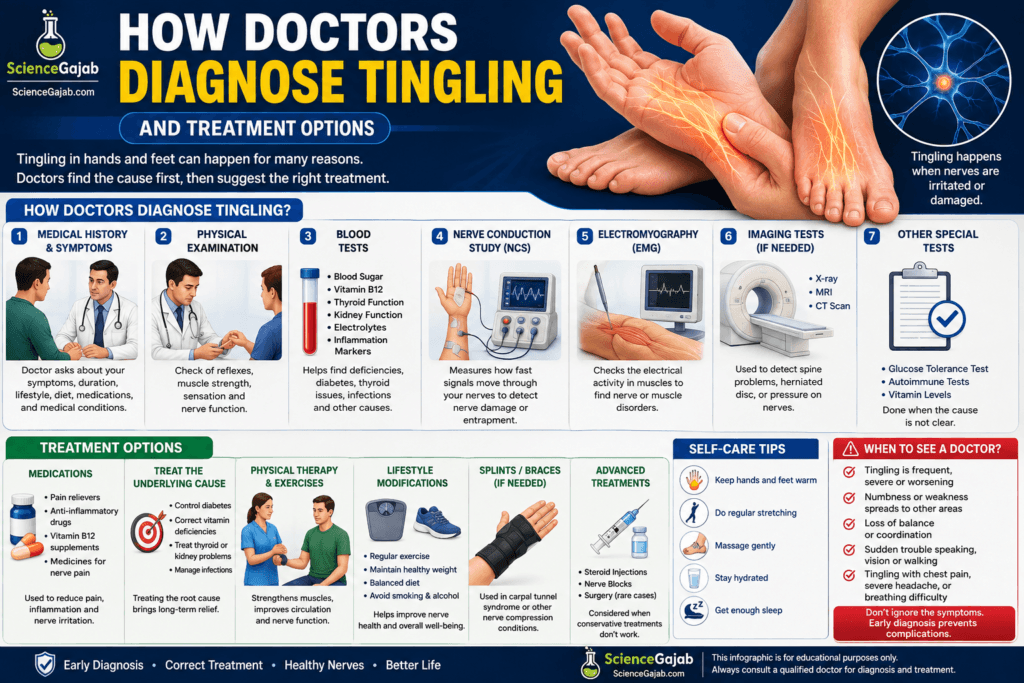
How Doctors Diagnose Tingling
Doctors may recommend:
- Blood sugar tests
- Vitamin B12 test
- Thyroid test
- Nerve conduction study
- MRI or spine imaging
Treatment Depends on the Cause
1. Vitamin Deficiency
Vitamin supplements may help.
2. Diabetes
Blood sugar control is essential.
3. Nerve Compression
Physiotherapy or posture correction.
4. Anxiety
Stress management and relaxation.
5. Poor Circulation
Exercise and smoking cessation.
Home Tips to Reduce Tingling
1. Move Regularly
Avoid sitting in one position for too long.
2. Exercise
Improves circulation and nerve health.
3. Eat Nutritious Foods
Healthy nerves need vitamins and minerals.
4. Avoid Smoking
Smoking damages blood vessels and nerves.
5. Control Blood Sugar
Very important for diabetics.
🏃 What Happens Inside Cells When You Exercise (Simple Explanation)
Foods That Support Nerve Health
Helpful foods include:
- Eggs
- Milk
- Fish
- Nuts
- Green vegetables
- Fruits
Why Oxygen Is Important for Cells (Simple Explanation)
Interesting Facts About Tingling
1. Temporary Tingling Is Extremely Common
Almost everyone experiences it occasionally.
2. Nerves Need Vitamins
Vitamin B12 is especially important.
3. Diabetes Is a Leading Cause
Especially for tingling in feet.
Chemical Coordination & Integration Explained Simply (Endocrine System, Hormones, Functions)
Frequently Asked Questions (FAQs)
Common causes include nerve pressure, vitamin deficiency, diabetes, anxiety, and poor circulation.
Yes, anxiety and panic attacks commonly cause tingling sensations
It can be, especially when affecting feet persistently.
Vitamin B12 deficiency is a major cause.
Seek medical care if tingling is persistent, worsening, painful, or associated with weakness.
Final Thoughts
Tingling in hands and feet is common and often temporary.
But persistent or worsening tingling may signal:
- Diabetes
- Vitamin deficiency
- Nerve compression
- Poor circulation
- Neurological disease
Understanding the cause is important because early treatment can prevent long-term nerve damage.
If tingling is frequent, severe, or associated with weakness or numbness, medical evaluation is strongly recommended.
Medical Disclaimer
This article is for educational awareness only and does not replace professional medical advice, diagnosis, or treatment.
Sources & References
- American Diabetes Association
- Mayo Clinic educational resources
- Neurology educational references
- Standard physiology textbooks
Reviewed Topic
Educational overview of tingling in hands and feet, nerve disorders, diabetes, vitamin deficiencies, and circulation problems explained in simple language for general readers.
Author Dr Sanjay Prajapati (MBBS)
https://www.facebook.com/sciencegajab/