
Why One Foot Swells More Than the Other: Causes, Warning Signs, and When to Seek Medical Help
It’s common for both feet to become swollen after a long day of standing or sitting. However, when only one foot swells or one foot becomes significantly larger than the other, it may indicate an underlying problem that deserves attention.
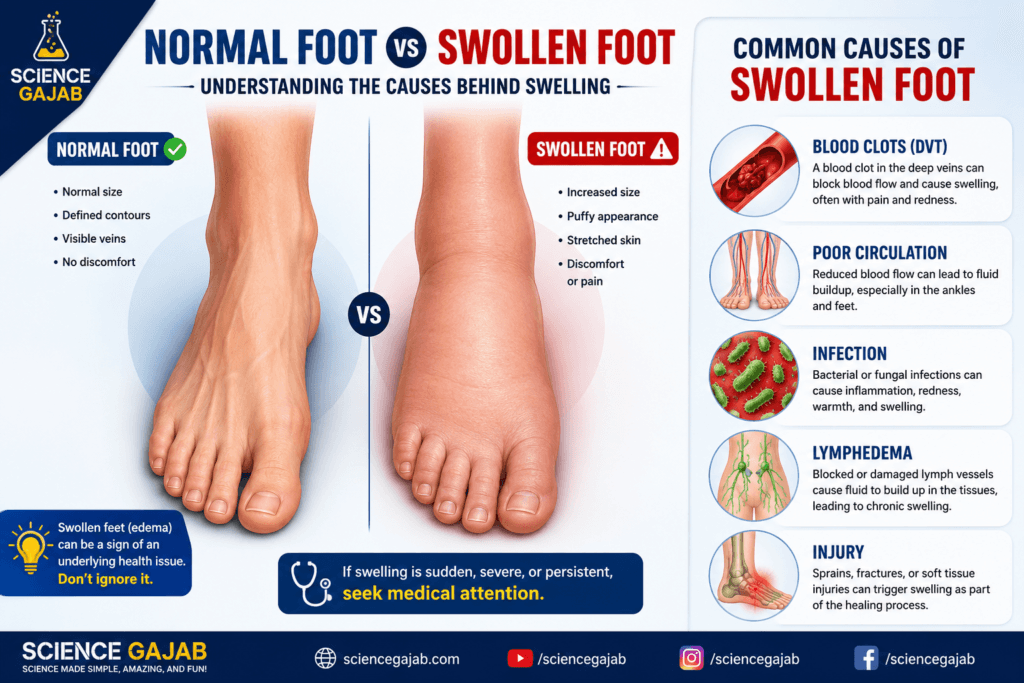
While some causes are relatively harmless, such as a minor injury, others can be serious and require urgent medical evaluation. Conditions such as blood clots, infections, circulation problems, and lymphatic disorders may cause swelling in just one foot or leg.
Understanding why one foot swells more than the other can help you recognize warning signs and determine when medical care is needed.
Is It Normal for One Foot to Be Slightly Larger?
Many people naturally have one foot that is slightly larger than the other.
However, sudden or noticeable swelling affecting only one foot is usually not considered normal and should be investigated if it persists.
Signs of Abnormal Swelling
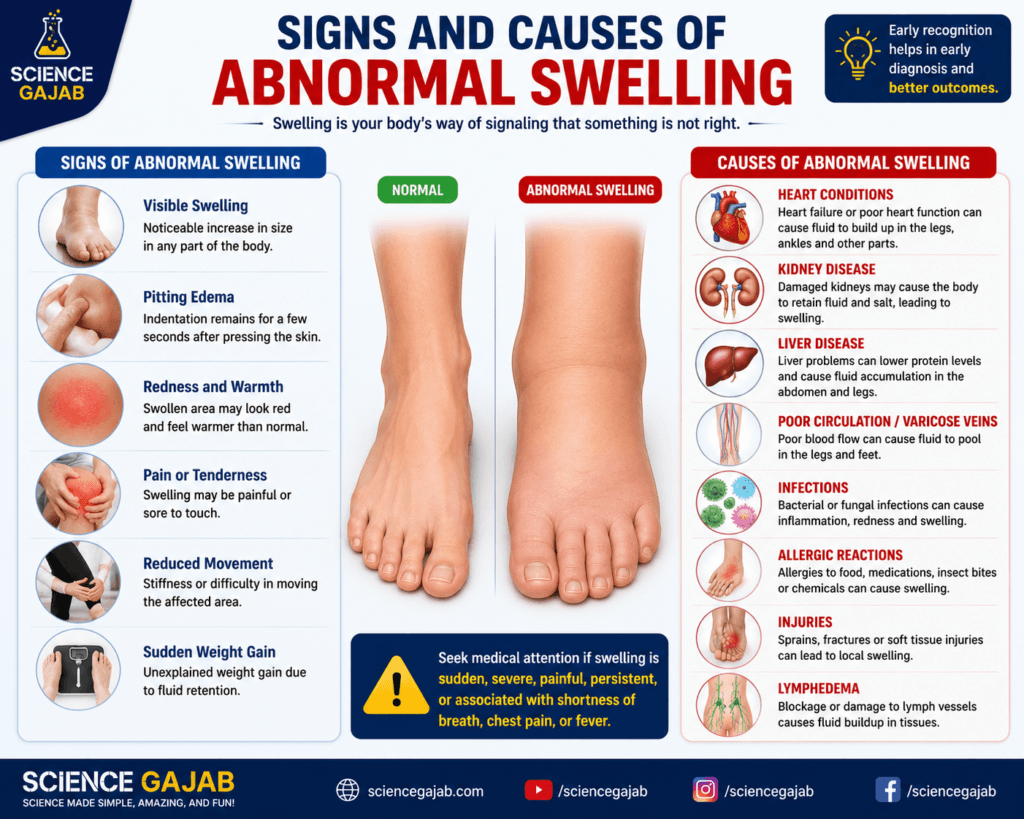
- One foot appears visibly larger
- Shoes fit differently on each foot
- Swelling develops suddenly
- Pain accompanies swelling
- Skin color changes occur
Persistent one-sided swelling may indicate an underlying condition.
Purple Feet and Poor Circulation: Causes, Warning Signs, and When to Seek Medical Help
How Swelling Develops
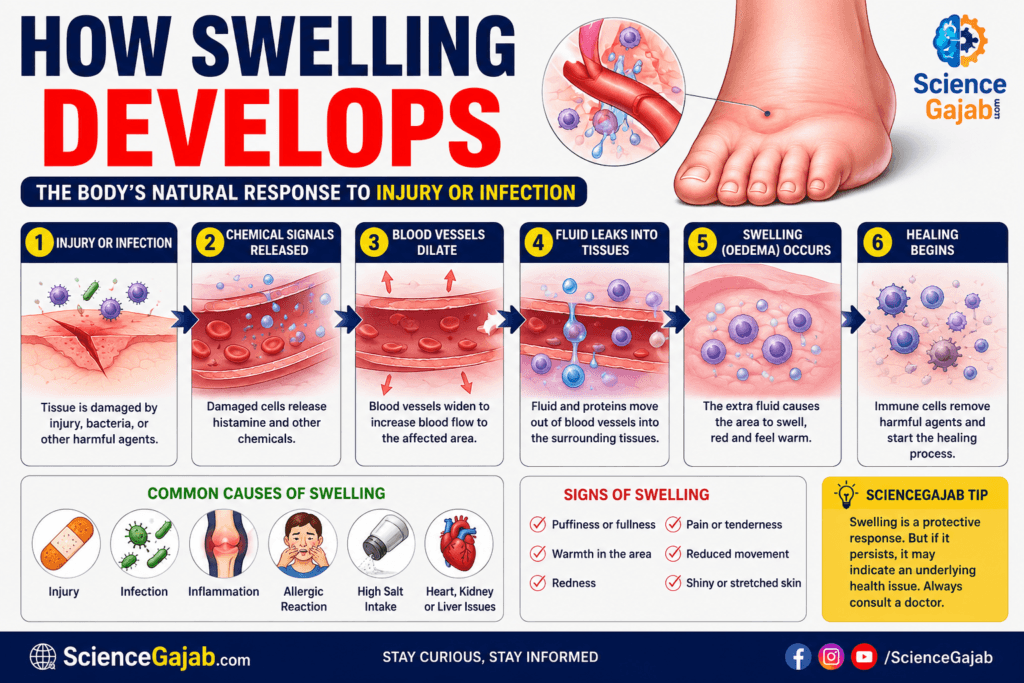
Swelling occurs when excess fluid accumulates within body tissues.
This may happen because of:
- Injury
- Poor circulation
- Blocked lymphatic drainage
- Infection
- Inflammation
Since the feet are affected by gravity, fluid tends to collect there first.
1. Injury or Trauma
One of the most common causes of swelling in one foot is injury.
Examples
- Ankle sprain
- Foot fracture
- Muscle strain
- Ligament injury
Symptoms
- Pain
- Bruising
- Difficulty walking
- Tenderness
Swelling often appears within hours of the injury.
Why Do Feet Become Cold? (Simple Explanation You Can Trust)
2. Deep Vein Thrombosis (DVT)
A blood clot in a deep vein can block blood flow and cause swelling.
This is one of the most serious causes of one-sided swelling.
Warning Signs
- Sudden swelling
- Pain or tenderness
- Warm skin
- Red or bluish discoloration
Why It Is Dangerous
A clot may travel to the lungs and cause a life-threatening pulmonary embolism.
Immediate medical attention is required.
Cracked Heels and Health Conditions: What Your Feet May Be Telling You
3. Chronic Venous Insufficiency
Veins contain valves that help blood return to the heart.
When these valves weaken, blood may pool in the lower limbs.
Symptoms
- Swelling
- Leg heaviness
- Varicose veins
- Skin discoloration
Although it often affects both legs, symptoms may be worse on one side.
Numb Feet: Common Causes Explained – Symptoms, Warning Signs, and Treatment
4. Lymphedema
The lymphatic system helps remove excess fluid from tissues.
When lymph flow becomes blocked, swelling develops.
Symptoms
- Persistent swelling
- Tight skin
- Heaviness
- Reduced flexibility
Lymphedema frequently affects one leg or foot more than the other.
5. Infection
Infections can cause inflammation and fluid buildup.
Common Signs
- Swelling
- Redness
- Warmth
- Pain
- Fever
People with diabetes should be especially cautious because infections can progress rapidly.
6. Cellulitis
Cellulitis is a bacterial skin infection that often affects one leg or foot.
Symptoms
- Swelling
- Red skin
- Warmth
- Tenderness
- Fever
Prompt treatment with antibiotics is important.
Why Do Feet Burn at Night? Causes, Warning Signs, and When to Worry
7. Poor Circulation
Reduced blood flow can contribute to swelling, especially if circulation is worse in one leg.
Possible Causes
- Peripheral artery disease
- Blood vessel narrowing
- Smoking-related vascular disease
Associated Symptoms
- Cold foot
- Pain while walking
- Slow-healing wounds
- Skin color changes
Circulation problems should be medically evaluated.
Back Pain Causes: 20 Reasons Your Back Hurts & When to See a Doctor
8. Arthritis
Certain forms of arthritis may affect one foot more severely.
Examples
- Osteoarthritis
- Rheumatoid arthritis
- Psoriatic arthritis
Symptoms
- Joint swelling
- Stiffness
- Pain
- Reduced mobility
Swelling often occurs around affected joints.
9. Gout
Gout is caused by uric acid crystal buildup in joints.
The big toe is one of the most commonly affected areas.
Symptoms
- Sudden swelling
- Severe pain
- Redness
- Warm skin
Symptoms often develop rapidly, sometimes overnight.
🚨 10 Signs Your Body Lacks Vitamins You Should Never Ignore
10. Insect Bites or Allergic Reactions
Localized swelling may develop after:
- Insect bites
- Stings
- Allergic reactions
Symptoms
- Itching
- Redness
- Swelling
Most cases improve within a few days.
Why Do Mosquito Bites Itch? The Science Behind the Irritating Bump
11. Foot or Ankle Surgery
Swelling is common during recovery after surgery.
Factors Affecting Recovery
- Type of surgery
- Activity level
- Circulation
Swelling may persist for weeks or months depending on the procedure.
Why Wounds Itch During Healing and How to Stop It ?
12. Tumors or Growths (Rare)
Rarely, a mass pressing on blood vessels or lymphatic structures can cause swelling.
Warning Signs
- Persistent swelling
- Unexplained enlargement
- No obvious injury
Medical evaluation is important if symptoms remain unexplained.
How Cancer Actually Begins Inside Your Body
Swelling With Pain vs Swelling Without Pain
Swelling With Pain
May indicate:
- Injury
- Infection
- Blood clot
- Gout
Swelling Without Pain
May indicate:
- Lymphedema
- Venous insufficiency
- Circulation disorders
The presence or absence of pain helps narrow the possible causes.
🚨 Early Signs of Vitamin B12 Deficiency — Don’t Ignore These Warning Signals!
When Is One-Sided Swelling an Emergency?
Seek immediate medical attention if swelling occurs with:
- Sudden onset
- Chest pain
- Difficulty breathing
- Severe pain
- Redness and warmth
- Blue or purple skin
These symptoms may indicate a blood clot or other serious condition.
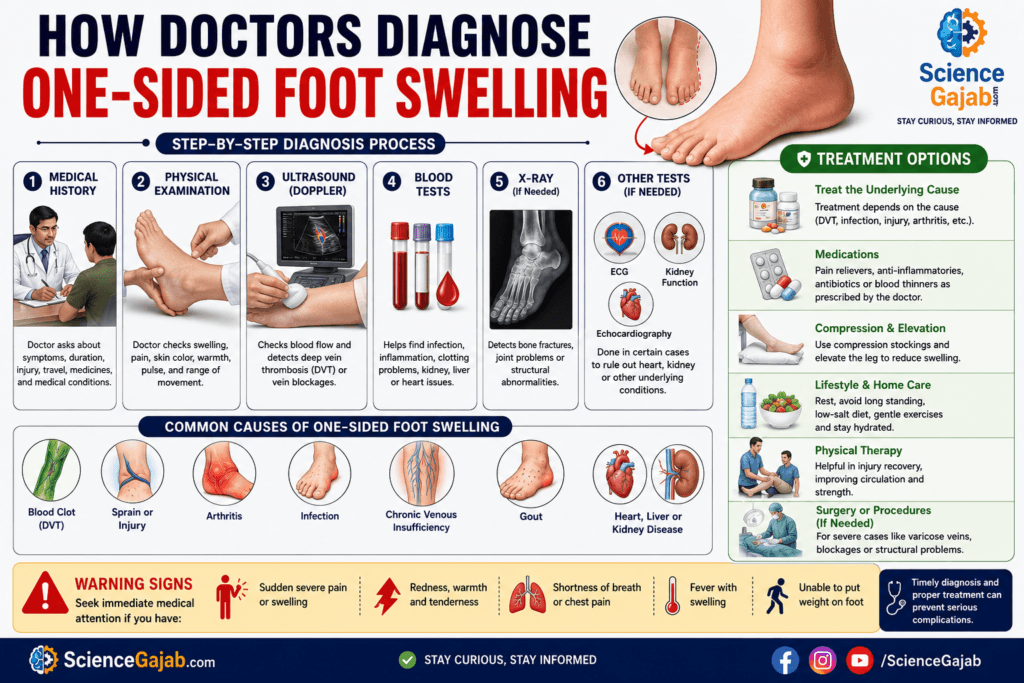
How Doctors Diagnose One-Sided Foot Swelling
Diagnosis begins with a medical history and physical examination.
Questions Your Doctor May Ask
- When did the swelling begin?
- Was there an injury?
- Is swelling worsening?
- Are other symptoms present?
Diagnostic Tests
May include:
- Ultrasound
- X-rays
- Blood tests
- Vascular studies
- MRI scans
Testing helps identify the underlying cause.
Treatment for One Swollen Foot
Treatment depends on the cause.
Injury
- Rest
- Ice
- Compression
- Elevation
Blood Clots
- Blood-thinning medications
- Emergency treatment when necessary
Infection
- Antibiotics
- Wound care
Venous Disease
- Compression therapy
- Exercise
- Medical management
Lymphedema
- Compression garments
- Specialized therapy
How to Reduce Foot Swelling at Home
If swelling is mild and not caused by a serious condition, these strategies may help:
1✔ Elevate the foot
2✔ Avoid prolonged standing
3✔ Stay physically active
4✔ Maintain healthy weight
5✔ Wear supportive footwear
6✔ Stay hydrated
7✔ Limit excess salt intake
Can Poor Circulation Cause One Foot to Swell?
Yes.
Circulation problems may affect one limb more than the other.
Signs of Poor Circulation
- Cold foot
- Purple discoloration
- Numbness
- Slow-healing wounds
- Leg pain
Medical evaluation is recommended if circulation problems are suspected.
Varicose Veins Stages Explained With Pictures (Easy Guide for Everyone)
Frequently Asked Questions
One-sided swelling may result from injury, blood clots, infection, lymphedema, or circulation problems.
Sometimes. Sudden swelling, pain, redness, or breathing difficulties require urgent medical attention.
Yes. Poor circulation may contribute to swelling and other symptoms such as cold feet and discoloration.
Yes. Infections, circulation problems, and diabetic complications may contribute to swelling.
Seek medical evaluation if swelling persists, worsens, or occurs with pain, redness, numbness, or color changes.
Expert Health Note
This article is based on current medical knowledge regarding edema, circulation disorders, vascular disease, lymphatic conditions, and foot health. It is intended for educational purposes only and should not replace professional medical advice. Persistent or unexplained one-sided swelling should be evaluated by a qualified healthcare provider.
Conclusion
While mild swelling may occur occasionally, one foot swelling more than the other is often a sign that something specific is affecting that limb. Causes range from minor injuries and infections to more serious conditions such as blood clots, circulation disorders, and lymphedema.
Paying attention to accompanying symptoms such as pain, redness, warmth, numbness, or discoloration can help identify when medical care is needed. Early diagnosis and treatment are important for preventing complications and protecting your long-term health.
If one foot remains swollen without an obvious reason, don’t ignore it—your body may be signaling an underlying problem that deserves attention.
Author Dr Sanjay Prajapati (MBBS)
Medically Reviewed & Evidence-Based
This article is based on current medical knowledge from trusted health organizations and standard clinical references. It is intended to help readers understand why one foot may swell more than the other, recognize common and serious causes, identify warning signs, and know when to seek medical care. It is not a substitute for professional medical advice, diagnosis, or treatment.
References:
- American Academy of Orthopaedic Surgeons (AAOS)
- American Heart Association (AHA)
- National Health Service (NHS)
- MSD Manual Professional Edition
- Merck Manual Consumer Version
- Mayo Clinic
- Society for Vascular Surgery
- American College of Cardiology (ACC)