
what-happens-during-fainting
What Happens During Fainting?
Fainting can happen suddenly and unexpectedly.
A person may:
- Feel dizzy
- Become weak
- See darkness or blurry vision
- Lose consciousness briefly
- Collapse to the ground
Many people describe it as:
“Everything went black for a few seconds.”
Fainting is medically called:
{Syncope}
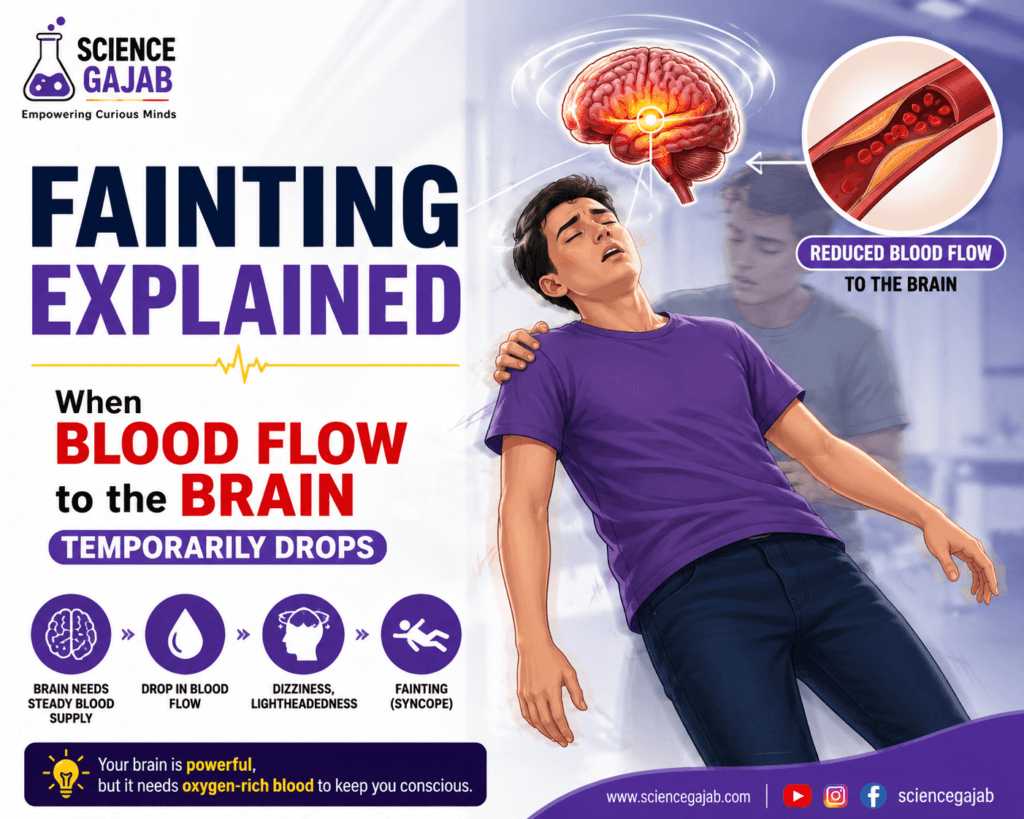
In most cases, fainting occurs because the brain temporarily receives less blood and oxygen.
Sometimes fainting is harmless. But occasionally it may signal serious problems involving:
- Heart
- Brain
- Blood pressure
- Nervous system
In this article, we’ll explain:
- What happens inside the body during fainting
- Common causes
- Warning signs
- Dangerous symptoms
- Recovery and prevention
Everything is explained in simple human language.
What Is Fainting?
Fainting is a brief temporary loss of consciousness.
It usually happens because:
- Blood flow to the brain decreases suddenly
- The brain receives less oxygen
- Consciousness is briefly lost
Most people recover within seconds or minutes.
Silent Signs of Heart Disease You Should Never Ignore
What Happens Inside the Body During Fainting?
The brain constantly needs oxygen-rich blood.
If blood flow suddenly falls:
- Brain function slows
- Consciousness is lost temporarily
The body often collapses to a horizontal position, helping blood return to the brain again.
Early Signs of Serious Disease You Should Never Ignore
The Main Mechanism Behind Fainting
Fainting usually involves:
\text{Reduced Blood Flow} \rightarrow \text{Reduced Brain Oxygen} \rightarrow \text{Temporary Loss of Consciousness}
Common Warning Signs Before Fainting
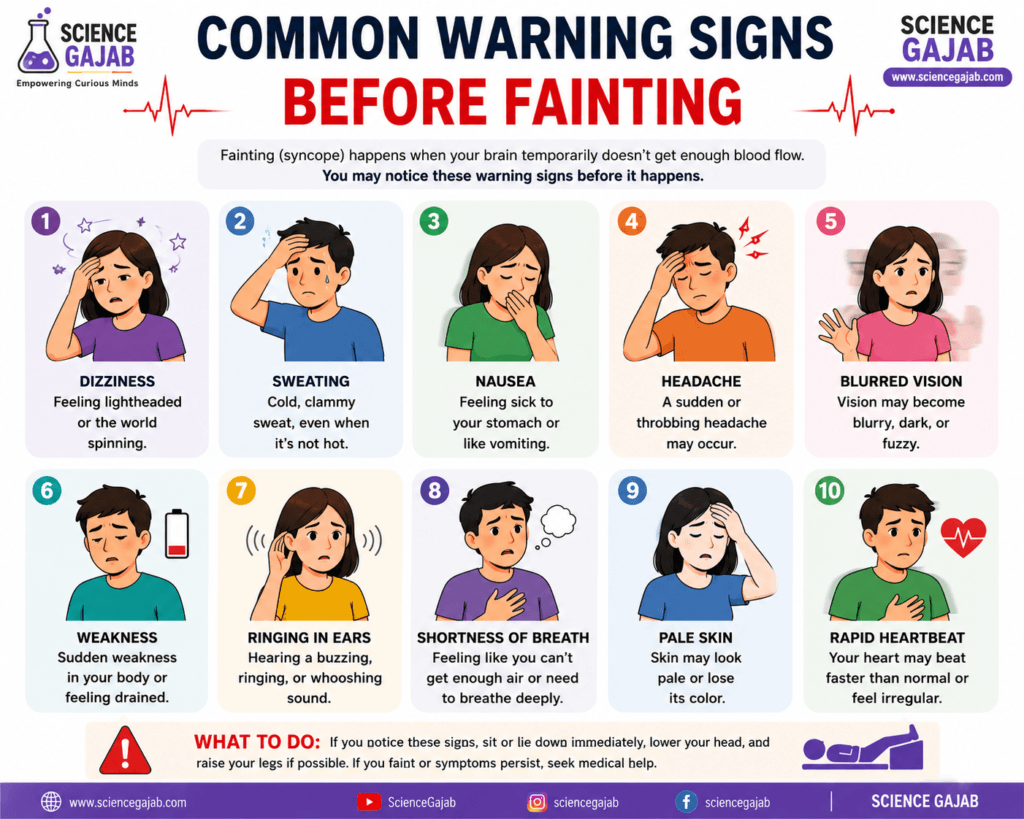
Many people experience symptoms beforehand.
These include:
- Dizziness
- Sweating
- Blurry vision
- Ringing in ears
- Weakness
- Nausea
- Feeling hot
- Pale skin
These symptoms are called:
- Presyncope symptoms
These 10 Symptoms Mean Your Immune System Is Failing 😨
Most Common Causes of Fainting
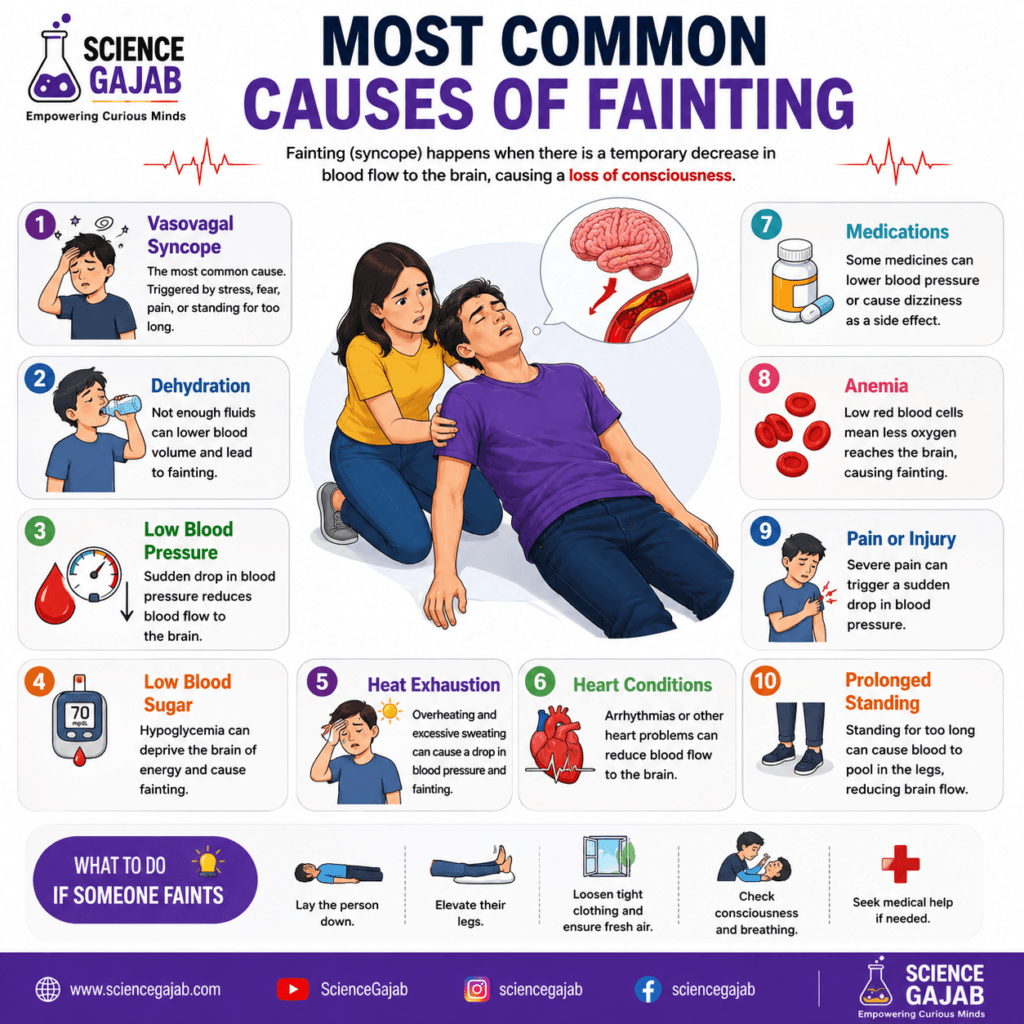
1. Vasovagal Fainting (Most Common)
This is the most common harmless type.
It happens when:
- Blood pressure suddenly drops
- Heart rate slows temporarily
Triggers include:
- Fear
- Emotional stress
- Seeing blood
- Pain
- Standing too long
What Causes Phantom Smells? Understanding Phantosmia and Why You Smell Things That Aren’t There
What Happens in Vasovagal Fainting?
The nervous system overreacts.
This causes:
- Blood vessel widening
- Reduced blood pressure
- Less blood reaching the brain
Structure and Function of the Human Heart | Circulatory System Explained
2. Standing Up Too Quickly
Suddenly standing may cause blood pooling in the legs.
This can temporarily reduce blood flow to the brain.
This is called:
- Orthostatic hypotension
🩸 What Happens When You Transfuse Blood to a Normal Person?
3. Dehydration
Low body fluids reduce blood volume.
Symptoms may include:
- Dizziness
- Weakness
- Fainting
Hot weather and illness increase risk.
Why Does Blood Pressure Suddenly Increase? (Simple Explanation You Can Trust)
4. Low Blood Sugar
The brain depends heavily on glucose.
Very low blood sugar may cause:
- Sweating
- Trembling
- Confusion
- Fainting
Common in diabetics.
❤️ What Happens During a Heart Attack? The Science Explained
5. Heart Problems
Some heart conditions reduce blood flow suddenly.
Examples:
- Abnormal heart rhythm
- Heart valve disease
- Heart attack
Cardiac fainting may be dangerous.
6. Heat and Exhaustion
Excessive heat causes:
- Sweating
- Fluid loss
- Blood vessel widening
This may lead to fainting.
Your Heart Beats 100,000 Times a Day—But Never Gets Tired. Here’s Why
7. Anxiety and Panic Attacks
Severe anxiety may cause:
- Hyperventilation
- Blood pressure changes
- Dizziness
- Feeling faint
8. Severe Pain
Intense pain can trigger nervous system responses causing fainting.
Your Heart Can Stop in Minutes — Here’s How Artery Blockage Happens
9. Blood Loss
Heavy bleeding reduces blood volume and oxygen supply.
This may cause:
- Weakness
- Pale skin
- Fainting
10. Pregnancy
Hormonal and circulation changes may increase fainting risk.
Especially during:
- Early pregnancy
- Standing too long
Is it safe to eat papaya while pregnant India?
What Happens to the Brain During Fainting?
The brain temporarily reduces higher functions because oxygen supply falls briefly.
Consciousness returns once blood flow improves.
Most fainting episodes are short-lived.
🫀 Human Circulatory System Basics: A Complete Guide
What Does a Person Feel During Fainting?
People may describe:
- Darkness closing in
- Floating sensation
- Ringing ears
- Tunnel vision
- Sudden weakness
Some remember the warning signs clearly.
Difference Between Arteries and Veins (With Easy Diagram) — Simple Language
What Happens After Fainting?
After recovery, people may feel:
- Weak
- Tired
- Confused briefly
- Sweaty
Recovery usually occurs within minutes.
Why Does Blood Pressure Suddenly Increase? (Simple Explanation You Can Trust)
Difference Between Fainting and Seizure
| Fainting | Seizure |
|---|---|
| Temporary low brain blood flow | Abnormal brain electrical activity |
| Usually quick recovery | Confusion may last longer |
| Often triggered by standing/stress | May occur suddenly |
Sometimes doctors need tests to differentiate them.
Dangerous Signs During Fainting
Seek emergency care if fainting occurs with:
- Chest pain
- Breathlessness
- Head injury
- Irregular heartbeat
- Seizure-like movements
- Sudden severe headache
These may indicate serious disease.
Why Veins Look Blue But Blood Is Always Red
Can Stress Cause Fainting?
Yes.
Strong emotional stress may trigger vasovagal fainting.
Common examples:
- Fear
- Seeing blood
- Panic
Why Do Lips Become Pale? (Simple Explanation You Can Trust)
Why Do Some People Faint at the Sight of Blood?
The nervous system overreacts.
This suddenly lowers:
- Blood pressure
- Heart rate
leading to reduced brain blood flow.
Varicose Veins Stages Explained With Pictures (Easy Guide for Everyone)
Why Fainting Happens in Crowded or Hot Places
Heat causes blood vessels to widen.
Standing long periods worsens blood pooling in legs.
This combination may reduce brain circulation.
What Happens to Blood Pressure During Fainting?
Blood pressure usually drops suddenly.
This is a key reason the brain temporarily receives less blood.
Purple Feet and Poor Circulation: Causes, Warning Signs, and When to Seek Medical Help
Can Fainting Be Dangerous?
Most fainting is harmless.
However, danger may come from:
- Underlying heart disease
- Injury during collapse
- Serious neurological causes
Signs of Anemia: 15 Warning Symptoms You Should Never Ignore
When Should You See a Doctor?
Medical evaluation is important if:
- Fainting happens repeatedly
- There is chest pain
- Family history of sudden death exists
- Fainting occurs during exercise
- Recovery is slow
How Doctors Diagnose Fainting
Doctors may recommend:
- Blood pressure testing
- ECG
- Blood sugar tests
- Heart monitoring
- Brain imaging if needed
Why Do Mosquito Bites Itch? The Science Behind the Irritating Bump
What To Do If Someone Faints
1. Lay the Person Flat
Helps blood return to the brain.
2. Raise Legs Slightly
Improves circulation.
3. Loosen Tight Clothing
Supports breathing.
4. Check Breathing
Ensure airway is open.
5. Seek Help if Recovery Delays
Especially if symptoms are severe.
What Causes Swollen Feet? Common Reasons, Warning Signs, and When to Seek Help
How to Prevent Fainting
1. Stay Hydrated
Drink enough water.
2. Avoid Standing Too Long
Move legs regularly.
3. Eat Regular Meals
Prevents low blood sugar.
4. Rise Slowly
Especially from bed or sitting.
5. Manage Stress
Relaxation may help.
Interesting Facts About Fainting
1. Fainting Is Common
Many healthy people faint at least once.
2. The Brain Needs Constant Blood Supply
Even brief reduction can cause unconsciousness.
3. The Body Often Protects Itself
Collapsing flat helps restore circulation.
Frequently Asked Questions (FAQs)
Blood flow to the brain temporarily decreases, causing brief loss of consciousness.
Usually not, but heart-related fainting can be serious.
Yes, severe stress may trigger vasovagal fainting.
Heat causes dehydration and blood vessel widening.
If it is recurrent, severe, or associated with chest pain or injury
Final Thoughts
Fainting usually occurs because the brain temporarily receives less blood and oxygen.
Common causes include:
- Stress
- Dehydration
- Heat
- Low blood sugar
- Vasovagal reactions
Most fainting episodes are brief and harmless.
However, repeated fainting or fainting associated with chest pain, heart symptoms, or neurological signs should never be ignored.
Understanding the body’s warning signs can help prevent serious complications and improve safety.
This 2% Body Organ Controls 20% of Your Energy
Medical Disclaimer
This article is for educational awareness only and does not replace professional medical advice, diagnosis, or treatment.
Sources & References
- Mayo Clinic educational resources
- American Heart Association
- Neurology educational references
- Standard physiology textbooks
Reviewed Topic
Educational overview of fainting, syncope, blood pressure changes, heart-related fainting, and neurological causes explained in simple language for general readers.
http://facebook.com/sciencegajab/