What Causes Phantom Smells?
Have you ever suddenly smelled smoke, burning rubber, perfume, or rotten food when nobody else around you could smell it? If so, you may have experienced a phenomenon known as phantom smells, medically called phantosmia.
Phantosmia occurs when a person detects odors that are not actually present in the environment. While the experience can be brief and harmless, recurring phantom smells may sometimes indicate an underlying issue involving the nose, nerves, or brain.
In this article, we’ll explore what phantom smells are, why they happen, possible causes, treatment options, and when you should consider seeing a healthcare professional.
What Are Phantom Smells?
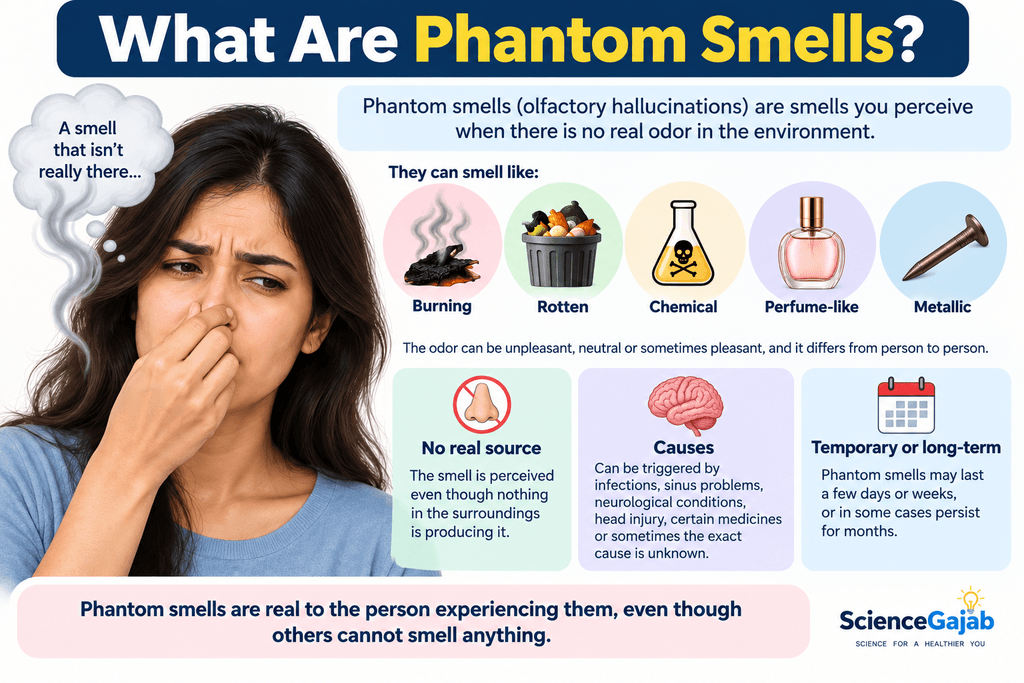
Phantom smells are odor sensations that occur without a real source.
A person experiencing phantosmia might smell:
- Smoke
- Burning plastic
- Chemicals
- Rotten eggs
- Mold
- Garbage
- Metallic odors
- Perfume
These smells may be pleasant or unpleasant, but they are often described as foul or irritating.
The odor may affect:
- One nostril
- Both nostrils
- Come and go
- Persist continuously
Although phantom smells can be alarming, they are more common than many people realize.
Why Does One Side of the Nose Get Blocked? The Surprising Science Behind the Nasal Cycle
How Does the Sense of Smell Normally Work?
To understand phantom smells, it helps to know how smell normally functions.
When you inhale:
- Odor molecules enter the nose.
- Specialized smell receptors detect these molecules.
- Signals travel through the olfactory nerve.
- The brain interprets the signals as specific smells.
When something disrupts this process, the brain may incorrectly perceive an odor even when none exists.
This false smell perception is known as phantosmia.
Why do we sneeze suddenly? The Simple Science Explained
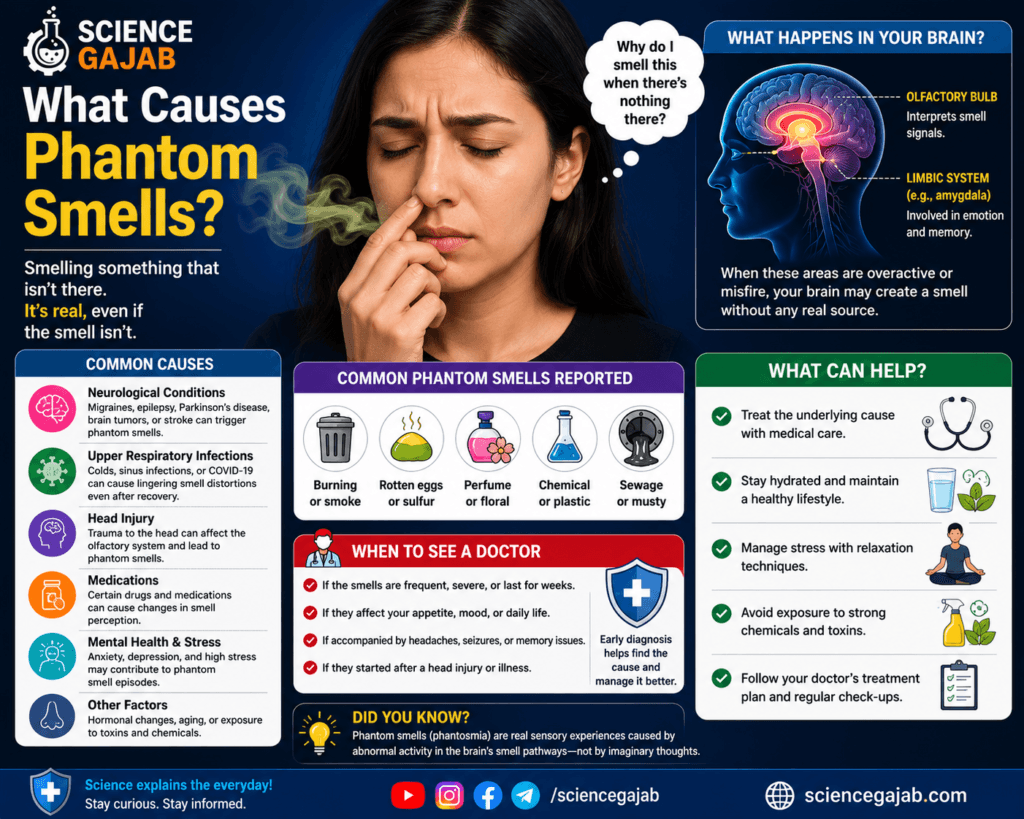
Common Causes of Phantom Smells
Many conditions can interfere with the smell pathway and trigger phantom odors.
1. Nasal Infections
One of the most common causes is infection of the nose or sinuses.
Examples include:
- Common cold
- Sinus infection
- Flu
- Respiratory infections
Inflammation can temporarily affect smell receptors and create distorted odor sensations.
People often notice phantom smells during recovery from these illnesses.
Why Do We Snore? The Science Behind Noisy Sleep
2. COVID-19 and Post-Viral Changes
COVID-19 dramatically increased awareness of smell disorders.
Many people reported:
- Loss of smell
- Distorted smells
- Phantom smells
Researchers believe viral damage to smell receptors or nerves may lead to incorrect smell signals during recovery.
Some individuals continue experiencing phantom odors months after infection.
PNEUMONIA | Symptoms & Causes of pneumonia| common cold
3. Sinus Problems
Chronic sinus conditions can affect smell perception.
Examples include:
- Chronic sinusitis
- Nasal polyps
- Allergic rhinitis
Inflammation and blockage may interfere with normal odor processing.
As the nasal tissues become irritated, unusual smell sensations may develop.
4. Head Injury
A blow to the head can damage structures involved in smell.
Injuries may affect:
- Olfactory nerves
- Smell receptors
- Brain regions responsible for odor interpretation
Some people develop phantosmia weeks or months after a head injury.
5. Migraines
Certain migraine sufferers experience sensory disturbances before or during attacks.
While visual symptoms are more common, some people report:
- Phantom smells
- Burning odors
- Smoke smells
- Chemical smells
These sensations may act as a warning sign before migraine pain begins.
🧠 What Happens During a Migraine? (Science Explained)
6. Epilepsy
Certain types of seizures, particularly those involving the temporal lobe, may cause phantom smells.
The smell is often:
- Sudden
- Brief
- Repetitive
Common reported odors include:
- Burning rubber
- Smoke
- Metallic smells
These episodes typically last seconds to minutes.
Reflex Action Explained Simply: How Your Body Reacts Before You Even Think
7. Aging
The sense of smell naturally changes with age.
As people grow older:
- Smell receptors decrease
- Nerve function changes
- Odor perception becomes less accurate
Some older adults occasionally experience phantom odors without a serious underlying condition.
🧬 Why Do We Age? The Real Science Behind Growing Older
8. Exposure to Toxic Chemicals
Certain chemicals may affect smell pathways.
Potential triggers include:
- Solvents
- Industrial chemicals
- Pesticides
- Air pollutants
Long-term exposure may alter smell perception and increase the likelihood of phantosmia.
Modes of Virus Transmission with Examples (Airborne, Vector, Contact) – Easy Guide for Students
9. Neurological Conditions
In some cases, phantom smells may be linked to neurological disorders.
Examples include:
- Parkinson’s disease
- Alzheimer’s disease
- Multiple sclerosis
These conditions can affect parts of the nervous system involved in smell processing.
However, phantosmia alone does not mean someone has a neurological disease.
Parts of the Human Brain and Their Functions Explained | Science Gajab
10. Stress and Anxiety
Stress affects many sensory systems.
Some individuals report phantom smells during periods of:
- High stress
- Panic attacks
- Severe anxiety
Although the exact mechanism is unclear, stress may influence how the brain processes sensory information.
Why Veins Look Blue But Blood Is Always Red
What Do Phantom Smells Usually Smell Like?
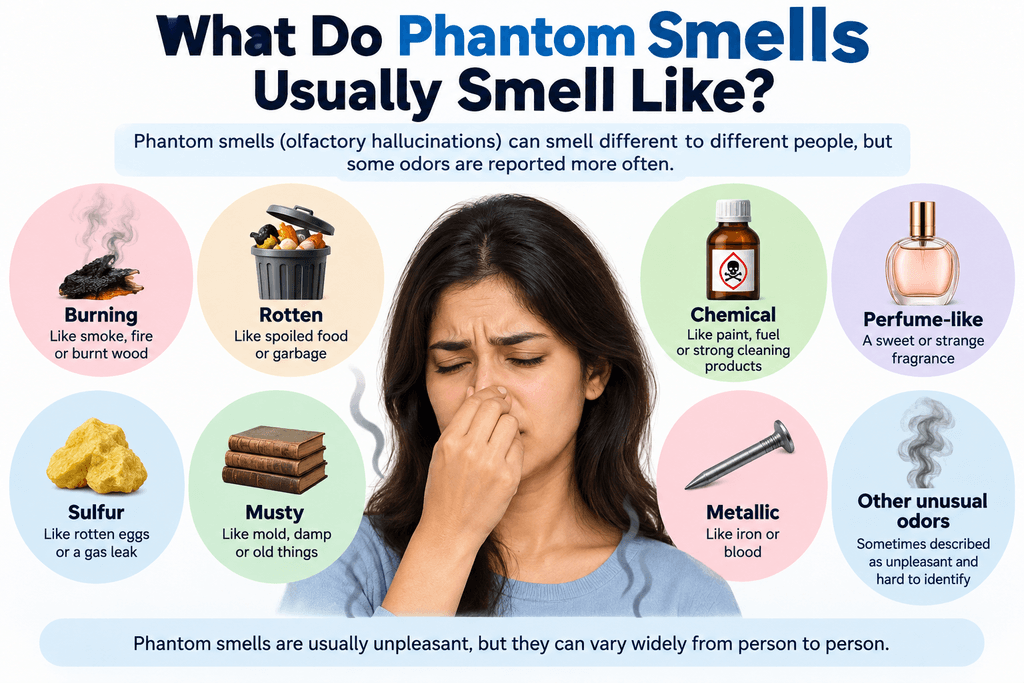
Most people describe unpleasant odors.
Common examples include:
- Smoke
- Burnt toast
- Burning wires
- Garbage
- Rotten food
- Chemicals
- Sewage
Less commonly, people report pleasant scents such as:
- Flowers
- Perfume
- Sweet foods
The specific smell often varies from person to person.
Why Do Ears Ring Suddenly? (Simple Explanation You Can Trust)
Phantom Smells vs. Parosmia
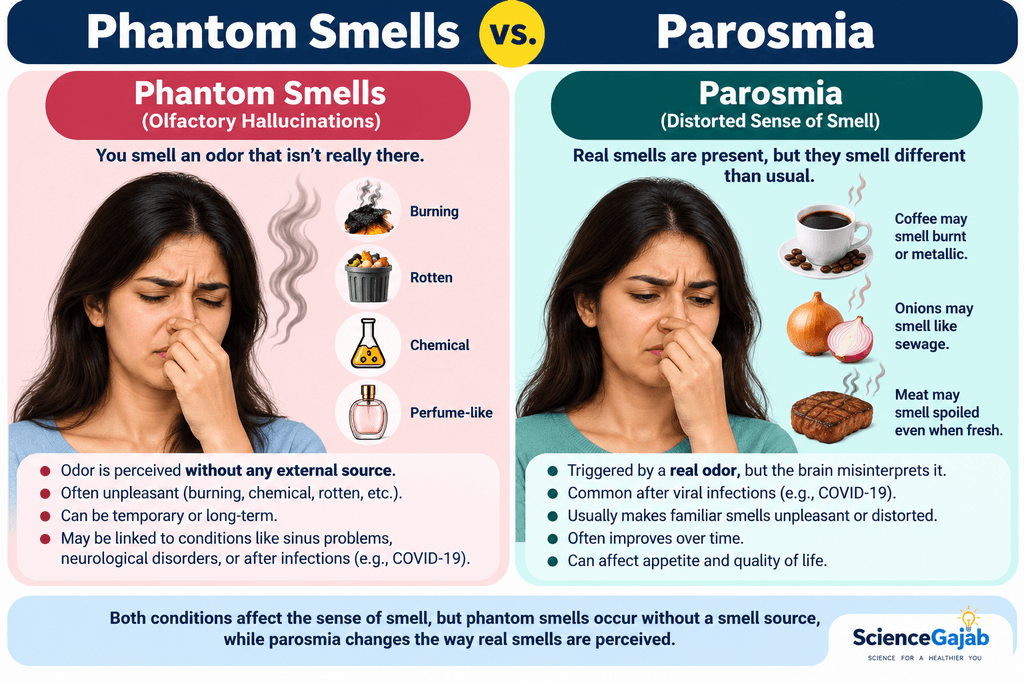
These conditions are often confused.
Phantosmia
You smell something that isn’t present.
Example:
Smelling smoke in a room where nothing is burning.
Parosmia
A real smell is present but smells different than it should.
Example:
Coffee suddenly smells like sewage.
Both conditions involve altered smell perception but occur in different ways.
Purple Feet and Poor Circulation: Causes, Warning Signs, and When to Seek Medical Help
Symptoms That May Accompany Phantom Smells
Depending on the cause, additional symptoms may occur.
These may include:
- Nasal congestion
- Headache
- Dizziness
- Facial pressure
- Reduced sense of smell
- Migraine symptoms
- Neurological symptoms
Keeping track of accompanying symptoms can help identify the underlying cause.
🚫🌬️ What Happens When Cells Don’t Get Oxygen? (Simple Explanation)
How Doctors Diagnose Phantom Smells
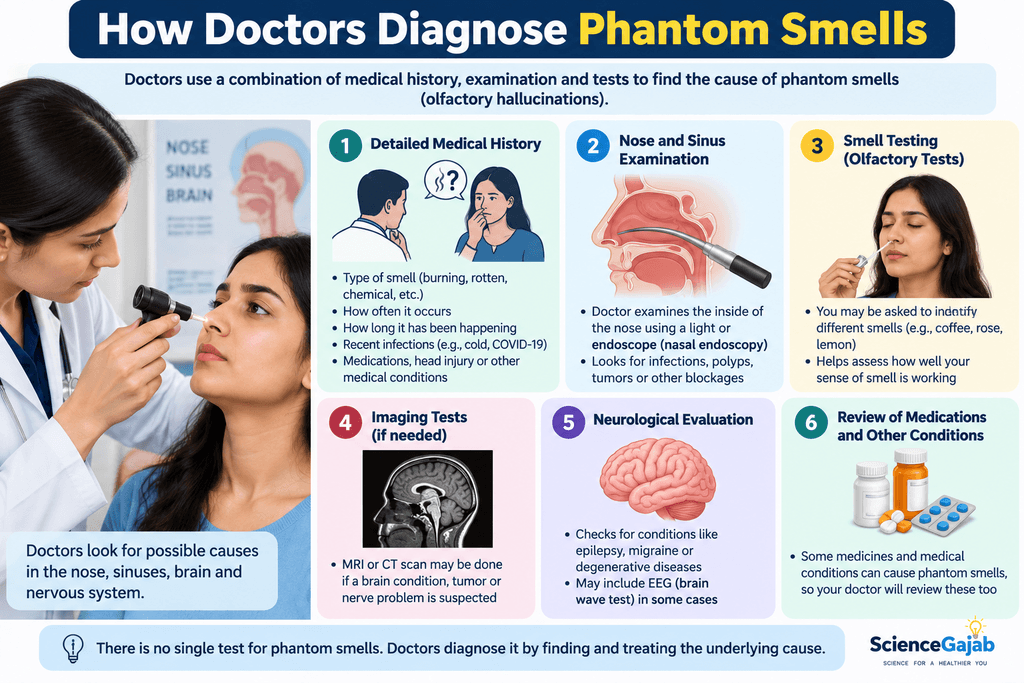
Diagnosis begins with a detailed medical history.
Your doctor may ask:
- What does the smell resemble?
- How often does it occur?
- Does it affect one nostril or both?
- When did it begin?
- Have you recently been sick?
Additional tests may include:
Nasal Examination
A specialist may inspect the nasal passages for:
- Polyps
- Infection
- Structural abnormalities
Smell Testing
Specialized odor identification tests can evaluate smell function.
Imaging Studies
Doctors may order:
- CT scan
- MRI scan
These tests help examine the sinuses and brain.
Neurological Evaluation
If seizures or neurological causes are suspected, further testing may be recommended.
🚫🌬️ What Happens When Cells Don’t Get Oxygen? (Simple Explanation)
Treatment for Phantom Smells
Treatment depends on the underlying cause.
Treating Sinus Disease
Managing sinus inflammation may improve symptoms.
Options include:
- Saline rinses
- Allergy treatment
- Nasal sprays
- Antibiotics when appropriate
Managing Post-Viral Smell Disorders
Some patients benefit from smell training.
This involves repeatedly smelling specific scents such as:
- Rose
- Lemon
- Eucalyptus
- Clove
The goal is to help retrain smell pathways.
Migraine Treatment
If migraines are responsible, controlling migraine triggers and treatment may reduce phantom odors.
Managing Neurological Causes
Treatment may focus on the underlying neurological condition.
Examples include:
- Anti-seizure medications
- Neurological monitoring
- Specialist care
Lifestyle Measures
Helpful strategies include:
- Staying hydrated
- Avoiding smoking
- Reducing exposure to strong chemicals
- Managing allergies
- Getting adequate sleep
Neural Control and Coordination Explained (With Easy Diagrams + Examples)
When Should You See a Doctor?
Occasional phantom smells after a cold may not be serious.
However, medical evaluation is recommended if:
- Symptoms persist for weeks
- Smells occur frequently
- You recently experienced head trauma
- You have neurological symptoms
- Phantom smells interfere with daily life
- You develop seizures or unusual episodes
Prompt evaluation can help identify any underlying condition.
Can Phantom Smells Be Prevented?
Not all cases can be prevented, but you may reduce risk by:
- Treating sinus infections promptly
- Wearing protective equipment around chemicals
- Avoiding smoking
- Managing allergies
- Protecting your head during sports
- Following good overall health habits
Maintaining nasal and neurological health supports normal smell function.
Why Do Feet Become Cold? (Simple Explanation You Can Trust)
Interesting Facts About Phantom Smells
- The medical term is phantosmia.
- Phantom smells can affect one nostril or both.
- Many people report smelling smoke even when nothing is burning.
- Viral infections are among the most common triggers.
- The condition may be temporary or long-lasting.
- Smell disorders became much more widely recognized after the COVID-19 pandemic.
🍞 Why Fermentation Happens Without Oxygen (Simple Explanation)
Frequently Asked Questions
Usually not, but persistent symptoms should be evaluated to identify potential underlying causes.
Stress and anxiety may contribute to altered sensory perception in some individuals
Yes. Many cases improve once infections, inflammation, or other temporary triggers resolve.
Smoke and burning odors are among the most frequently reported.
Rarely. Most cases are caused by less serious issues such as infections, sinus disease, or smell pathway irritation. However, persistent symptoms should be medically assessed.
Final Thoughts
Phantom smells, or phantosmia, occur when the brain perceives odors that do not actually exist in the environment. Although the experience can be unsettling, many cases are linked to temporary issues such as sinus infections, allergies, viral illnesses, or recovery after COVID-19.
Persistent or recurring phantom smells deserve medical attention, especially if they are accompanied by headaches, neurological symptoms, or a history of head injury. Understanding the possible causes is the first step toward identifying the right treatment and restoring normal smell perception.
By paying attention to your symptoms and seeking professional evaluation when necessary, you can better understand why these mysterious odors appear and what can be done about them.
Medical Review & Sources
Medically reviewed by: Dr Sanjay Prajapati
Last reviewed: 12 Sep 2026
This article is based on reliable medical sources, including the NIH/NIDCD, Mayo Clinic, and Cleveland Clinic. Phantosmia can have several causes, including infections, sinus problems, head injury, certain medications, and neurological conditions.
Medical disclaimer: This content is for educational purposes and does not replace professional medical advice. Persistent, recurrent, or unexplained phantom smells should be evaluated by a healthcare professional.
https://www.facebook.com/sciencegajab/