
vitamin K deficiency symptoms
15 Vitamin K Deficiency Symptoms You Should Never Ignore (Early Warning Signs)
Reviewed by: ScienceGajab Medical Content Team
Reading Time: 13 Minutes
Last Updated: Oct 2026
vitamin K deficiency symptoms
Quick Answer
Vitamin K deficiency occurs when your body does not have enough vitamin K, a fat-soluble vitamin essential for normal blood clotting and bone health. Early symptoms often include easy bruising, frequent nosebleeds, bleeding gums, prolonged bleeding from cuts, heavy menstrual bleeding, and blood in the stool or urine. If left untreated, severe vitamin K deficiency can lead to serious internal bleeding, hemorrhage, and weakened bones.
Most healthy adults obtain enough vitamin K from food and gut bacteria, but people with fat absorption disorders, liver disease, or prolonged antibiotic use may be at higher risk.
Table of Contents
- What Is Vitamin K?
- Why Is Vitamin K Important?
- Who Is at Risk?
- 15 Vitamin K Deficiency Symptoms
- Causes
- Risk Factors
- Diagnosis
- Treatment
- Best Vitamin K-Rich Foods
- Prevention
- FAQs
- Key Takeaways
What Is Vitamin K?
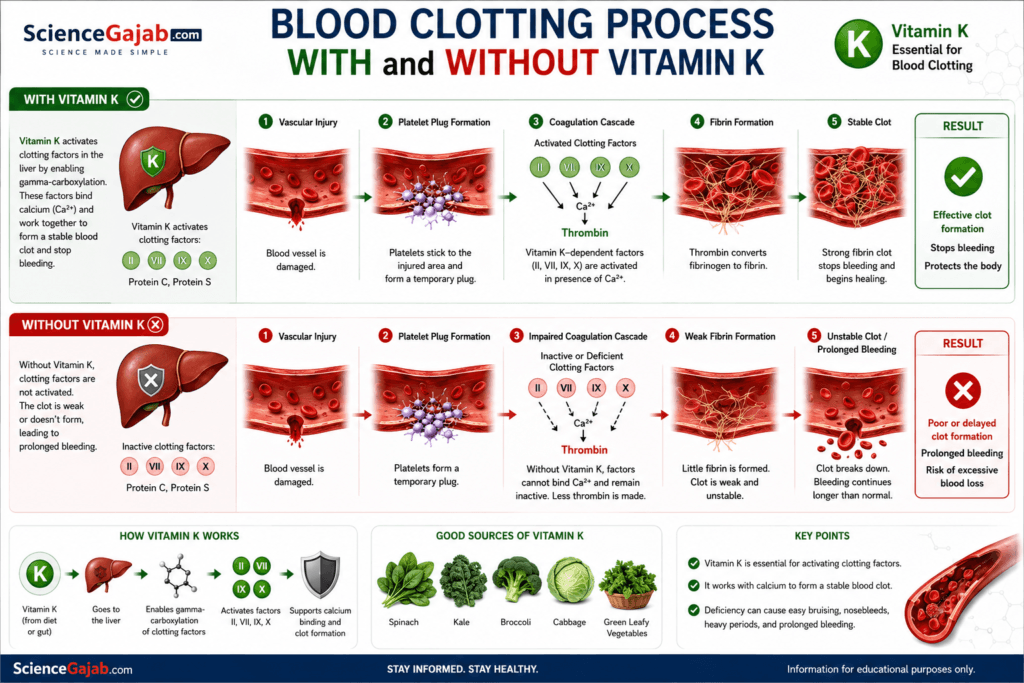
Vitamin K is a fat-soluble vitamin that is essential for producing proteins involved in:
- Blood clotting
- Bone metabolism
- Blood vessel health
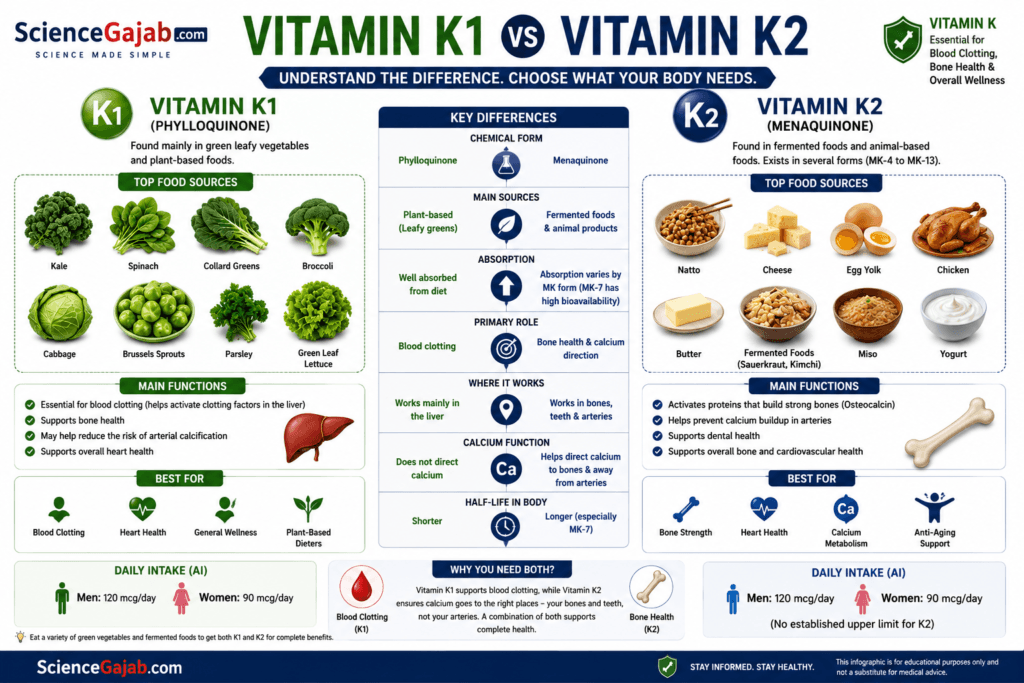
There are two main forms:
Vitamin K1 (Phylloquinone)
Found mainly in:
- Spinach
- Kale
- Broccoli
- Cabbage
- Green leafy vegetables
Vitamin K2 (Menaquinone)
Found in:
- Fermented foods
- Cheese
- Egg yolks
- Some animal products
Vitamin K2 is also produced in small amounts by bacteria living in the intestines.
Why Is Vitamin K Important?
Vitamin K helps:
- Form normal blood clots
- Prevent excessive bleeding
- Maintain strong bones
- Support healthy blood vessels
- Activate bone proteins such as osteocalcin
Without enough vitamin K, the body cannot efficiently produce several clotting factors, increasing the risk of bleeding.
Silent Signs of Heart Disease You Should Never Ignore
Who Is Most at Risk?
Vitamin K deficiency is more likely in:
- Newborn babies
- Older adults with poor nutrition
- People with Crohn’s disease
- Individuals with celiac disease
- Patients with chronic liver disease
- People with cystic fibrosis
- Individuals after bariatric surgery
- People taking long-term antibiotics
- People taking medications that interfere with vitamin K metabolism
Early Vitamin K Deficiency Symptoms
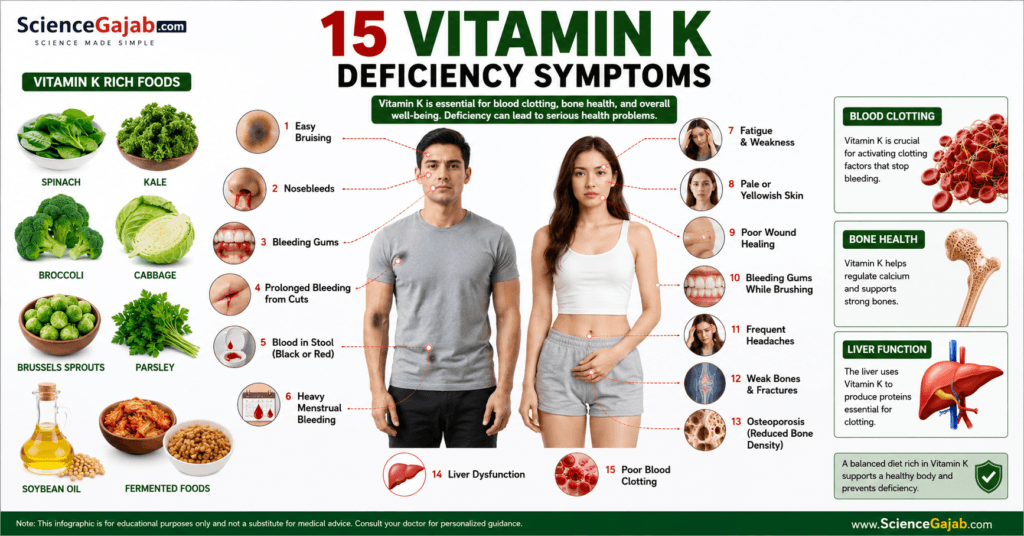
1. Easy Bruising
One of the earliest symptoms is bruising after minor injuries.
You may notice:
- Large bruises
- Bruises appearing without remembering an injury
- Bruises that take longer to fade
15 Vitamin A Deficiency Symptoms You Should Never Ignore (Early Warning Signs)
2. Frequent Nosebleeds
Low vitamin K may cause:
- Recurrent nosebleeds
- Bleeding that lasts longer than usual
- Nosebleeds after minor irritation
3. Bleeding Gums
People often notice:
- Bleeding while brushing teeth
- Bleeding after flossing
- Swollen gums
- Gum tenderness
Bleeding gums can also result from gum disease, so dental evaluation may be needed.
Difference Between Arteries and Veins (With Easy Diagram) — Simple Language
4. Prolonged Bleeding from Cuts
Small cuts may:
- Continue bleeding longer than expected
- Take longer to clot
- Reopen easily
This occurs because vitamin K is necessary for normal clot formation.
15 Vitamin E Deficiency Symptoms You Should Never Ignore (Early Warning Signs)
5. Heavy Menstrual Bleeding
Women may experience:
- Heavier menstrual flow
- Longer periods
- Passing large blood clots
- Increased menstrual fatigue
Heavy menstrual bleeding has many possible causes and should be medically evaluated.
6. Blood in Stool
Vitamin K deficiency can increase the risk of bleeding within the digestive tract.
Signs include:
- Black, tarry stools
- Bright red blood in stool
- Unexplained gastrointestinal bleeding
Blood in the stool always requires prompt medical evaluation.
7. Blood in Urine
Some people may notice:
- Pink urine
- Red urine
- Brown urine
Blood in urine has many possible causes, including urinary tract disease, kidney stones, infections, and bleeding disorders.
Functions of the Kidney: 12 Essential Roles Your Kidneys Play in Keeping You Healthy
8. Slow Clotting After Dental Work
People with vitamin K deficiency may experience prolonged bleeding after:
- Tooth extraction
- Dental cleaning
- Minor oral surgery
Dentists should always be informed about bleeding disorders and medications before procedures.
Doctor’s Tip
Easy bruising and bleeding should never be ignored. Although vitamin K deficiency is one possible cause, similar symptoms can occur with liver disease, low platelet counts, inherited bleeding disorders, or medications such as anticoagulants. Medical evaluation is important to identify the underlying cause.
Did You Know?
Healthy adults rarely develop vitamin K deficiency from diet alone because vitamin K is widely available in green vegetables, and intestinal bacteria also produce small amounts. Deficiency is more commonly related to medical conditions that reduce absorption or affect clotting.
9. Excessive Bleeding After Surgery
People with vitamin K deficiency may bleed longer than expected after:
- Minor surgery
- Dental procedures
- Skin biopsies
- Injuries
This happens because the body cannot produce enough clotting factors without adequate vitamin K.
Why Wounds Itch During Healing and How to Stop It ?
10. Easy Bleeding Under the Skin
Tiny blood vessels (capillaries) may break more easily, causing:
- Small purple or red spots (petechiae)
- Larger purple patches (purpura)
- Bruises after very minor trauma
These symptoms should always be evaluated by a healthcare professional because they can also occur with platelet disorders or blood diseases.
11. Weak Bones
Vitamin K activates osteocalcin, a protein that helps bind calcium to bones.
Long-term deficiency may contribute to:
- Reduced bone strength
- Poor bone mineralization
- Increased fracture risk
Vitamin K works together with vitamin D and calcium to maintain healthy bones.
What Your Tongue Says About Your Health (Simple Guide With Tongue Signs)
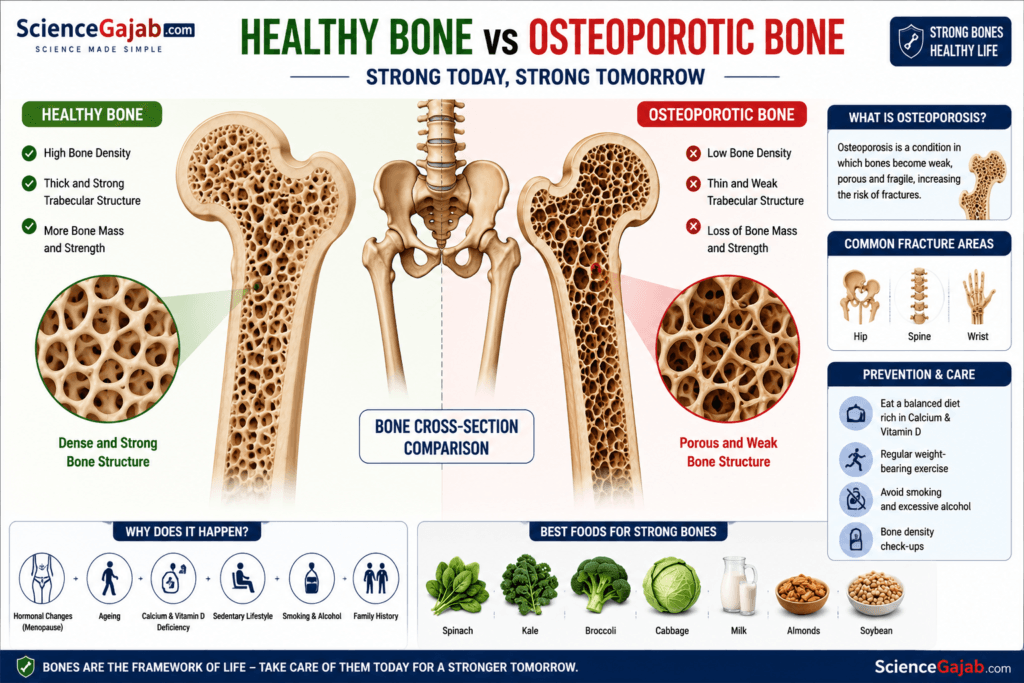
12. Osteoporosis
Chronic vitamin K deficiency may contribute to osteoporosis in some people, especially when combined with aging, low calcium intake, vitamin D deficiency, or menopause.
Symptoms may include:
- Loss of height
- Back pain
- Fragility fractures
- Stooped posture
13. Delayed Wound Healing
Vitamin K helps support normal healing after injury.
Deficiency may result in:
- Slow healing
- Persistent bleeding from wounds
- Increased bruising around injuries
Signs of Diabetes Visible on Feet: 10 Warning Signs You Should Never Ignore
14. Internal Bleeding (Severe Cases)
In severe deficiency, bleeding may occur inside the body.
Possible warning signs include:
- Vomiting blood
- Black, tarry stools
- Severe abdominal pain
- Weakness
- Dizziness
Internal bleeding is a medical emergency. Seek immediate medical attention.
15. Bleeding in Newborns
Newborn babies naturally have low vitamin K stores.
Without preventive vitamin K given after birth, some babies may develop Vitamin K Deficiency Bleeding (VKDB), which can cause:
- Bleeding from the umbilical stump
- Bleeding from the nose or mouth
- Blood in stool
- Bleeding inside the brain (rare but serious)
This is why newborn vitamin K prophylaxis is routinely recommended in many countries.
Cracked Heels and Health Conditions: What Your Feet May Be Telling You
Common Causes of Vitamin K Deficiency
1. Poor Fat Absorption
Vitamin K is a fat-soluble vitamin.
Conditions that reduce fat absorption include:
- Crohn’s disease
- Celiac disease
- Chronic pancreatitis
- Cystic fibrosis
2. Long-Term Antibiotic Use
Prolonged antibiotic treatment may reduce intestinal bacteria that produce small amounts of vitamin K2.
💊 How Antibiotics Kill Bacteria (And Why They Don’t Work on Viruses)
3. Liver Disease
The liver produces clotting factors that require vitamin K.
Liver disease may interfere with this process and increase bleeding risk.
4. Bariatric Surgery
Some weight-loss surgeries reduce absorption of fat-soluble vitamins.
5. Poor Nutrition
Although uncommon in healthy adults, prolonged poor dietary intake may contribute to deficiency.
6. Certain Medications
Some medicines can interfere with vitamin K metabolism, including:
- Vitamin K antagonists (such as certain anticoagulants)
- Some anticonvulsants
- Certain long-term antibiotics
Never stop prescribed medication without consulting your healthcare provider.
Modes of Virus Transmission with Examples (Airborne, Vector, Contact) – Easy Guide for Students
Risk Factors
People at increased risk include:
- Newborn babies
- Older adults with poor nutrition
- People with digestive disorders
- Patients with chronic liver disease
- Individuals after bariatric surgery
- People taking long-term antibiotics
- Individuals using medications that interfere with vitamin K
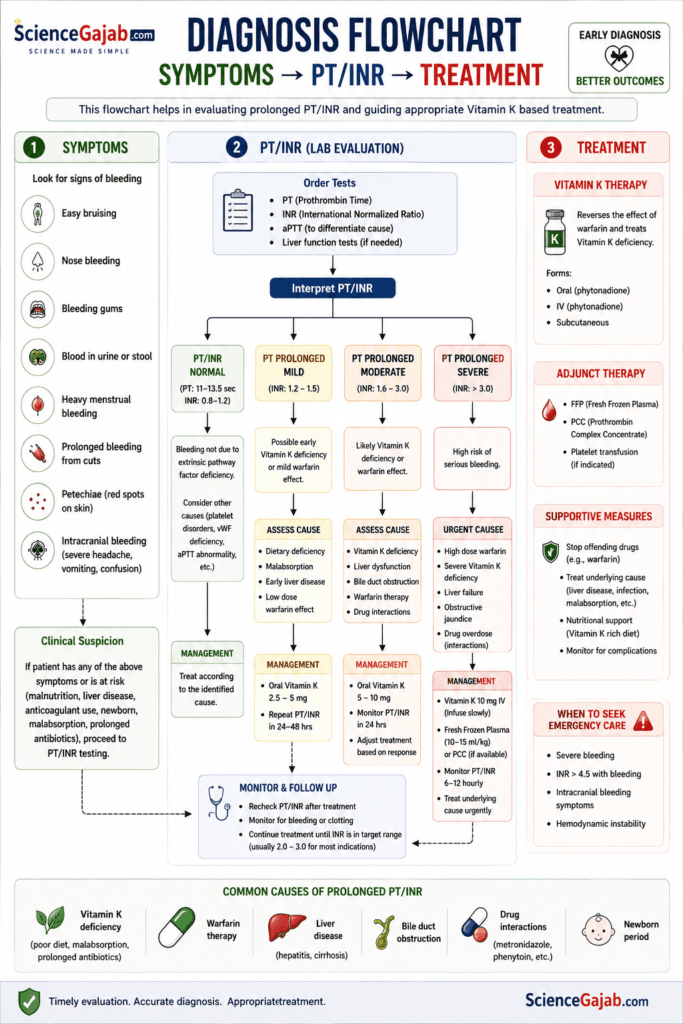
How Is Vitamin K Deficiency Diagnosed?
A healthcare professional may recommend:
Medical History
Questions about:
- Diet
- Bleeding symptoms
- Medications
- Liver disease
- Digestive disorders
- Family history of bleeding disorders
Physical Examination
The doctor may look for:
- Bruising
- Petechiae
- Gum bleeding
- Signs of anemia
- Bone tenderness (when appropriate)
Laboratory Tests
Common investigations include:
- Prothrombin Time (PT)
- International Normalized Ratio (INR)
- Complete Blood Count (CBC)
- Liver Function Tests (LFTs)
- Vitamin K assessment in selected situations
Additional tests may be needed to identify the underlying cause.
Can Vitamin K Deficiency Be Treated?
Yes.
Treatment depends on:
- Severity of deficiency
- Presence of bleeding
- Underlying cause
- Current medications
People with severe bleeding require urgent medical care.
Treatment Options
1. Increase Vitamin K-Rich Foods
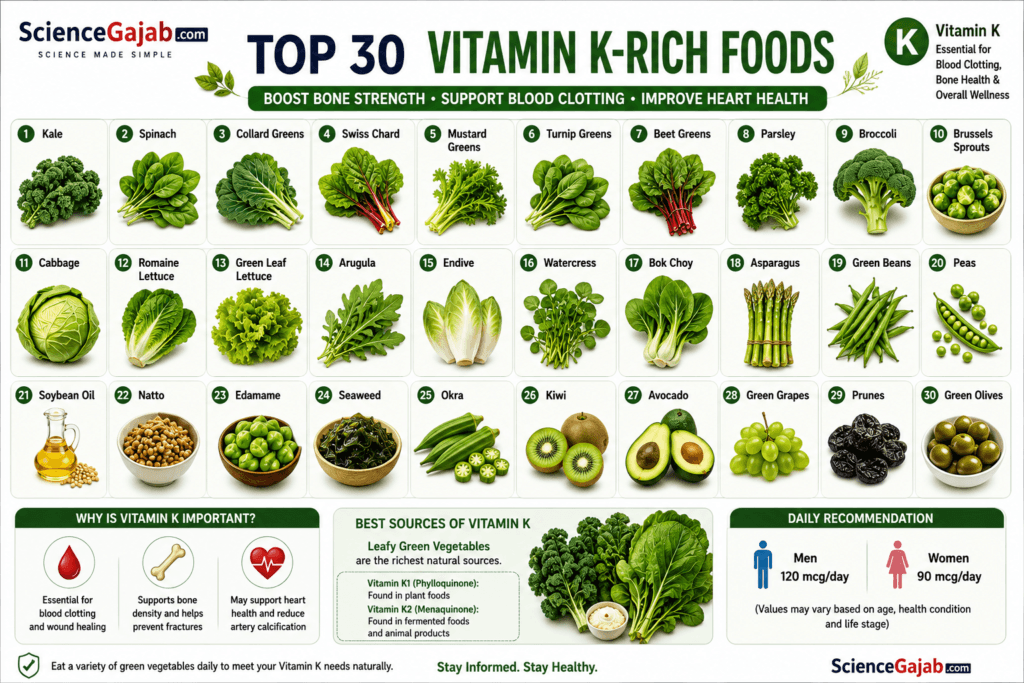
Natural sources include:
- Spinach
- Kale
- Broccoli
- Brussels sprouts
- Cabbage
- Parsley
- Soybeans
- Fermented foods
2. Vitamin K Supplements
Supplements may be prescribed when deficiency is confirmed.
Because vitamin K can interact with blood-thinning medications, supplements should only be taken under medical supervision.
3. Treat the Underlying Cause
Long-term management focuses on treating:
- Fat malabsorption disorders
- Liver disease
- Nutritional deficiencies
- Medication-related causes
15 Best Foods to Improve Memory Naturally: Science-Backed Brain Nutrition
30 Best Vitamin K-Rich Foods
Green Leafy Vegetables
- Kale
- Spinach
- Collard greens
- Mustard greens
- Turnip greens
- Swiss chard
- Parsley
- Beet greens
- Amaranth leaves
- Fenugreek leaves
Cruciferous Vegetables
- Broccoli
- Brussels sprouts
- Cabbage
- Bok choy
- Cauliflower
Other Vegetables
- Asparagus
- Green beans
- Okra
- Lettuce
- Peas
Animal & Fermented Foods
- Natto (fermented soybeans)
- Cheese
- Egg yolk
- Chicken liver
- Beef liver
Oils & Other Foods
- Soybean oil
- Canola oil
- Avocado
- Kiwi
- Blueberries
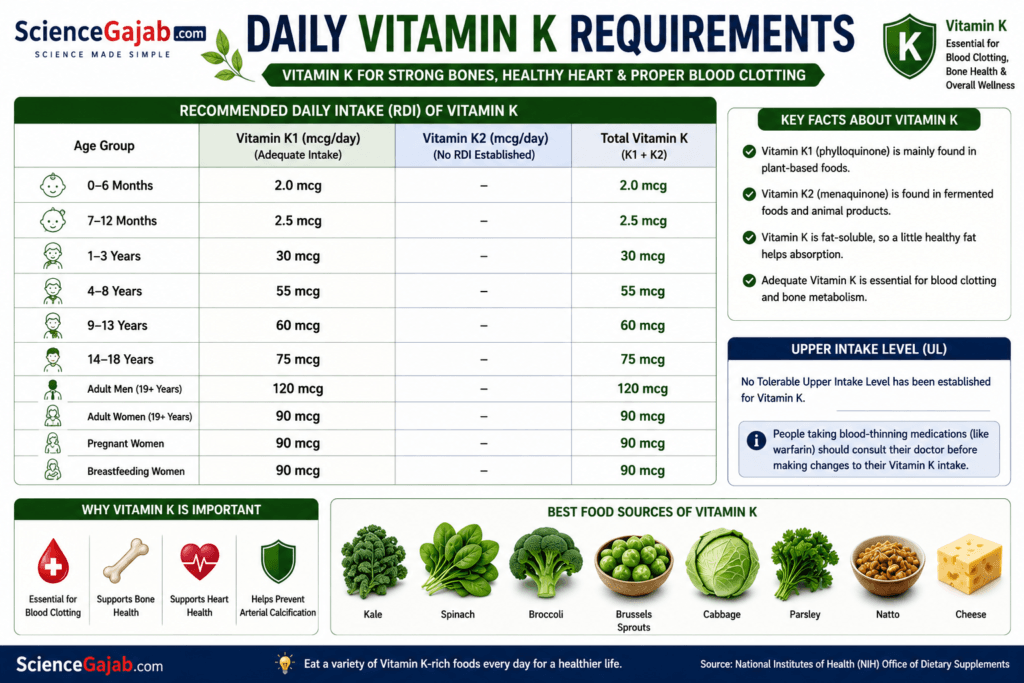
Daily Vitamin K Requirements
| Group | Recommended Daily Intake |
|---|---|
| Adult Men | 120 mcg |
| Adult Women | 90 mcg |
| Pregnant Women | 90 mcg |
| Breastfeeding Women | 90 mcg |
Sample One-Day Vitamin K Meal Plan
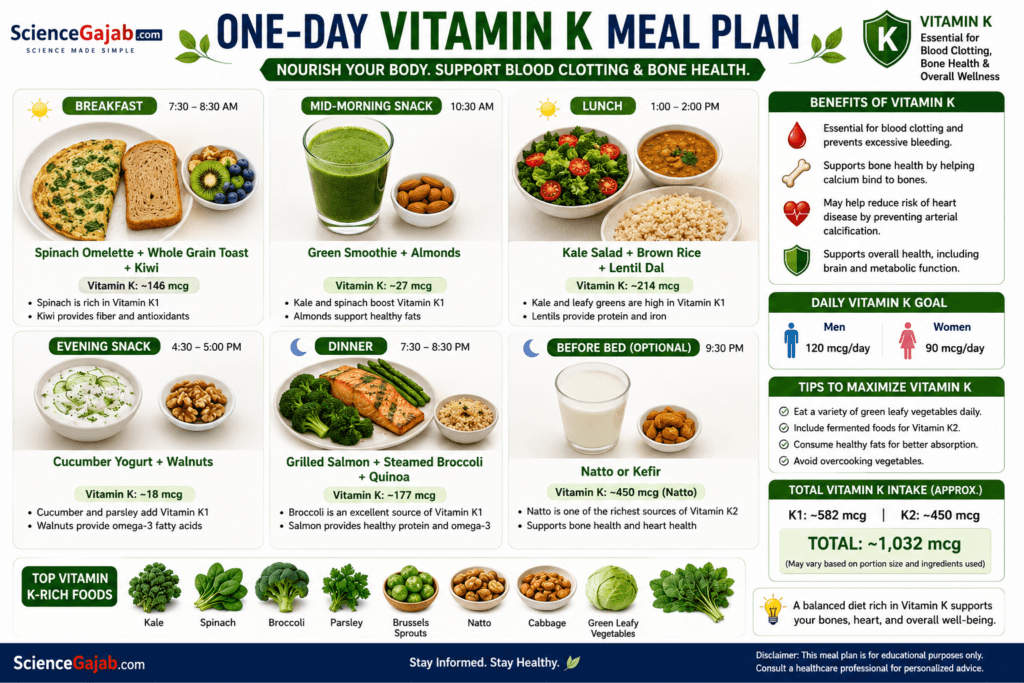
Breakfast
- Vegetable omelet with spinach
- Whole-grain toast
- Kiwi
Mid-Morning Snack
- Yogurt
- Blueberries
Lunch
- Broccoli stir-fry
- Brown rice
- Lentil curry
Evening Snack
- Avocado salad
Dinner
- Grilled chicken
- Steamed kale
- Whole wheat chapati
Prevention Tips
1✔ Eat green leafy vegetables regularly.
2✔ Include cruciferous vegetables several times a week.
3✔ Manage digestive disorders promptly.
4✔ Inform your healthcare provider about all medications you take.
5✔ Do not start vitamin K supplements without medical advice if you take blood-thinning medications.
🚨 Early Signs of Vitamin B12 Deficiency — Don’t Ignore These Warning Signals!
Frequently Asked Questions
1. What is the first sign of vitamin K deficiency?
Easy bruising and prolonged bleeding after minor cuts are among the earliest signs.
2. Can vitamin K deficiency cause bleeding?
Yes. Vitamin K is essential for blood clotting, and deficiency increases the risk of excessive bleeding.
3. Which foods contain the most vitamin K?
Kale, spinach, parsley, broccoli, Brussels sprouts, and natto are among the richest sources.
4. Can vitamin K deficiency cause osteoporosis?
It may contribute to poor bone health, but osteoporosis is usually caused by multiple factors, including aging, menopause, low calcium intake, and vitamin D deficiency.
5. Why do newborns receive vitamin K after birth?
Newborns have naturally low vitamin K stores. A vitamin K injection helps prevent Vitamin K Deficiency Bleeding (VKDB), a potentially serious condition.
6. Can vitamin K supplements interact with medications?
Yes. Vitamin K can affect the action of certain blood-thinning medicines. Always discuss supplements with your healthcare provider.
7. How is vitamin K deficiency diagnosed?
Diagnosis may include a medical history, physical examination, PT/INR testing, CBC, and liver function tests.
8. Is vitamin K deficiency common?
It is uncommon in healthy adults but more likely in people with fat malabsorption disorders or liver disease.
9. Can vitamin K deficiency be reversed?
In many cases, yes. Early diagnosis, dietary improvements, and treatment of the underlying cause often restore normal vitamin K status.
10. Should I take vitamin K supplements without medical advice?
No. Vitamin K supplements should only be taken under medical supervision, especially if you use anticoagulant medications.
Key Takeaways
1✔ Vitamin K is essential for normal blood clotting and healthy bones.
2✔ Early symptoms include easy bruising, nosebleeds, bleeding gums, and prolonged bleeding.
3✔ Severe deficiency can lead to internal bleeding and serious complications.
4✔ Green leafy vegetables are the best natural sources of vitamin K.
5✔ People taking blood-thinning medications should discuss any dietary or supplement changes with their healthcare provider.
“Could You Be Low in Vitamin K?” Checklist
- □ Easy bruising
- □ Frequent nosebleeds
- □ Bleeding gums
- □ Prolonged bleeding from cuts
- □ Blood in stool or urine
- □ Long-term antibiotic use
- □ Digestive disorder affecting fat absorption
- □ Low intake of green leafy vegetables
Comparison Table
| Feature | Vitamin K Deficiency | Vitamin C Deficiency | Platelet Disorders |
|---|---|---|---|
| Easy bruising | ✔ Common | ✔ Common | ✔ Common |
| Bleeding gums | ✔ | ✔ | Sometimes |
| Nosebleeds | ✔ | Sometimes | ✔ |
| Poor wound healing | Sometimes | ✔ | Rare |
| Weak bones | ✔ | Rare | ✘ |
| Abnormal PT/INR | ✔ | ✘ | Usually ✘ |
Review by Dr Sanjay Prajapati,MBBS