
early-signs-of-stroke
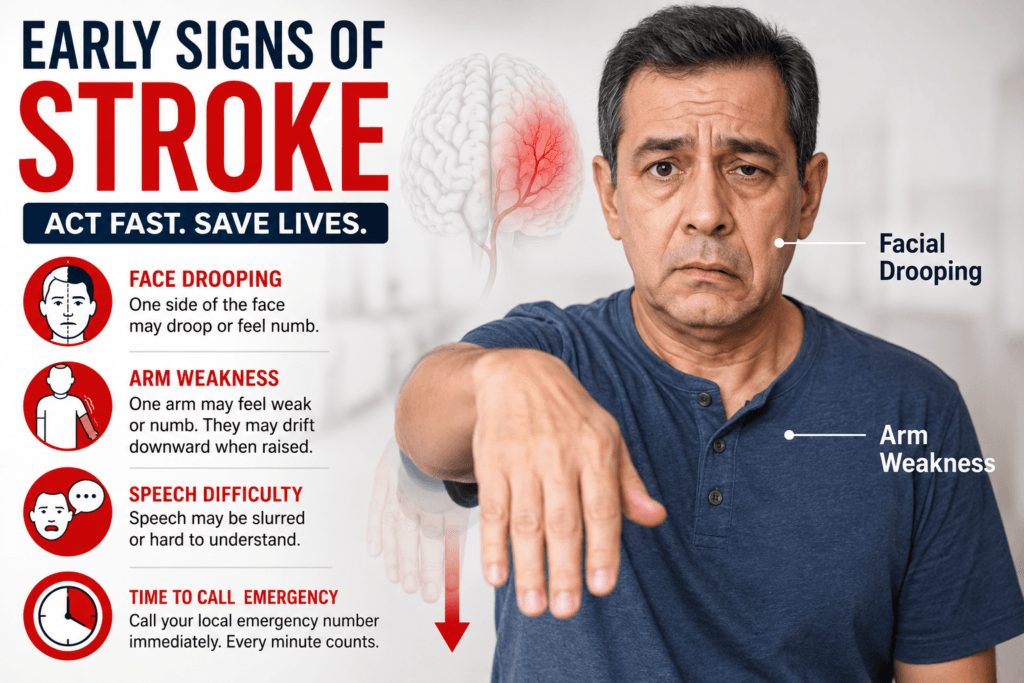
Early Signs of Stroke
A stroke is a medical emergency that happens when blood flow to part of the brain suddenly stops.
Brain cells begin to die within minutes if oxygen supply is interrupted.
The dangerous part is that stroke symptoms often begin suddenly — and many people ignore the early warning signs.
A person may suddenly develop:
- Facial drooping
- Weakness on one side
- Slurred speech
- Dizziness
- Vision problems
Recognizing stroke symptoms early can save brain function and even save lives.
In this article, we’ll explain:
- Early signs of stroke
- Why stroke happens
- Warning symptoms people ignore
- Mini-stroke symptoms
- Emergency response steps
Everything is explained in simple human language.
What Is a Stroke?
A stroke occurs when blood supply to part of the brain is interrupted.
This may happen due to:
- Blocked blood vessel
- Bleeding inside the brain
Without oxygen, brain cells quickly become damaged.
Why Stroke Symptoms Affect One Side
The brain controls opposite sides of the body.
\text{Right Brain} \rightarrow \text{Left Body Side}
\text{Left Brain} \rightarrow \text{Right Body Side}
So damage to one brain side may weaken the opposite body side.
Neural Control and Coordination Explained (With Easy Diagrams + Examples)
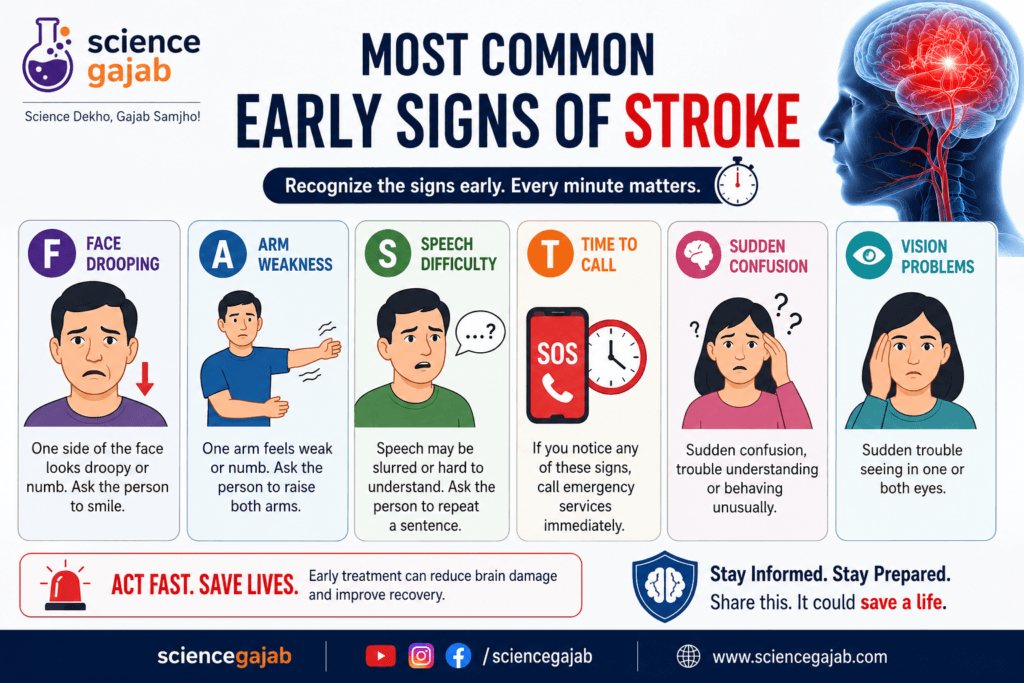
Most Common Early Signs of Stroke
1. Sudden Facial Drooping
One side of the face may suddenly become weak.
The person may:
- Smile unevenly
- Have drooping mouth
- Difficulty closing one eye
This is one of the most important warning signs.
2. Sudden Arm or Leg Weakness
Weakness usually affects one side of the body.
A person may notice:
- Weak arm
- Leg dragging
- Difficulty lifting objects
- Trouble walking
Why Does the Body Become Weak Suddenly? (Simple Explanation You Can Trust)
3. Slurred Speech or Difficulty Speaking
Stroke may affect speech centers in the brain.
Symptoms include:
- Slurred speech
- Difficulty understanding words
- Inability to speak clearly
Symptoms Your Nerves Are Damaged (Early Signs You Should Never Ignore)
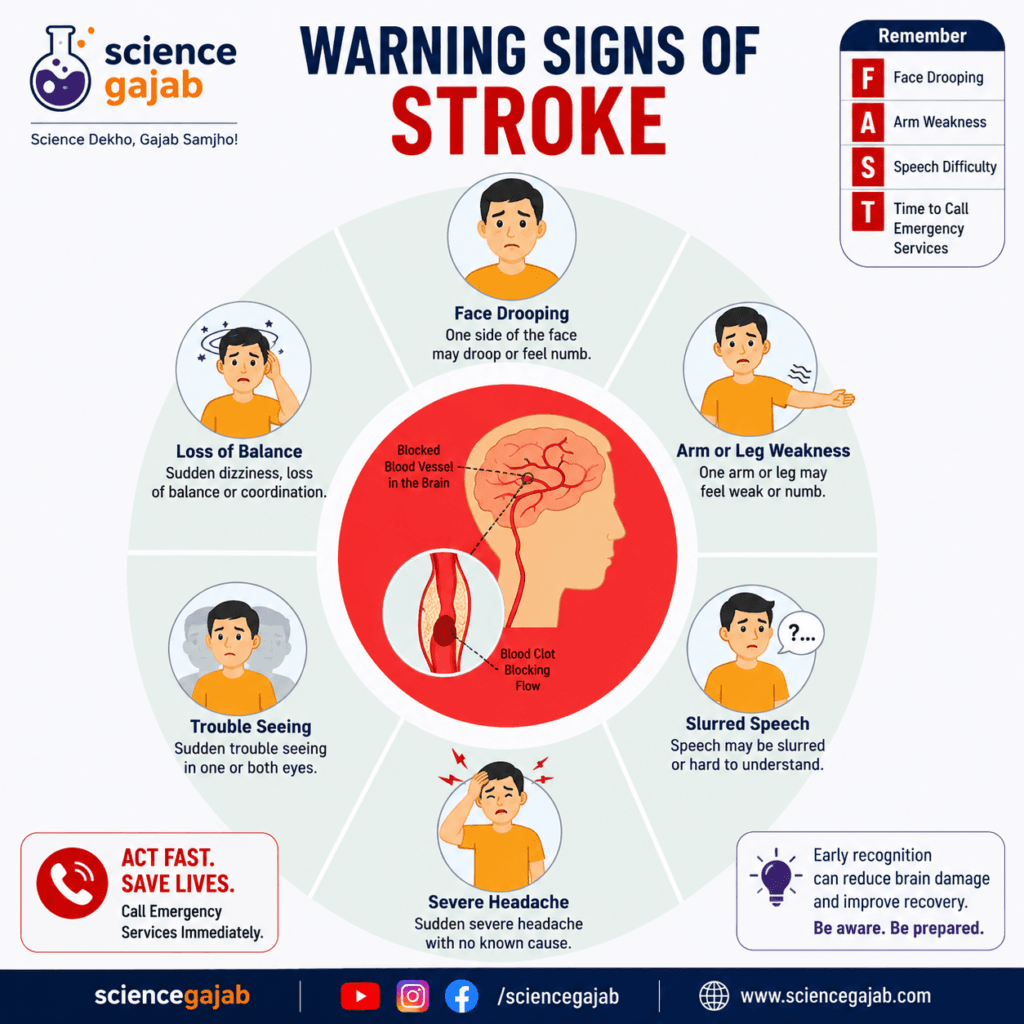
4. Sudden Dizziness or Loss of Balance
Some strokes affect coordination and balance.
Symptoms may include:
- Sudden dizziness
- Difficulty walking
- Falling
- Loss of coordination
Parts of Ear and Their Functions (Simple Diagram Explained)
5. Sudden Vision Problems
Stroke may suddenly affect eyesight.
Possible symptoms:
- Blurry vision
- Double vision
- Loss of vision in one eye
Causes of Sudden Blurry Vision (Simple Explanation You Can Trust)
6. Sudden Severe Headache
A very severe headache may occur especially in bleeding strokes.
Warning signs include:
- Sudden worst headache
- Vomiting
- Neck stiffness
🧠 What Happens During a Migraine? (Science Explained)
7. Numbness or Tingling
Stroke may cause sudden:
- Numbness
- Tingling
- Reduced sensation
Usually on one side.
Numb Feet: Common Causes Explained – Symptoms, Warning Signs, and Treatment
FAST Rule for Stroke Recognition
Doctors use the FAST method:
| Letter | Meaning |
|---|---|
| F | Face drooping |
| A | Arm weakness |
| S | Speech difficulty |
| T | Time to seek emergency help |
What Is a Mini-Stroke?
A mini-stroke is called:
\text{Transient Ischemic Attack (TIA)}
Symptoms may last:
- Minutes
- Hours
then improve.
But it is a serious warning sign because a major stroke may follow later.
Stroke Symptoms in Women
Women may sometimes experience less typical symptoms such as:
- Fatigue
- Nausea
- Confusion
- Weakness
- Sudden headache
Why Does Your Brain Feel Tired After Studying? The Science Behind Mental Fatigue
Stroke Symptoms in Elderly People
Older adults may show:
- Sudden confusion
- Falls
- Weakness
- Speech difficulty
Why Does Blood Pressure Suddenly Increase? (Simple Explanation You Can Trust)
What Causes Stroke?
Major causes include:
- High blood pressure
- Diabetes
- Smoking
- High cholesterol
- Heart disease
- Obesity
Silent Signs of Heart Disease You Should Never Ignore
Types of Stroke
1. Ischemic Stroke
Most common type.
Occurs due to blocked artery.
2. Hemorrhagic Stroke
Occurs when a blood vessel bursts and bleeds.
Usually more dangerous.
Why Quick Treatment Matters
Brain cells begin dying rapidly during stroke.
Doctors often say:
\text{Time = Brain}
Faster treatment means:
- Less brain damage
- Better recovery
- Lower disability risk
AI vs Human Brain: The Shocking Truth About Who’s Really More Powerful
Dangerous Symptoms Requiring Emergency Care
Call emergency services immediately if someone has:
- Facial drooping
- Sudden weakness
- Speech difficulty
- Severe dizziness
- Sudden vision loss
- Collapse
Can Stroke Symptoms Go Away?
Sometimes symptoms improve temporarily during a mini-stroke.
But medical evaluation is still urgently needed.
Difference Between Stroke and Heart Attack
| Stroke | Heart Attack |
|---|---|
| Brain blood flow problem | Heart blood flow problem |
| Weakness/speech problems | Chest pain common |
| Neurological symptoms | Cardiac symptoms |
Can Young People Get Stroke?
Yes.
Although more common in older adults, strokes can occur in younger people due to:
- Smoking
- High BP
- Heart disorders
- Clotting disorders
How Doctors Diagnose Stroke
Doctors may use:
- Brain CT scan
- MRI
- Blood tests
- ECG
- Blood pressure testing
Stroke Treatment
Treatment depends on the type.
1. Clot-Busting Medicines
Used in some ischemic strokes.
2. Blood Pressure Control
Very important.
3. Surgery
Sometimes needed in bleeding strokes.
4. Rehabilitation
Includes physiotherapy and speech therapy.
Stroke Recovery
Recovery varies depending on:
- Brain area affected
- Treatment timing
- Severity
Some people recover well, while others may have lasting weakness.
Can Brain Cells Really Regrow? The Surprising Science
How to Reduce Stroke Risk
1. Control Blood Pressure
Most important prevention step.
2. Manage Diabetes
Protects blood vessels.
3. Stop Smoking
Smoking increases clot risk.
4. Exercise Regularly
Improves circulation.
5. Eat Healthy Diet
Supports artery health.
18 Calcium Deficiency Symptoms You Should Never Ignore (Hypocalcemia Warning Signs)
Foods That Support Brain and Blood Vessel Health
Helpful foods include:
- Fruits
- Vegetables
- Fish
- Nuts
- Whole grains
15 Best Foods to Improve Memory Naturally: Science-Backed Brain Nutrition
Interesting Facts About Stroke
1. Stroke Is a Leading Cause of Disability
2. Brain Cells Die Quickly Without Oxygen
3. Mini-Strokes Are Important Warning Signs
Frequently Asked Questions (FAQs)
Facial drooping, arm weakness, and speech difficulty are classic early signs.
Yes, in mini-strokes symptoms may improve temporarily.
Sometimes yes, especially if associated with weakness or speech problems.
Early treatment reduces brain damage and improves recovery.
Yes, though less common than in older adults.
Final Thoughts
Stroke symptoms often begin suddenly and should never be ignored.
Warning signs such as:
- Facial drooping
- One-sided weakness
- Slurred speech
- Sudden dizziness
- Vision changes
require immediate medical attention.
Recognizing stroke early and acting quickly can save brain function, reduce disability, and save lives.
Medical Disclaimer
This article is for educational awareness only and does not replace professional medical advice, diagnosis, or treatment.
Sources & References
- American Stroke Association
- Mayo Clinic educational resources
- Neurology educational references
- Standard physiology textbooks
Reviewed Topic
Educational overview of stroke symptoms, mini-strokes, neurological warning signs, and emergency stroke care explained in simple language for general readers.
Author : Dr Sanjay Prajapati,MBBS